

%204.png) GuestPostMailer
GuestPostMailer




.png)
.png)
Running a franchise business requires you to manage numerous dynamic elements than most business owners ever deal with. Multiple locations, multiple teams, multiple local markets — and one brand reputation to safeguard across all of them.
That's exactly what makes franchise SEO one of the most robust marketing investments you can make and one of the most misunderstood. If executed poorly, your own locations end up competing with each other for rankings. However, smart execution enables each unit to win in its own city while the brand grows worldwide.
This guide breaks down everything you need to know — what SEO for franchises actually means, the specific challenges it carries, and the step-by-step tutorial for local SEO strategy for franchises that works.
What Is Franchise SEO?
Franchise SEO is the practice of improving a franchise business for search engines at both the brand level and at the individual location level, simultaneously.
Think of it as two parallel efforts running at once:
- Brand-level SEO builds authority and awareness for your franchise as a whole. When someone searches your brand name or a broad category term related to your industry, this is what gets them to you.
- Location-level SEO is your local SEO strategy for franchises — it gets each individual unit to show up when nearby customers search things like "gym near Koramangala" or "sandwich shop open in Andheri West." This is pure local intent, and it converts at a higher rate than almost any other traffic source.
Most businesses only need one of these. Franchises need both — and that's what makes franchise SEO marketing its own discipline entirely.
Also Read:
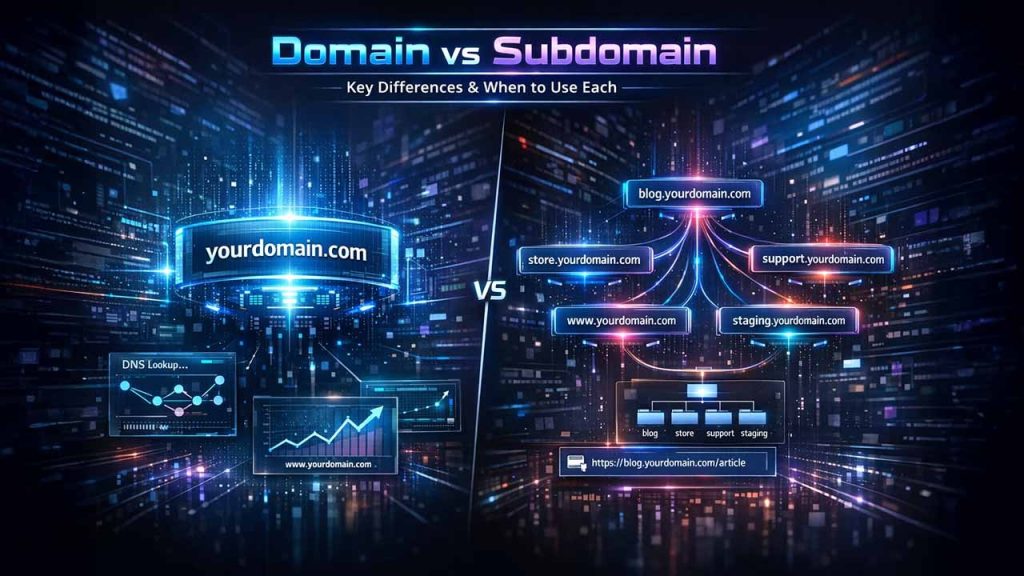
Domain Vs Subdomain: Key Differences & When to Use Each
The Importance of Franchise SEO
The case for investing in SEO marketing for franchises isn't hard to make once you look at how people actually find and choose local businesses. Local search intent is extremely high-purchase intent. When someone searches for something "near me," they're not casually browsing — they're typically ready to visit, call, or book. The majority of people who perform a local search visit a physical business within 24 hours.
The Local Pack (also called the Map Pack) — the section showing a map with three business listings near the top of Google results — consistently attracts a large portion of clicks on local search pages. In many cases, it outperforms the organic results listed below it. Getting your franchise locations into that Map Pack for the right keywords is one of the highest-return activities in all of franchise SEO marketing.
On the brand side, consistently ranking well nationally builds credibility. Customers are far more likely to trust a brand they recognize when they encounter it in local search. This is why SEO franchise strategy needs to serve both goals: local conversions and brand authority.
How SEO for Franchises Different from Regular SEO
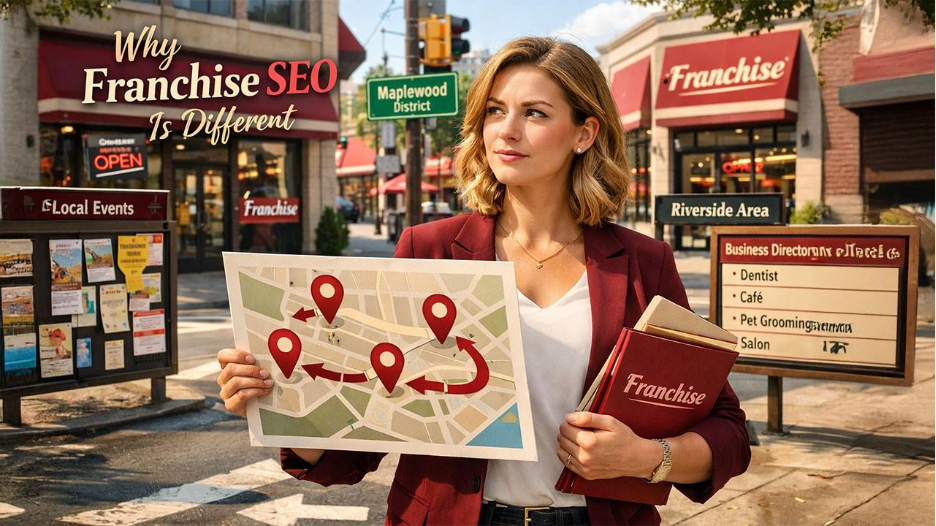
There are three challenges specific to franchise businesses that a solo local business or a single-location brand never has to deal with.
1. Keyword Cannibalization
This is the biggest and most damaging problem in franchise SEO, and it's also the one most franchisors don't realize they're creating. When you have fifteen locations, and each one targets the same keywords, like "best pizza restaurant," "affordable gym," those pages end up competing against each other in Google's index. Google can't determine which one to prioritize, so it often ranks none of them well. This is called keyword cannibalization, and it can quietly suppress rankings across your entire franchise network.
2. Brand Consistency vs. Local Relevance
Your franchise brand needs to look and sound consistent everywhere — same logo, same colors, same core voice. But the content that resonates with customers in one city is genuinely different from what works in another. The smart solution is to maintain consistent branding and design while creating locally grounded content that speaks to each market. This balance is central to any effective local SEO strategy for franchises.
3. NAP Consistency Across Dozens of Listings
NAP stands for Name, Address, Phone Number. When you're managing 20, 50, or 100 locations — each with listings on Google Business Profile, Yelp, Apple Maps, Justdial, and industry-specific directories — keeping every listing perfectly accurate becomes a genuine operational challenge. Inconsistent NAP data confuses search engines and misleads customers.
A location listed with an old phone number, a slightly different address format, or a name that varies across platforms can suppress rankings and send real customers to the wrong place.
How to Make an Effective Franchise SEO Strategy
Every franchise location needs its own dedicated page — and not just a copy-paste template with the city name swapped. Google sees through that quickly, and so do customers.
Here's what actually needs to go on each location page: a localized title tag and meta description (include the neighborhood and service category), unique content that mentions local landmarks or team members, accurate NAP (name, address, phone) that matches your Google Business Profile exactly, an embedded Google Map, LocalBusiness schema markup, internal links from your homepage and footer, real customer testimonials from that location, and genuine photos.
Implement Local Keyword Research
Generic keywords won't move the needle here. "Physiotherapy clinic in Powai" and "vegan restaurant Indiranagar" are the kinds of searches that actually bring in customers who are nearby and ready to act. Beyond city-level terms, dig into long-tail phrases. "24-hour pharmacy Whitefield" or "late-night food delivery Bandra" have lower search volume but convert far better than broad terms because the person searching already knows what they want.
Don't overlook "near me" searches either. You don't need to target that phrase literally — when your location pages and Google Business Profile are properly set up for your category, Google resolves those searches automatically.
Google's autocomplete is a free starting point. Just start typing a relevant search and see what comes up — those suggestions reflect real search behavior. Tools like SEMrush or Ahrefs give you volume and difficulty data when you're ready to go deeper.
Optimize Google Business Profile
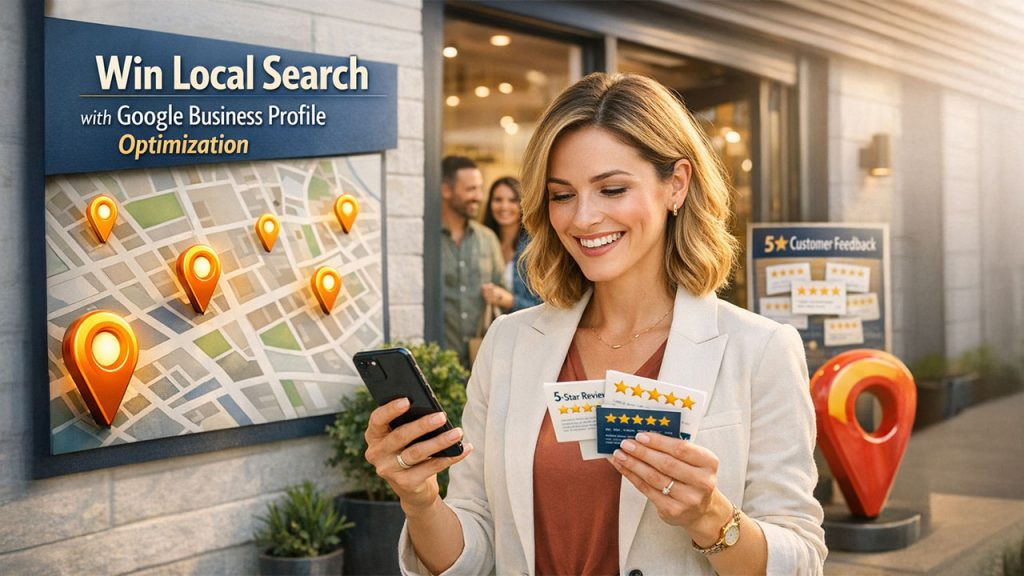
Your GBP (Google Business Profile) is the single most important local SEO asset you have. It's what drives Map Pack appearances, Google Maps visibility, and the business panel that shows up when someone searches your brand name in a specific area. Every franchise location needs its own listing — not one shared account for the whole network. Use Google Business Profile Manager to oversee all listings centrally while keeping each one locally active.
Fill in every field completely. Choose the most specific business category available. Link each listing to its own location page, not your homepage. Add real local photos. Keep hours updated, especially around holidays.
Reviews deserve a system, not an afterthought. Ask satisfied customers consistently, and respond to every review — good or bad. This matters both for rankings and for the impression it makes on potential customers reading your profile before deciding whether to visit.
NAP Consistency and Local Citations
A citation is any mention of your business name, address, and phone number online. Consistent citations across directories tell Google your business is legitimate and properly located. The rule is simple: your NAP must be identical everywhere — same spelling, same phone format, same address abbreviation. Even small differences between listings confuse search engines and chip away at local rankings.
Beyond Google Business Profile, get listed on Apple Maps, Bing Places, Yelp, and whatever industry-specific platforms are relevant (Zomato for food, Practo for healthcare, Justdial for general business). Audit your citations quarterly using tools like BrightLocal or Moz Local. When a location moves or closes, update listings immediately and redirect the old web page rather than letting it return a 404 error.
Build High-Quality Backlinks
For your main brand, build authority through digital PR, guest posts on industry publications, and credible franchise directory listings. For individual locations, focus on locally relevant links. Local news coverage of a new opening or community initiative, chamber of commerce memberships, event sponsorships, school or charity partnerships — these all generate links from sources Google already trusts. One more underused strategy that is worth mentioning is forum posting, which naturally refers to franchise locations where relevant.
Local Content That Works
You don't need a blog for every location. You need the content that exists to genuinely serve that local audience. Think neighborhood guides relevant to your category, seasonal content tied to local events or festivals, FAQs based on what customers at that location actually ask, and posts about community initiatives your franchise is involved in. If a competitor's location page says "we serve Hyderabad," yours should show the team, the neighborhood, what locals love about it, and why it's worth choosing over anyone else nearby.
Technical SEO
None of the above works if Google can't crawl and index your pages properly.
- Use responsive design — Google indexes the mobile version of your site first, and location pages that don't work on a phone simply won't rank well.
- Test page speed with Google PageSpeed Insights and aim for under three seconds.
- Use canonical tags on location pages that share structural similarities to prevent duplicate content confusion.
- Include all location pages in your XML sitemap and submit it through Google Search Console.
- Set up a clean /locations index page that links to every branch — this helps both users and search engines navigate your whole network.
When a location closes or moves, redirect the old URL to the nearest relevant page with a 301 redirect. A dead link left behind is both a user experience problem and an SEO signal you don't want.
Final Words
The businesses that win long-term at SEO franchise strategy are the ones that treat it as an ongoing operational system — not a one-time project or a monthly checklist. Every location is a search entity in its own right. Every Google Business Profile is a live, maintained digital storefront. Every piece of local content is a signal to search engines that this location is active, relevant, and worth showing to nearby searchers.
Build that system across every location: get the architecture right, create locally meaningful content, keep your listings accurate, earn trusted backlinks, and generate reviews consistently. Do it with clear ownership between corporate and franchisees, and you'll build a search presence that compounds month after month — turning local searches into visits, visits into customers, and customers into the kind of loyal, local reputation that no paid ad can replicate.
Meta Description: Learn how franchise SEO helps businesses rank locally for every unit and build high-authority brand appearance with this complete guide.
Frequently Asked Questions about Franchise SEO
Q. What is Franchise SEO?
Franchise SEO is one of the best search engine optimization techniques built for businesses operating across multiple locations. It helps them improve the search visibility of each franchise location in local search results without compromising brand authority across the franchise network.
Q. What makes Franchise SEO different from standard SEO?
Traditional SEO focuses on websites operating in single or limited locations, while Franchise SEO functions for multiple locations and local listings. It leverages many advanced strategies for local search optimization, location-driven content, and brand consistency.
Q. What are the location pages in Franchise SEO?
Location pages are the specialized webpages that showcase different branches of franchise businesses and networks. These pages play a crucial role in local search visibility and helping businesses improve brand presence in specific geographic regions.
Q. Why is SEO necessary for franchise businesses?
SEO helps franchise businesses target local customers by improving their visibility in geographic search results. It also guarantees that each location is displayed to users in relevant search results, including near me searches or location-based queries.
Q. Is customer review important for Franchise SEO?
Analyzing customer reviews is one of the crucial steps in local search engine rankings. However, positive reviews can have a great contribution in optimizing credibility, improving search positions, and boosting click-through rates.
.png)
.png)
.png)
.png)