

%204.png) GuestPostMailer
GuestPostMailer





.png)
.png)
As a local business owner looking to bring more local customers online, you have come to the right place. Having local SEO knowledge as a beginner doesn’t have to be intimidating. With a proper plan, improvements can be noticed even within a couple of months.
Consider your own personal behavior. When you look for a plumber, a restaurant, or any other service in your general area, what do you do first? Chances are, you go to Google. This is exactly what your potential customers do, and if your business doesn't show up in their results, you're missing opportunities.
What is Local SEO for Beginners?
Local Search Engine Optimization involves optimizing your online presence to attract potential customers through local search engine results. This means that if customers in your area are conducting a search for something you offer, your business will be listed.
For example, if you are running a bakery in Denver, local search engine optimization helps your bakery show up in search results when a person types “best bakery near me” or “best bread in Denver.” The idea is to connect with people who are searching for you in your neighborhood
Why Local SEO Matters More Than Ever
The numbers say it all. A whopping 80% of mobile local searches translate into conversions, and close to 50% of those users end up visiting your business location within 24 hours of performing a local search. This goes on to prove that not only does local SEO bring you traffic, but it also brings you customers who are geared to take action
Understanding the Importance of Local SEO for Small Businesses
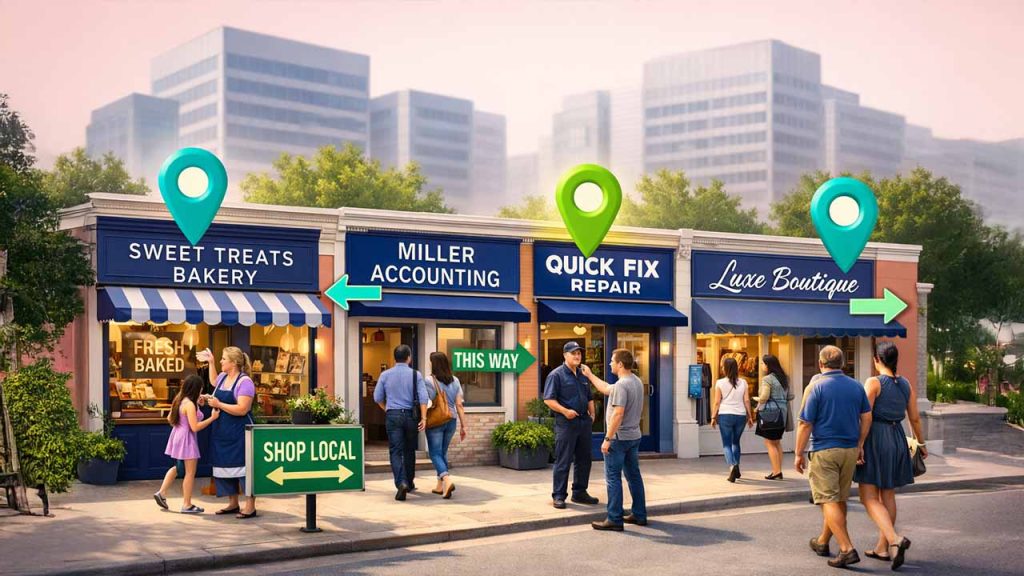
Local SEO for beginners starts by taking into account the reasons it has become so vital for contemporary companies:
Customer Search Behavior Has Evolved
The days of printing the yellow pages are now over. Today, people in abundance, that is, 86%, use the internet to look for businesses in their area. Whether it is a leak in the faucet or a new shoe, people turn to Google instantly. Otherwise, the competition would get hold of that opportunity.
Higher Quality Traffic and Leads
Local SEO will bring you far more than visits—to leads with intent. Someone searching for ‘tax accountant in Miami’ is searching for assistance, not browsing. Being detected for search terms like this will connect you with people ready to switch.
Level the Playing Field Against Larger Competitors
One of the most powerful advantages of local SEO for beginners is that it democratizes visibility. You don't need a massive marketing budget to compete with national chains. Through strategic local optimization, your small business can rank above corporate giants in your area. This is where you can truly revolutionize your SEO strategy—by leveraging local signals that big corporations often overlook and using them to evaluate digital marketing performance at a hyper-local level. Surprisingly, more than half of local businesses haven't even claimed their Google Business Profile, giving proactive businesses a significant competitive edge.
How to Optimize for Local SEO: 8 Essential Steps
Let's break it down into actionable steps for the local SEO beginner. Apply these strategies to increase your visibility in local search results:
Step 1: Claim and Optimize Your Google Business Profile
With over 92% market share, Google is the dominant search engine, and thus, Google Business Profile (formerly Google My Business) is your most valuable local SEO asset. This free tool controls how your business appears in Google Search and Maps.
How to optimize your Google Business Profile:
- Ensure your Name, Address, and Phone number, or NAP, are consistent everywhere
- Please select three to five categories of services where your expertise is the best, and you can provide the maximum
- Write a compelling business description of 100-200 words.
- Post high-quality pictures of your business, products, and services
- Include Regular Business Hours & Holiday Hours
- Turn on the messaging to enable customer contact.
Consistency is key. Even minor inconsistencies in NAP details between platforms may confuse the search engine and affect the rankings.
Step 2: Research and Target the Right Keywords
Keywords comprise the framework of SEO. These phrases are the actual terms searched by users on search engines while searching for your type of business.
Results-oriented keyword research for local SEO:
- Provide a list of phrases customers might use to find your business
- Include location qualifiers like the names of cities and “near me.”
- Use freely available tools, Google Keyword Planner, for data related to searching
- See what tools like SEMrush or Ahrefs might provide to gain insights
- Identify target keywords that have a reasonable number of searches (above 70 searches a month) and moderate competition.
- Emphasize long tail keywords with high buying intent
Rather than searching for the term “pizza,” try searching for the phrases “best deep-dish pizza in Chicago” and “late-night pizza delivery in the downtown area.”
Step 3: Build Local Citations and Quality Backlinks
Citations are any online mentions of your business details on directories and websites. Backlinks refer to links from other sites pointing to yours. Both help build up trust and credibility with the search engines.
Building citations effectively:
- List your business on Yelp, Yellow Pages, Bing Places, and niche directories
- Keep the information of NAP consistent throughout all the listings
- Focus on relevant, reputable directories - not the quantity
- Get into your local Chamber of Commerce and obtain a listing
Earning quality backlinks:
- Partner with other local businesses offering a different but complementary service.
- Sponsor community events or charities
- Publish local content that others want to reference
- Analyze competitors' backlinks using tools like Moz Link Explorer
- Pitch stories to local bloggers and news sites
Step 4: Create Localized, High-Quality Content
This is the point where local SEO for beginners can be effective. High-quality content can help increase rankings and is useful to your visitors.
Content Strategies That Work:
- Write and publish articles on the local topics and FAQs
- Set up special "Service" page links for each geographic area your business supports
- Naturally refer to local points of interest, events, and neighborhoods
- Use Internal and External Links Effectively
- The article should be written for readers, not for search engine optimizers
- To match the way users search in natural language
The best content, according to Google’s algorithms, answers users' needs by helping them. Accuracy, relevance, and engagement should come first.
Step 5: Implement Schema Markup for Local Business
"Schema markup refers to the coding that assists search engines in understanding your business information. As an essential element of a Website Redesign SEO Checklist, it helps enhance the appearance of SERPs by allowing your results to display work hours, reviews, ratings, and other valuable details that improve visibility and click-through rates.
Key schema types for local businesses:
- Local Business schema with NAP details
- Business and holiday hours
- Pricing range and payment options
- Customer reviews and ratings
- Service area details
Step 6: Actively Encourage and Manage Customer Reviews
Reviews are important because customers base their purchase decisions on them. Also, search engines recognize reviews as an indication of trust and trustworthiness.
Identify Review Management Guidelines:
- Send reviews after positive experiences Send reviews after positive experiences
- Provide direct links to your Google Business Profile pages
- Responded to all reviews in a positive fashion
- Don’t post or solicit fake or purchased reviews
- Show reviews on your website
- Address negative feedback with solutions
Providing great service means you will receive great feedback. Experience, not results, should be your focus.
Step 7: Track Performance with Local SEO Tools
What you can’t measure, you can’t improve. This is true because if you can’t measure it, you can’t track it.
The Necessities for Local SEO Tracking:
- Google Analytics: Tracking Traffic, Behavior, and Conversions
- “Google Search Console is the central place to access Google’s various services, like Google Webmaster
- SEMrush or Ahrefs: Enhanced keyword and competitor analysis
- Google Business Profile Insights: Engagement metrics for your listings
- Visual documentation tools like snapjotz com: For capturing and organizing local business content
Some of the most significant metrics for Google My Business are keyword rankings, organic traffic, local conversions, and profile interactions.
Step 8: Continuously Optimize Your Strategy
Local SEO for beginners isn’t a one-time effort. Algorithms change; competitors adapt, and your business evolves.
Ongoing optimization tactics:
- Review performance data monthly
- Refresh content to keep it relevant
- Track competitor activity
- Experiment with different strategies
- Stay updated on Google changes
- Adjust keywords based on actual conversions
Long-term success comes from consistent improvement, not one-off optimization.
Also Read: Erpoz: Complete Guide to Features, Benefits, and Business Implementation
On-Page SEO Optimization Checklist for Local Search
Use this checklist to ensure strong on-site optimization for your local SEO for beginners implementation:
- Consistent NAP across all pages
- NAP included in the site footer
- Content reflects local expertise
- Headers include local keywords
- Optimized title tags
- Descriptive image alt text
- Location-based internal linking
- Proper local schema markup
- Mobile-friendly, fast-loading website
- Location pages for each service area
Off-Page SEO Optimization Checklist for Local Businesses
Don’t overlook off-site factors:
- Listings on 3–5 trusted directories
- Active review monitoring and responses
- Review the request system in place
- Outreach to local bloggers
- Guest posts on authority sites
- Social media engagement
- Community involvement and sponsorships
- Accurate, consistent citations
Common Local SEO Mistakes to Avoid
Be alert to these common problems:
- Inconsistent NAP Information: Small discrepancies could confuse search engines and adversely affect search rankings.
- Failure to Optimize Mobile Devices: Most local search queries are performed on mobile devices, and this has negative effects on visibility.
- Neglecting Negative Reviews: Negative views need to be addressed to build trust.
- Keyword Stuffing: Too many keywords make text less readable and may lead to penalties.
- Lack of location-specific information: Generic information does not rank locally, and people will not engage with it.
Advanced Tips for Local SEO Success
After mastering the basics of local SEO for beginners, try these advanced tactics:
- Make local landing pages that are unique to each area
- Improve local link partnerships
- Optimize for Voice Search Queries
- Use Google Posts frequently
- Continue the expansion of structured data beyond the basics
How Long Does Local SEO Take to Show Results?
Invariably, one of the most common questions that new business owners ask is about timing. The initial gains that are realized are typically between one and three months post-Google Business Optimization and Citation Optimization. Better search ranking improvements are typically found between three and six months, while at the end of six to twelve months, maximum results are typically attained.
Conclusion: Start Your Local SEO Journey Today
Local SEO for Beginners can be intricate to start with. However, by considering these points below, local SEO is achievable. Start with optimizing your Google Business Listing, right up to creating local content. These are the essential steps to ensure long-term visibility.
Key takeaways:
- Local SEO helps you reach the customers who are ready to purchase your products
- NAP consistency is essential
- Quality content creates trust
- Ongoing optimization drives lasting results
- Start small and scale up
As it is now, with 97% of people researching the businesses they plan to visit before actually visiting, it’s imperative that you optimize for local SEO. Apply the measures today so that more locals will be able to find your services at the time you want them to.
Each local SEO for beginners process starts with the first step. Regardless of whether you choose to handle this on your own or work with professionals, the most significant step is taking that step now. Your customers are already searching; you need to be visible.


.png)
.png)
.png)
.png)