

%204.png) GuestPostMailer
GuestPostMailer



.png)
.png)
Every great trip starts on the screen. Someone types "best Europe tour packages" or "honeymoon destinations under a budget" into Google, and within seconds, a list of agencies appears. The ones at the top get the clicks, but the ones buried on page two get ignored.
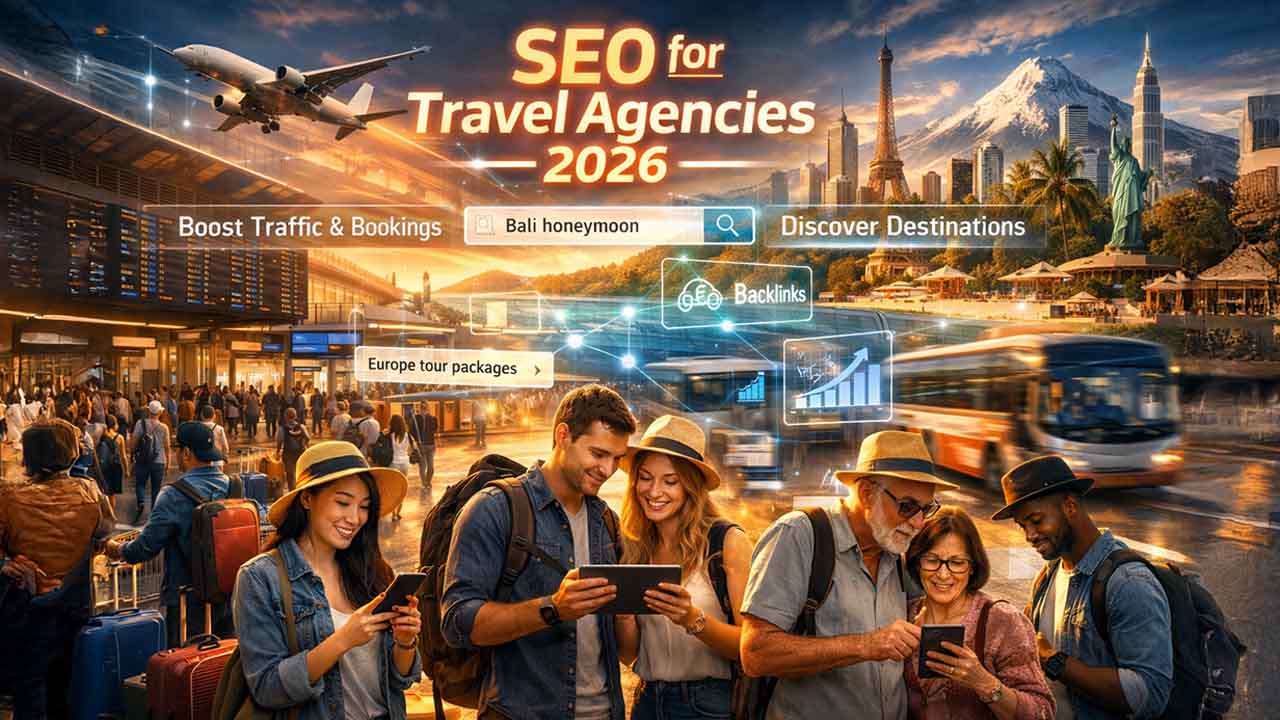
If your travel agency isn't showing up where your potential clients are searching, you're not just losing traffic, you're losing bookings to competitors who understood one thing before you did: SEO is the most powerful salesperson your travel agency will ever have, and it works 24/7.
This guide breaks down everything you need to know about SEO for travel agencies: what it means, why it matters, how it works, what strategies actually move the needle, and the costly mistakes you need to stop making right now.
What Is SEO for Travel Agencies and How Does It Work?
SEO for travel agencies is the practice of optimizing your travel website and online presence so that it ranks higher in search engine results when potential travelers are actively looking for trips, tour packages, or travel services.
Effective SEO for a travel agency involves smart keyword targeting, compelling content creation, technical website improvements, local search optimization, and building authority through quality backlinks.
When someone searches for “Bali honeymoon packages” or “adventure tours in Ladakh”, Google matches that traveler with the most relevant, well-optimized, and trustworthy website it can find. SEO is how you make sure your agency is that website.
Why SEO Is Important for Travel Agencies in 2026
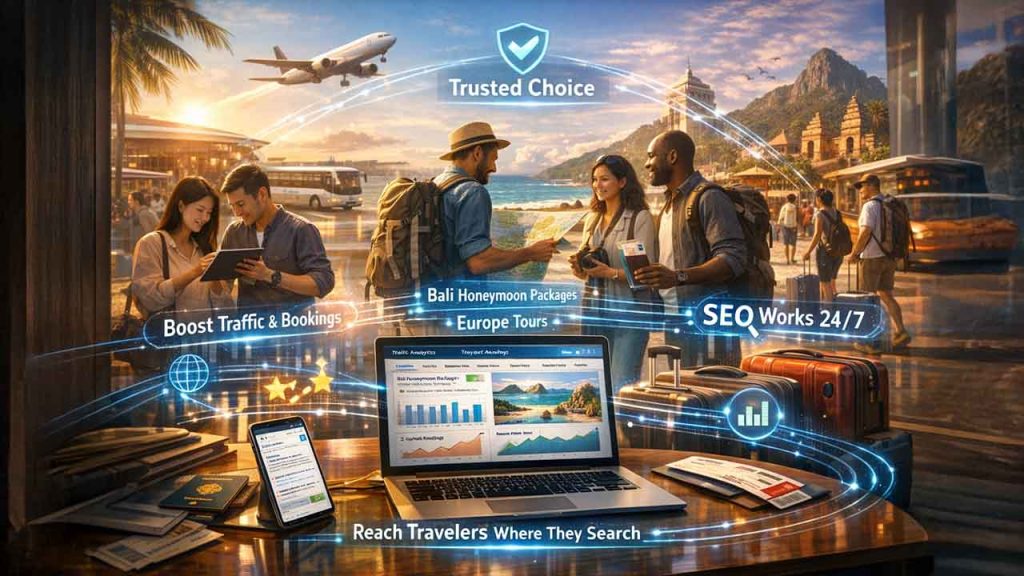
Here's a reality check: over 90% of online experiences begin with a search engine. In the travel industry specifically, research and discovery happen almost entirely online before a single booking is made. Your potential clients Google, compare, read reviews, browse destination guides, and check out tour itineraries before contacting you or filling out the form. If your website isn't optimized to appear in those searches, you're essentially losing those leads.
Beyond visibility, SEO helps travel agencies in a few critical ways:
- It reduces dependence on OTAs (Online Travel Agencies) like MakeMyTrip or Booking.com, which charge heavy commissions on every booking.
- It builds trust and authority. Websites that rank high are perceived as more credible by travelers.
- It delivers consistent, long-term traffic without the recurring cost of paid advertisements.
- It improves the overall user experience of your website, making it faster, more mobile-friendly, and easier to navigate.
The travel industry is growing fast. Agencies that invest in SEO today are building a foundation that will keep paying dividends for years.
Top Benefits of SEO for Travel Agencies (Traffic, Leads & Bookings)
The benefits of doing SEO for a travel agency go well beyond rankings. Here's how SEO stacks up against the alternative — paid advertising:
| Low without continuous spending | SEO | Paid Ads (PPC) |
|---|---|---|
| Cost over time | Decreases as results compound | Ongoing; stops when budget stops |
| Lead quality | High intent, organic visitors | Variable; depends on targeting |
| Trust factor | Higher; organic results feel credible | Lower; users often skip ads |
| Time to results | 3-9 months | Immediate |
| Long-term sustainability | Very high | Low without continuous spend |
| Best for | Consistent bookings & brand growth | Seasonal promotions & quick launches |
How SEO for Travel Agencies Works: 4 Core Pillars Explained
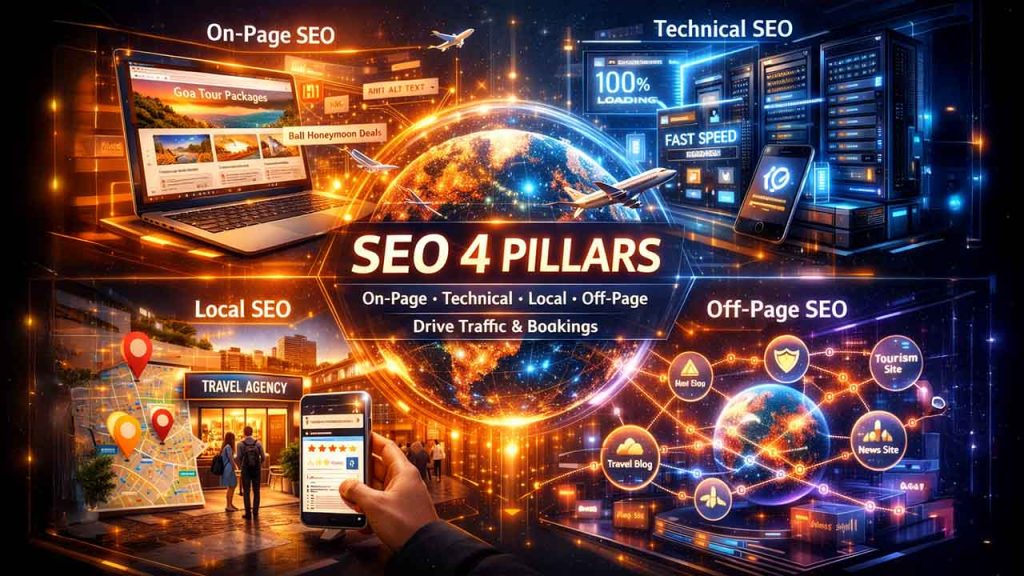
Understanding the mechanics of SEO helps you make better decisions about where to invest your time and budget. There are four core pillars:
On-Page SEO for Travel Websites (Content & Keywords)
This involves everything that happens on your actual website pages: the titles, meta descriptions, headings, image alt text, internal links, and the quality of your content. For a travel agency, this means each destination page, tour package listing, and blog post needs to be properly optimized for the terms your audience is searching for.
Technical SEO for Travel Agencies (Speed, Mobile & Performance)
This is the behind-the-scenes engine. A slow website, broken links, poor mobile experience, or crawling errors will hurt your rankings regardless of how good your content is. Google rewards websites that load fast, work well on smartphones, and are structurally sound.
Local SEO for Travel Agencies to Rank “Near Me” Searches
For travel agencies with a physical location or those serving specific regions, local SEO is non-negotiable. This means claiming and optimizing your Google Business Profile, keeping your name, address, and phone number consistent across all directories, and earning local reviews. When someone searches "travel agency near me," local SEO is what makes you show up.
Off-Page SEO for Travel Agencies (Backlinks & Authority Building)
This primarily means earning backlinks from other reputable websites pointing back to yours. The more authoritative sites link to your agency, the more Google trusts your site. This can come from travel blogs, tourism boards, media features, and directory listings.
Together, these four pillars create a comprehensive SEO presence that drives qualified, ready-to-book traffic to your website.
10 Proven SEO Strategies for Travel Agencies to Increase Bookings
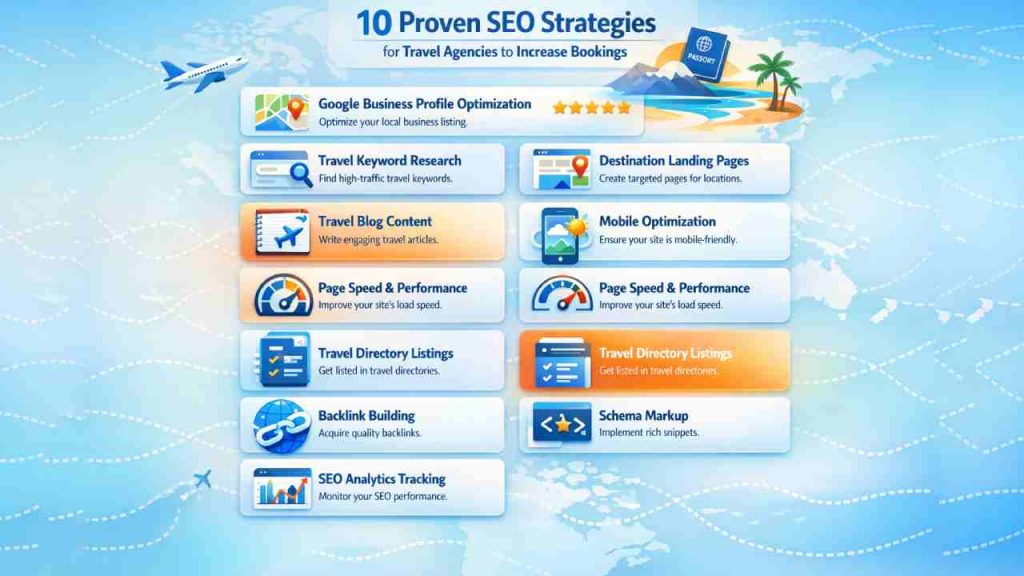
These are the strategies that actually make a difference for travel agencies in today's competitive search landscape:
- Optimize Google Business Profile for Travel Agency SEO: Complete every field, add high-quality destination photos, select precise business categories, and keep your hours updated. This is the foundation of local visibility.
- Perform Keyword Research for Travel Niche: Go beyond just terms to target specific phrases that have high search intent, such as “family tour packages to Goa” or “Maldives trip under 80,000 INR”. These phrases convert better than random generic terms.
- Create Destination-Specific Landing Pages: Design dedicated landing pages that are well-optimized for each package that you offer or destination. If your service pages are generic, then they won’t rank for specific travel searches.
- Publish Travel Blogs and SEO Content Regularly: You must publish travel blogs, itinerary ideas, packing guides, destination recommendations, along with helpful FAQs. These types of content attract organic traffic, which strengthens the position of your agency as a trusted resource.
- Optimize Travel Website for Mobile Users: The majority of people use smartphones for travel searches. A slow mobile experience and poor UI will negatively affect your rankings and conversions.
- Improve Page Speed and Core Web Vitals: Google actively rewards webpages that load fast. To achieve that, compress images, convert them to WebP format, and reduce the scripts that are unnecessary.
- Build Citations on Travel Directories: Get yourself listed on high-authority travel platforms such as TripAdvisor, Viator, and Yelp. These citations are important as they strengthen your local SEO and send qualified referral traffic.
- Earn High-Quality Backlinks for Authority: Every reputable link helps build your domain authority. That's why you collaborate with travel bloggers, get featured in travel-specific publications, and partner with companies that manage destinations. To streamline this process, using the right link-building tools can help you find prospects, manage outreach, and track acquired backlinks efficiently.
- Use Schema Markup for Travel Listings: Schema helps Google display rich results like star ratings, pricing, and availability directly in search results. This increases click-through rates dramatically.
- Track SEO Performance with GA4 and Search Console: Continuously monitor which pages drive traffic and conversions to refine your strategy accordingly. SEO without measurement is mere guesswork that won’t yield any fruitful results.
Common SEO Mistakes Travel Agencies Must Avoid
Knowing what not to do is just as important as knowing what to do. Here are the most common SEO mistakes travel agencies make and why they're hurting your growth:
- Ignoring Local SEO Optimization: Not optimizing your Google Business Profile means you're missing out on high-intent "near me" searches from travelers ready to book.
- Inconsistent Business Information (NAP Issues): Mismatched names, addresses, or phone numbers across platforms confuse search engines and damage your local ranking potential.
- Poor Mobile Optimization: A website that doesn't perform on smartphones is essentially ignoring the majority of your audience.
- Thin or Duplicate Travel Content: Copy-pasted tour descriptions or low-effort blog posts weaken your topical authority and can trigger ranking penalties. Update your content seasonally to maintain rankings.
- Lack of Internal Linking Strategy: Without proper internal links, search engines can't understand the structure of your site or the relationships between your pages.
- Building Low-Quality Backlinks: Spammy or irrelevant backlinks can actually harm your rankings. Quality always wins over quantity.
- Not Tracking SEO Performance: Running an SEO campaign without analytics is like navigating without a map. You won't know what's working or what needs fixing.
Conclusion: Why SEO Is a Long-Term Growth Strategy for Travel Agencies
In recent years, travel agencies have become more competitive than ever. Travelers have become savvier; their searches are now more specific, and those agencies that consistently appear in the right searches are the ones that continue to grow regardless of the season.
However, SEO for travel agencies isn’t an instant solution. It is a long-term investment. When you do it right, it compounds over time, builds authority, visibility, and a stable, steady pipeline of direct bookings. The SEO is not an afterthought. The travel agencies that treat SEO as a core business strategy are the ones that won’t need any third-party platforms, nor do they need to spend on ads to stay in business.
Start with the basics, be consistent, track your results, and keep refining. The digital landscape rewards those who show up with intention, just like the best journeys do.
FAQs About SEO for Travel Agencies
Q. How long does SEO take to show results for a travel agency?
Most agencies see results in 3 to 6 months for local SEO, while competitive keywords can take 6 to 12 months.
Q. Can a small travel agency compete with large OTAs through SEO?
Yes. Small agencies can target niche and local keywords with higher conversion potential and lower competition.
Q. Is local SEO important for travel agencies?
Yes. Local SEO helps attract nearby travelers through Google Business Profile, listings, and reviews.
Q. Should a travel agency do SEO or PPC?
Both. PPC drives quick results, while SEO builds long-term organic traffic.
Q. What types of content work best for travel agency SEO?
Destination guides, travel blogs, itineraries, comparison pages, and FAQs perform best.
.png)
.png)
.png)
.png)