
%204.png) GuestPostMailer
GuestPostMailer





.png)
.png)
In the high-speed world of software development that we're living in nowadays, security can't be an afterthought. Organizations need an AppSec solution that can integrate seamlessly with their DevOps process and identify security issues early on. When evaluating Aikido vs Checkmarx, teams can find the best tool to accomplish a task based on scanning, resolving issues, and integrating with specific tools by understanding these three factors.
Teams can find the best tool to accomplish a task based on scanning, resolving issues, and integrating with specific tools by understanding these three factors.
Choosing the Right AppSec
For a DevSecOps team, choosing an appropriate AppSec platform is very vital. A correct solution keeps the applications secure from security holes, it accelerates the development, reduces troubleshooting time, and ensures adherence to regulations.
Security tools should fit into workflows, not slow the team down and create bottlenecks, because of modern software architectures and fast release cycles.
Among those seeking to fill these needs, the most popular platforms are Aikido and Checkmarx. Both are strong candidates, but they have different ways of making things safe and easy to use.
Key Differences Between Aikido vs Checkmarx
1. Pricing and Value
- Aikido: With all-in-one coverage and clear pricing, it is easier for teams to plan and grow.
- Checkmarx: Prices are based on the needs of businesses and come with separate modules, which can be expensive and hard to plan for.
2. Platform Approach
- Aikido: It provides an all-in-one solution that allows for coding cloud security without any need for extra add-ons.
- Checkmarx: This requires an additional setup and purchase as it uses separate modules to perform various security operations.
3. Performance & Insights
- Aikido: The scanning speed has increased, and vulnerability identification becomes much simpler.
- Checkmarx: The scan might take longer, as well as being less clear on the issues, where they are, and the solution.
4. Dependency & SCA Features
- Aikido: Includes advanced software composition analysis with checks for reachability, ways to reduce false positives, and steps to take to fix problems.
- Checkmarx: Offers SCA, but the guidance for fixing problems can be less clear and useful.
1. Aikido: Security Built Into DevOps
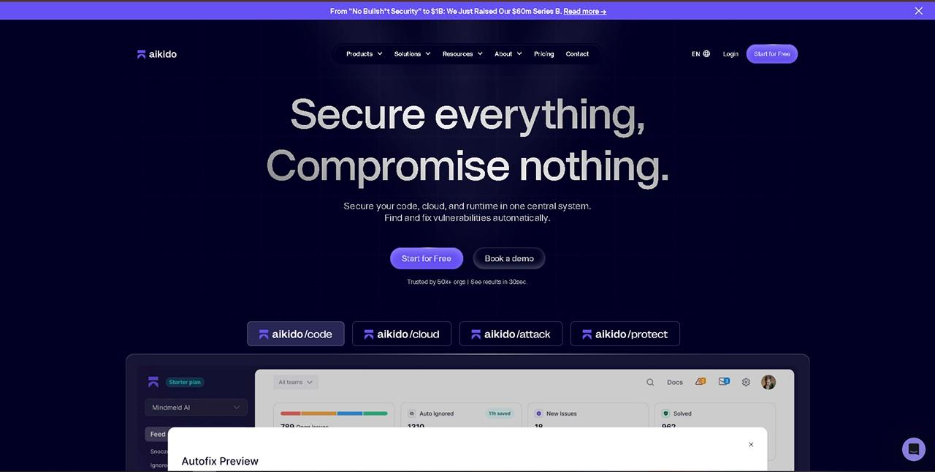
Aikido is designed to easily integrate into the current DevOps paradigm and safeguard the whole stack simultaneously. The principal objective is to ensure developers are equipped with the necessary tools to effectively address security issues in such a way that they do not impede the build or the delivery.
Key Strengths
- Full Stack Security: It encompasses Static Application Security Testing (SAST), Dynamic Application Security Testing (DAST), Static Code Analysis (SCA), Interactive Application
- Developer Friendly: Offers developers helpful advice to simplify the process of fixing things.
- CI/CD Integration: The automated scan process works seamlessly in pipelines, creating zero friction in the development process itself. Like other IT automation tools that streamline repetitive tasks, Aikido reduces manual security checks while maintaining comprehensive protection.
- Smart Prioritization: The AI system ranks the security issues on how dangerous they are in the world, so that those that matter the most get the attention they deserve.
- Flexible and Scalable: It works for small groups or for big companies with complicated systems.
- Advanced Analytics: Real-time dashboards display exposure, trends, and remediation activity.
- Reduced False Positives: Programmers can focus on the actual problems due to the intelligence of the filters.
- Dependency Management: Include suggestions on vulnerable dependencies and reachability to enhance SCA.
Aikido is the most suitable platform that can support enterprise DevSecOps teams that are looking for a modern, integrated, and simple platform to use. Aikido not only protects applications effectively, but it also improves the workflow and ensuring security.
2. Checkmarx
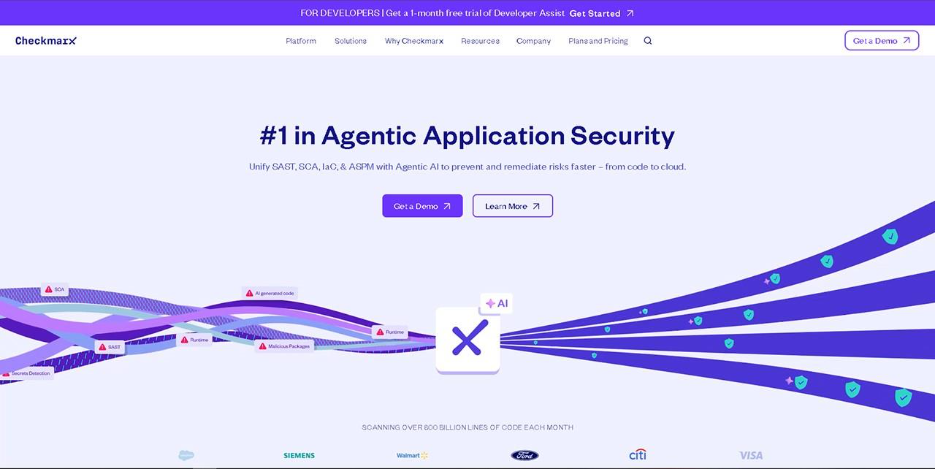
Checkmarx is a well-known AppSec solution, which businesses use for carrying out static code analysis as well as software composition scanning. This helps huge businesses identify various weaknesses, comply, and protect complex applications.
Key Strengths
- Robust Security: SAST and SCA features robust enough for complex, large-scale applications.
- Compliance and Reporting: Dashboards including all the data required for regulatory requirements and audits.
- Pipeline Integration: It may be more difficult to set up, but it can work with CI/CD workflows.
- Developer Guidance: Provides fixes, although it can be more complex and difficult to comprehend.
- Multiple Language Support: Offers support for numerous programming languages and frameworks.
- Regulatory Readiness: Helps groups successfully fulfill industry norms and legal obligations.
- Scalable for Businesses: Designed to handle large codebases and complex organizational structures.
Checkmarx is a great choice for businesses that prioritize compliance, can grow, and scan code reliably, especially in industries that have strict rules.
Recommendation
For organizational DevSecOps teams, that choice will depend on what is essential to them. When considering Aikido vs Checkmarx:
- Aikido is the result of a harmonious union of being developer-friendly, being integrated, as well as being AI-powered.
- It is an optimal solution for scanning, compliance, and robust vulnerability management, especially within large or regulated environments.
Conclusion
Both platforms have strong AppSec features, but they meet different needs. The Aikido vs Checkmarx debate ultimately comes down to your team's priorities: Checkmarx offers deep scanning and compliance features, while Aikido focuses on speed, usability, and smart prioritization. It all depends on how your team balances security, regulatory requirements, and developer productivity.
Improve the security of your applications and streamline your development processes to keep ahead of any threats.

.png)
.png)
.png)
.png)