




.png)
.png)
There are many business owners that believe simply having a Google Business Profile and a website is sufficient to attract local customers. However, this is far from the truth. Not running a proper local SEO audit causes you to lose customers to your competitors who are way ahead of you.
Local SEO audit is not a task for developers or something that you can check on a quarterly report. This is the most honest evaluation that tells you where your business actually stands online. This comprehensive guide will walk you through everything you need to know; what an audit is, why it is essential for your business, how to conduct one, what problems need fixing, and how to go further once the basics are covered. Businesses that are still building their foundation can benefit from understanding local SEO for beginners before going deeper into audits.
What Is a Local SEO Audit? (Definition + How It Works)
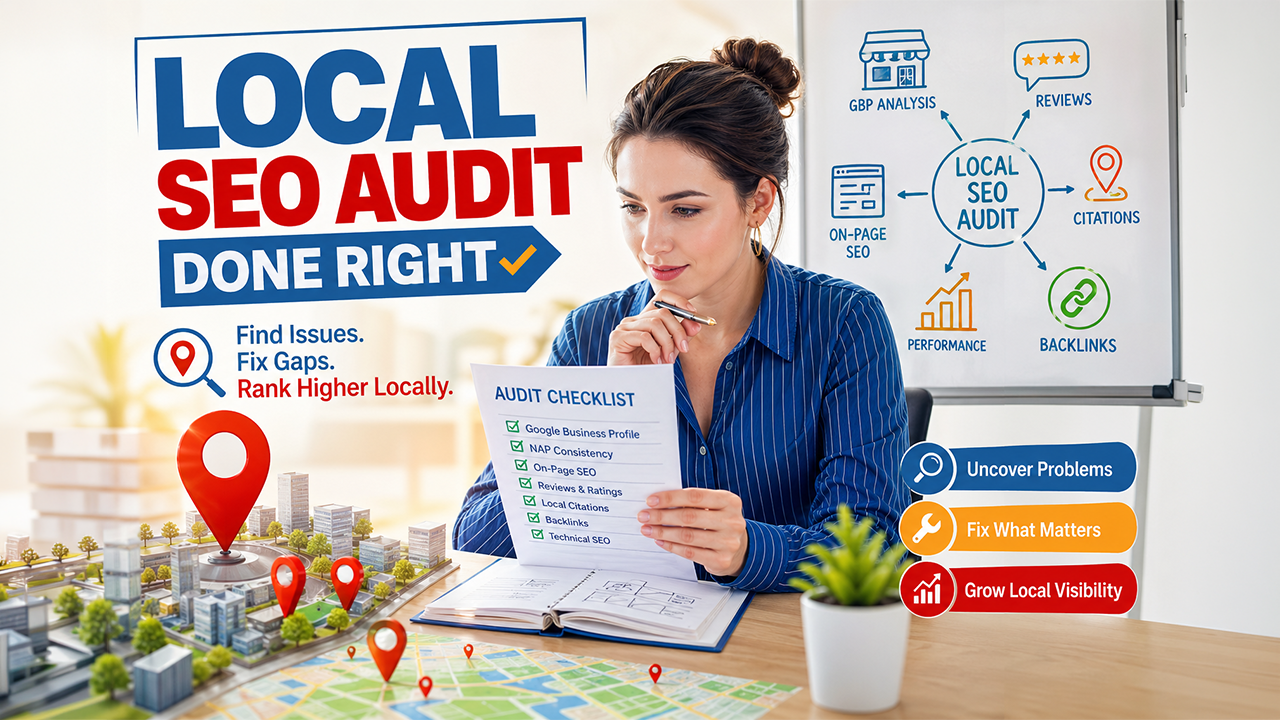
A local SEO audit is a thorough, systematic evaluation of how well your business is performing to appear in local search results. When someone nearby searches for any service or product that you offer, the audit determines whether your business shows up for that particular search or not. If not, it will tell you exactly why.
A proper local SEO audit investigates about your Google Business Profile against various metrics such as your presence across online directories, strength of your reviews, user engagement, your backlinks, on-page optimization quality, and technical health of your site.
Why Is a Local SEO Audit Important for Local Rankings?
When someone types “mobile repair shop near me” or “best cafe in Delhi” and if your business doesn’t appear in those results, the customers move on to the next result, and they are unlikely to come back. A local SEO audit gives you clarity that most marketing efforts do not. It shows you what is working, what is broken, what is costing you visibility, and what needs improvement. Without an audit, any optimization work that you do is just guesswork, not strategy. With an audit, every decision you make has a foundation and directly improves your search engine positioning.
Additionally, NAP (Name, Address, and Phone Number) inconsistencies in your business profile across different platforms can actively damage your rankings over time. While duplicate listings can split your authority, outdated or incomplete information misleads both customers and search engines. These failures are slow leaks that damage your business quietly. An audit helps you find them before they sink the ship.
How to Conduct a Local SEO Audit (Step-by-Step Process)
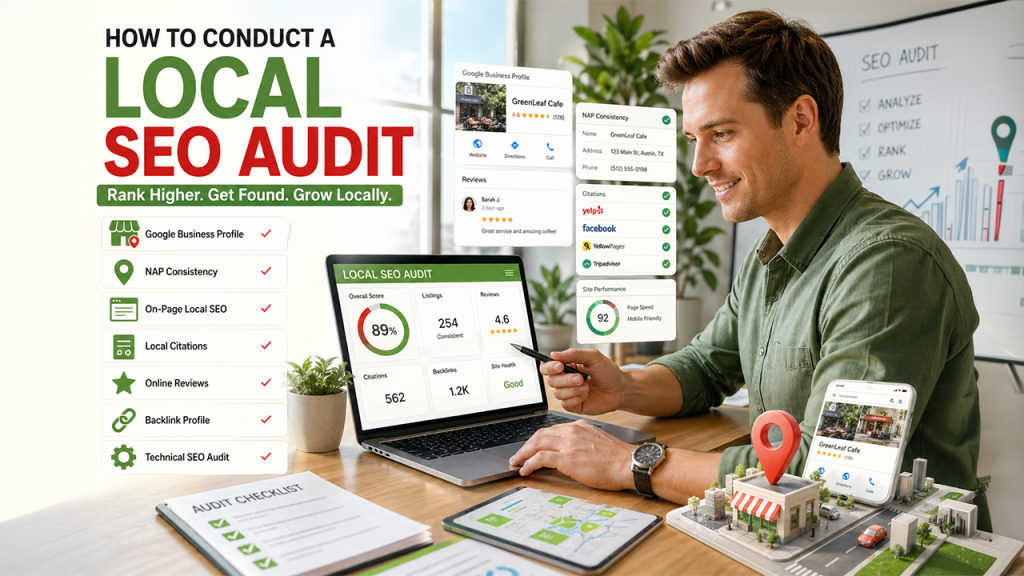
Before you start running an audit effectively, you must understand what are the elements that you need to audit. A local SEO audit doesn’t exist in isolation; it is interconnected with several areas that all influence how local search engines rank you locally.
Audit Your Google Business Profile
This is the most visible and most important element of the local SEO. Log in and review every field such as business name, category, address, hours, website URL, phone number, services, and photos. Make sure that your Google Business Profile is fully verified, claimed, complete, and updated. When information is missing, time and address is incorrect, or photos are outdated, it confuses both customers and search engines.
Check NAP Consistency Across All Listing
Search your business Name, Address, and Phone number across every platform such as your website, Google, Yelp, Instagram, Facebook, Apple Maps, and every directory in between. Even small differences, like "St." versus "Street," can confuse search engines and hurt your online presence and ranking. Document every discrepancy and correct it. Tools like BrightLocal or Moz Local can streamline this process significantly.
Evaluate On-Page Local SEO
Your website needs to recognize the local language that people use for local search. Review your homepage and service pages for locally optimized title tags, meta descriptions, headers, and content of the page. It also means that you should state clearly where you operate and what you offer in a way that is easy to understand for both users and search engines.
Analyze Local Citations
Citations refer to mentions of your business across third-party directories and data aggregators. Identify where your business is listed and whether the information is accurate. Look for missing listings on high-authority directories and create them where absent. Their quality, quantity, and consistency all contribute to how search engines see your authority in a specific geographic area.
Analyze Online Reviews
Reviews are seen as trust signals. Assess your volume of reviews, how recent they are, and the overall rating of reviews especially on Google as they affect your local ranking as well as the chances of potential customers to choose you over a competitor. Flag any unanswered negative reviews and develop a response strategy.
Examine Backlink Profile
Use a tool like Backlink Checker Ahrefs or SEMrush to analyze which sites link to you locally. Identify opportunities for new local backlinks from community organizations, local media, or industry associations. Links from locally relevant websites tell search engines that your business is genuinely embedded in its geographic community. These carry significant weight in local ranking algorithms.
Run Technical SEO Audit
Use Google Search Console and PageSpeed Insights to check technical SEO services such as page speed, crawlability, mobile responsiveness, and structured data such as LocalBusiness markup. If your technical foundation is weak, even a perfect Google Business Profile and flawless NAP consistency will fail to save your rankings.
Common Local SEO Issues and How to Fix Them (Quick Solutions)
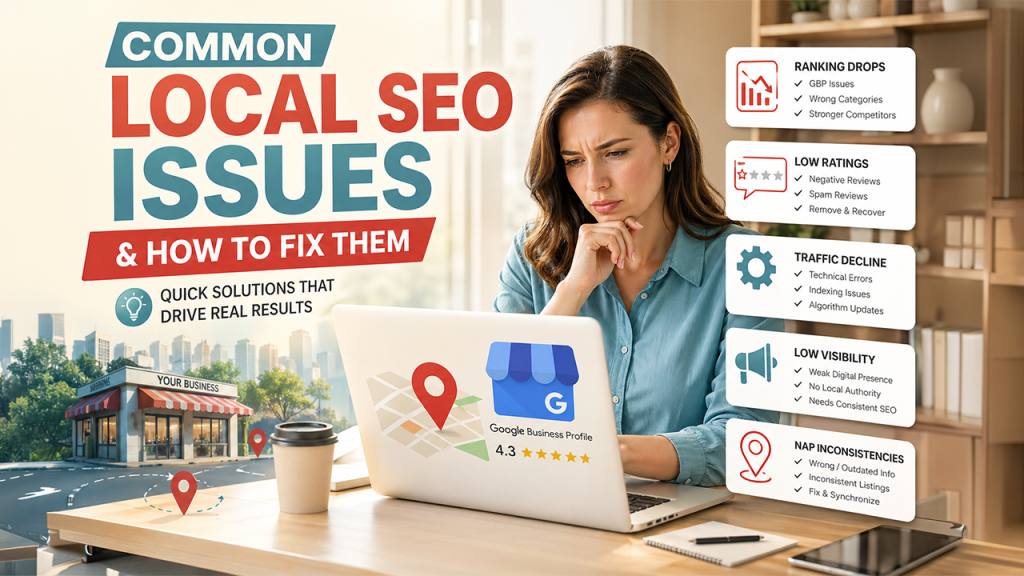
Most local SEO problems fall into predictable patterns. Here is what to watch for and how to actually deal with each one.
Local Ranking Drops from GBP Issues or Competition
Check whether your Google Business Profile is fully compliant with Google's guidelines, your categories are correctly set, and you are not being filtered out by a more authoritative nearby competitor. Listing spam is also a real issue. If competitors are using keyword-stuffed business names or operating ineligible listings, you can report them directly through Google's Business Redressal Complaint Form.
Low Ratings from Negative or Spam Reviews
If customers share genuine complaints, resolve them and improve your customer experience over time. However, if the reviews look like spam, remove them through your Google Business Profile dashboard. You can use the Google Review Tool to check the removal status. Remember that Google is not always obligated to remove them, so focus on consistently earning new positive reviews to gradually balance things out.
Traffic Decline from Technical Issues or Updates
First, check trusted SEO news sources to rule out the possibility of a Google algorithm update. Then move to Google Search Console to check for crawl errors, mobile usability issues, or indexing problems that could be the cause for declining traffic or rankings.
Low Visibility from Weak Digital Presence
Local brands suffer from a lack of authority simply because they have not yet invested in developing a digital footprint across their website, local business listings, reviews, social profiles, and third-party publications. The fix requires consistent, long-term investment in local SEO, content, and PR to build the kind of authority that earns and holds visibility.
Ranking Issues from NAP Inconsistencies
When listings are not managed, they develop data inaccuracies over time like incorrect phone numbers, outdated addresses, or missing fields. Go through each directory manually and correct the information or use a listing management tool to push accurate data across platforms at scale.
Advanced Local SEO Techniques to Improve Local Rankings
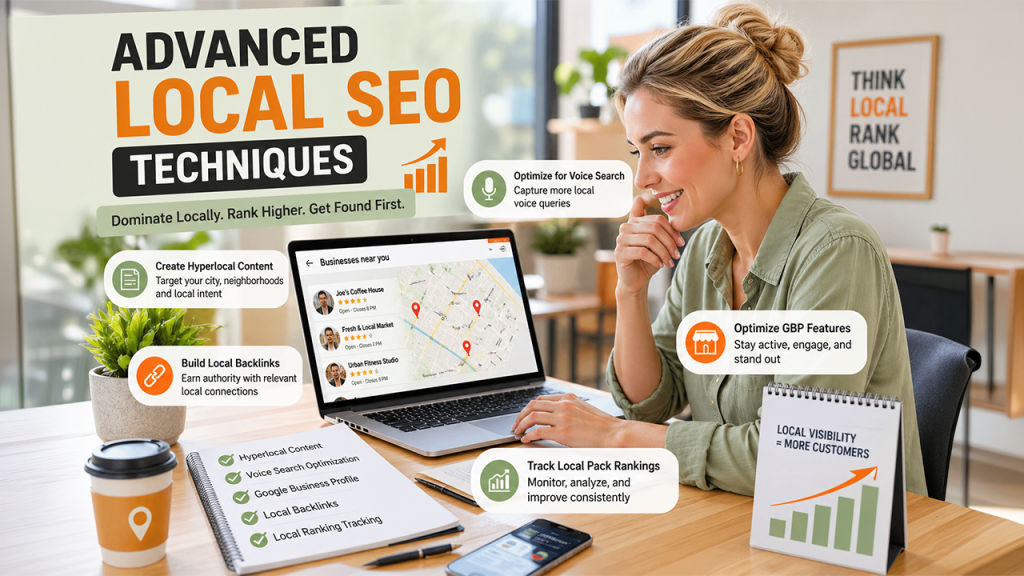
Once you make the foundations strong, these strategies help you move from competitive to dominant.
Create Hyperlocal Content (City & Area-Based SEO): Create blog posts, landing pages, or guides that speak directly to your city, neighborhood, or local community. Content that references local landmarks, events, or issues performs well because it matches how people in your area actually search.
Optimize for Voice Search (Local Query Optimization): Voice queries are easier, longer, and more conversational. Include question-based phrases like "who offers" or "where can I find" throughout your content to capture this growing segment of local search traffic.
Optimize Google Business Profile Features: Most businesses post once and forget it. Use GBP posts regularly, enable messaging, list your full product and service catalog, and make sure to respond to questions in the Q&A section. Google rewards active, engaged profiles with better visibility.
Build Local Backlinks (Authority & Relevance Signals): Sponsor local events, partner with nearby complementary businesses, or contribute expert commentary to local news outlets. Each local backlink you earn strengthens your geographic relevance in Google's eyes. Having the best link building tools in place makes this process significantly more manageable.
Track Local Pack Rankings (Tools & Performance Monitoring): Use tools like BrightLocal or Local Falcon to track where you rank in the local 3-pack across different locations within your service area. Rankings vary by location, and knowing where you are weak helps you target your efforts precisely. Businesses operating across multiple locations will find that franchise SEO requires its own dedicated local strategy for each branch.
Conclusion
A local SEO audit is where strategy drives the result. It eliminates the guesswork and shows you whether your business is performing well or not when a nearby customer is actively searching for what you offer. Those businesses that audit regularly, fix issues consistently, and optimize their website intelligently are the ones that earn the top local position in local search and hold it for a long time.
Do not wait for your rankings to drop before you pay attention. Build the audit into your regular marketing rhythm and treat it as the strategic discipline it truly is.

.png)
.png)