




.png)
.png)
There is over 1,000+ CRM tools on the market right now. This number isn’t empowering, it’s exhausting. And yet, 43% of businesses still end up switching CRMs within two years of choosing one. It's not because tools are bad, but because they picked the wrong one for how their team actually sells. This guide filters out the top 17 CRM software examples that can work across different company sizes, use cases, and price points.
This isn’t a ranked list of the “best” CRM software. It's a practical guide to 17 real CRM tools, matched to real sales situations. Whether you’re a 5-person startup or a 150-person sales organization, the right solution lies somewhere in this list.
What is CRM Software?
Customer Relationship Management or CRM software is essentially designed to manage every interaction that your business has with customers and prospects. It stores customer contact data, captures leads, tracks deal progress, and automates repetitive tasks such as follow-ups and customer service. Additionally, it gives your entire team visibility into where every deal stands at any given moment.
Modern CRM platforms go well beyond simple contact lists. They connect your sales pipelines, marketing efforts, and customer service functions so that nothing slips through the cracks. When a prospect visits your website or opens your email, CRM logs it automatically. Simply put, a good CRM turns chaotic customer data into a structured, actionable process that helps businesses close more deals and build lasting relationships.
Top 17 CRM Software Examples for Businesses in 2026
Explore 17 practical CRM software examples designed to fit different business sizes, sales processes, and growth stages.
1. GuestpostCRM
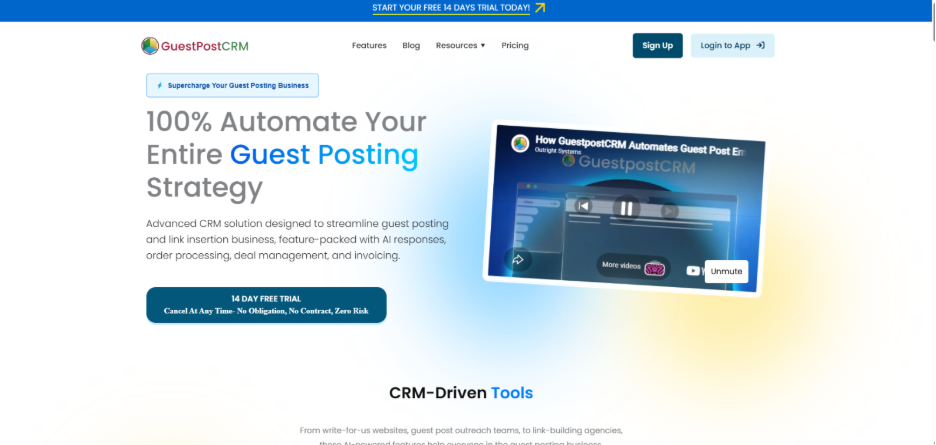
GuestPost CRM is purpose-built for SEO agencies and link-building teams, automating guest post workflows from prospecting to invoice generation. Rather than forcing a generic CRM to handle SEO operations, it is designed from the ground up for the way link builders and content teams actually work.
Best for: SEO agencies, freelance link builders, and digital marketing teams managing guest post outreach and order pipelines at scale.
Key Features:
- Automated order and task management with predefined order templates
- Link tracking and management across all active campaigns
- AI-generated personalized responses and AI-powered campaign summaries
- SEO summary and blacklist status checks are built directly into the workflow
- Client details and full history accessible at a glance
- Customizable workflows that adapt to team-specific processes
- Custom deals alongside transparent financial management with integrated invoice generation
- Automates repetitive admin tasks to reduce manual overhead
- Secure data storage for client and campaign records
Pricing:
- Free Trial: 500 credits/month, basic email scanning, standard support
- Pay As You Go: $5 for 250 credits
- Bulk Plan: $20 for 1,200 credits
- Enterprise Plan: Custom pricing
2. HubSpot CRM
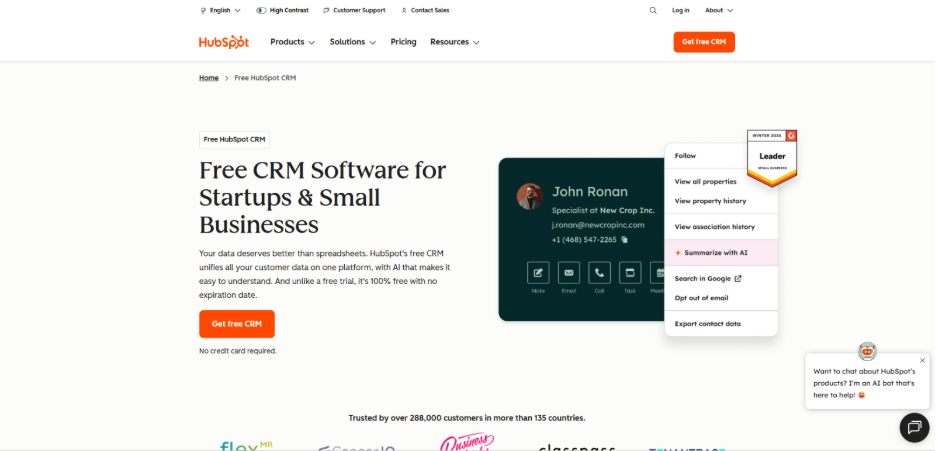
HubSpot remains one of the most accessible entry points into CRM, largely because its free tier is genuinely functional rather than artificially limited. You get unlimited users, contact management, deal pipelines, email tracking, and a meeting scheduler at zero cost.
Best for: Teams of 5–100 who want a growth path from CRM into marketing automation without switching platforms.
Key Features:
- Unlimited users and up to 1 million contacts on the free tier
- Contact and company management with activity timelines
- Visual deal pipeline with drag-and-drop stage movement
- Email tracking with open and click notifications
- Meeting scheduler that embeds directly into emails
- Live chat and basic chatbot builder for website visitors
- Integration with Gmail and Outlook (two-way sync)
Pricing:
- Free tier offers unlimited users, core CRM features
- Starter: $15/user/month
- Professional: $90/user/month
- Enterprise: $150/user/month
3. Salesforce
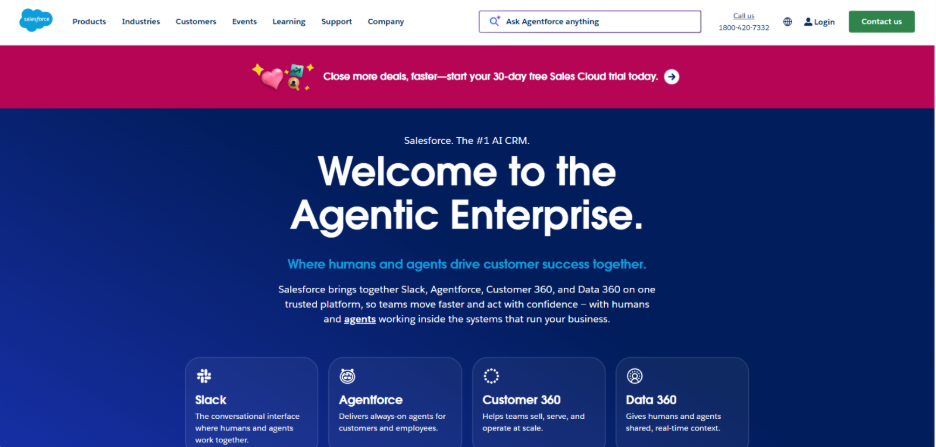
Salesforce is the most customizable CRM on the planet. That power comes with real complexity and cost, but for large organizations with dedicated admins, it's unmatched. It is the category-defining enterprise CRM. Salesforce can model virtually any sales process, connect to thousands of tools, and generate analytics that satisfy even the most demanding executives.
Best for: organizations with 100+ employees who have dedicated CRM administrators and complex pipeline structures.
Key Features:
- Contact, account, and opportunity management with unlimited custom fields
- Visual pipeline with configurable stages and forecasting
- Einstein AI for predictive lead scoring and opportunity insights
- Territory management with complex assignment rules
- Workflow automation through Flow and Process Builder
- AppExchange marketplace with 5,000+ third-party integrations
- Advanced reporting, custom dashboards, and role-based permissions
- Mobile app with offline capability
- API access for custom development and integrations
Pricing:
- Starter Suite at $25/user/month
- Professional at $75/user/month
- Enterprise starts at $150/user/month
- Unlimited plan at $300/user/month
4. Pipedrive
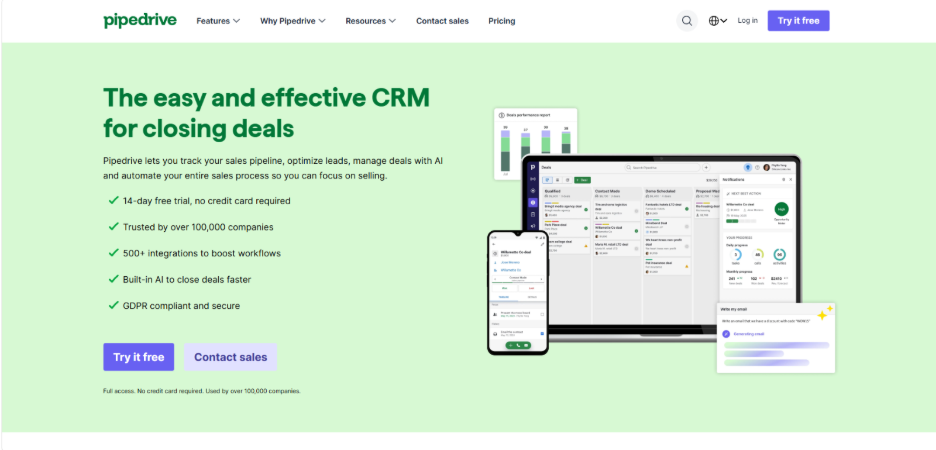
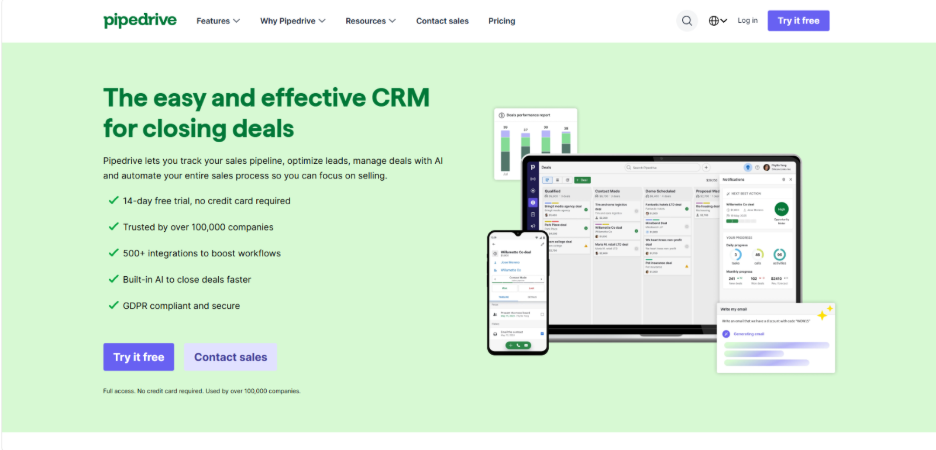
Pipedrive was designed around one philosophy: salespeople should spend time selling, not managing software. Every feature reflects that. It doesn't try to be a marketing platform, and that restraint is its strength. Reps adopt it fast; managers get visibility without chasing updates.
Best for: sales teams of 5–50 who want pipeline discipline without enterprise complexity.
Key Features:
- Visual Kanban pipeline with drag-and-drop deal management
- Activity-based selling with tasks tied directly to deals
- Email integration with two-way sync, templates, and tracking
- Smart contact data that auto-fills information from emails
- Sales automation with workflow recipes triggered by stage changes
- Goals and performance tracking at the rep and team level
- Mobile apps with full offline functionality
Pricing:
- Essential: $14/user/month
- Advanced: $29/user/month
- Professional: $59/user/month
- Enterprise: $99/user/month
5. OutRight CRM
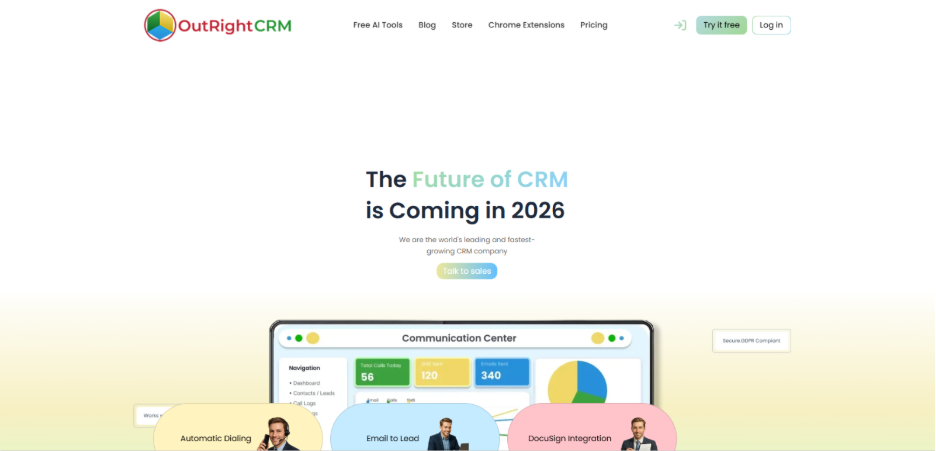
OutRight CRM is built to centralize and automate business operations through cloud optimization, with a focus on enhancing customer relationships. It bundles AI-powered tools with omni-channel communication and deep customization, making it a practical alternative to more expensive enterprise platforms for growing teams.
Best for: Small and medium-sized businesses that want AI-driven automation and communication tools without the complexity or cost of enterprise CRMs.
Key Features:
- AI-powered sales automation with streamlined pipeline management
- Contact and account management with full activity visibility
- Omni-channel communication combining email, calls, and messaging
- Automatic dialer with built-in call management
- Email archiver and extraction for marketing workflows, with full support as a CRM for Gmail users managing outreach directly from their inbox
- DocuSign integration for in-platform document signing
- Custom video meetings without third-party tools
- Universal API integration for connecting existing business tools
- Fully customizable workflows and modules
- Cloud-based architecture built to scale with team growth
Pricing:
- Standard: $82/month
- Advanced Plan: $119/month
- Premium Plan: $189/month
6. Zoho CRM
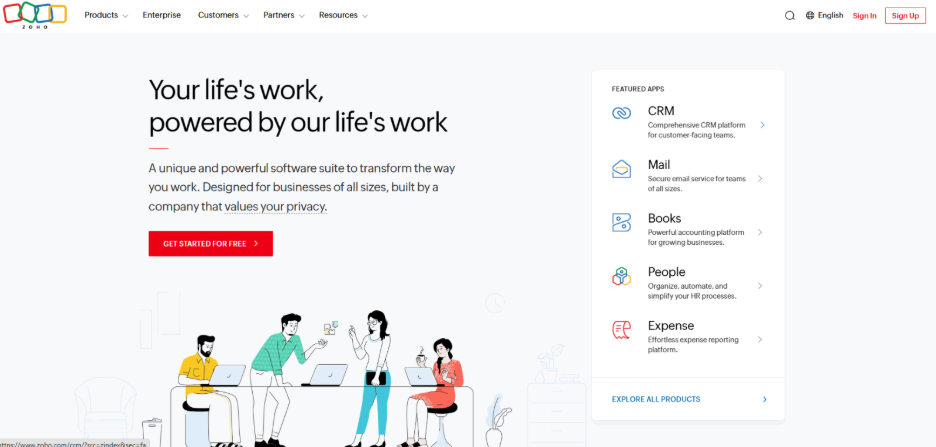
Zoho quietly delivers one of the best value propositions in the CRM market. Enterprise-level features at prices that make larger competitors uncomfortable. It also connects seamlessly with Zoho's broader suite of 45+ business apps.
Best for: sales team consisting of 5-50 reps looking for visual pipeline management without enterprise complexity or marketing features.
Key Features:
- Multichannel tracking across email, phone, live chat, and social media
- Sales process builder with stage-specific automation and field validation
- Territory management with automatic lead assignment rules
- Advanced analytics with custom dashboards and scheduled reports
- Workflow automation with multi-condition logic
- Mobile app with offline access and business card scanner
- Integration with the full Zoho suite (Books, Projects, Desk, Campaigns)
Pricing:
- Free up to 3 users, basic features
- Standard plan at $14/user/month
- Professional plan starts at $23/user/month
- Enterprise at $40/user/month
- Ultimate at $52/user/month
7. Microsoft Dynamics 365
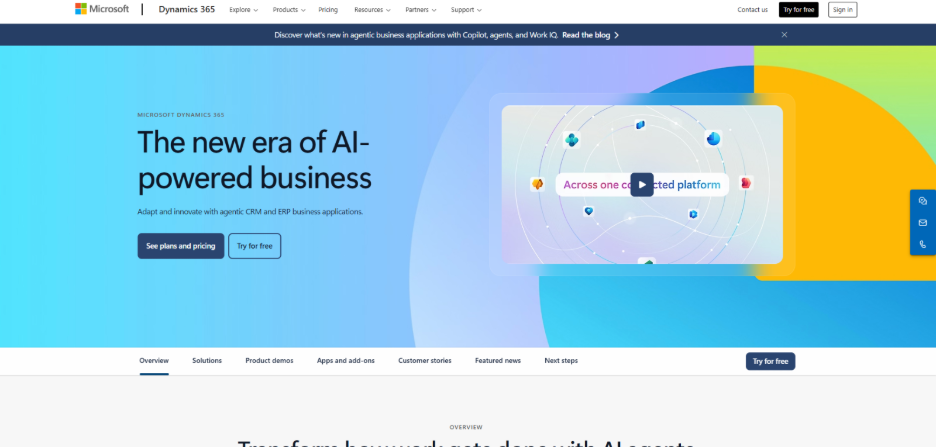
If your organization runs on Microsoft, such as Office 365, Teams, Azure, Power BI; Dynamics is the natural CRM extension. It pulls everything into a unified business platform, with deep LinkedIn Sales Navigator integration and AI-driven next-best-action recommendations.
Best for: enterprises (200+ employees) already committed to the Microsoft ecosystem.
Key Features:
- Unified customer view combining sales, service, and finance data
- Relationship analytics mapping stakeholder influence within accounts
- LinkedIn Sales Navigator integration surfacing prospect insights in CRM
- Power Platform integration for building custom apps and automating workflows
- AI-driven next-best-action and pipeline health recommendations
- Industry-specific modules for financial services, healthcare, and manufacturing
- Role-based security with enterprise compliance certifications
- Custom entity creation without traditional software development
Pricing:
- Sales Professional at $65/user/month
- Sales Enterprise at $95/user/month
- Sales Premium at $135/user/month
- Microsoft Relationship Sales at $162/user/month
8. Freshworks CRM (Freshsales)
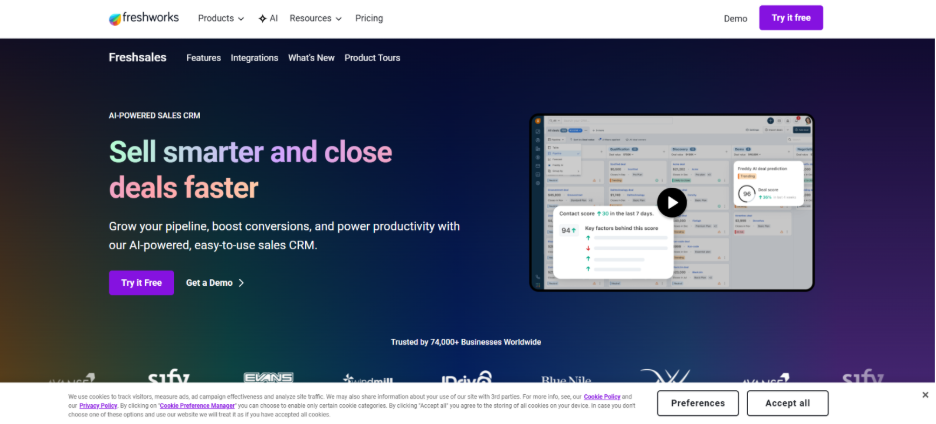
Freshworks carved out a smart niche by bundling a built-in phone system with modern CRM features at mid-market pricing. No separate VoIP subscription is needed; reps can click-to-call, record conversations, and drop voicemails directly from the platform.
Best for: teams of 10–100 who need integrated telephony without enterprise price tags.
Key Features:
- Built-in phone system with click-to-call, call recording, and voicemail drops
- Freddy AI for lead scoring, deal insights, and next-action recommendations
- Email sequences with A/B testing and optimal send time suggestions
- Visual sales pipeline with automation rules for stage transitions
- Unified inbox combining email, phone, and chat interactions
- Territory management with automatic lead routing
- Mobile app with offline CRM access
Pricing:
- Free tier offers unlimited users, basic contact, and account management
- Growth: $15/user/month
- Pro: $39/user/month
- Enterprise: $69/user/month
9. Monday.com CRM
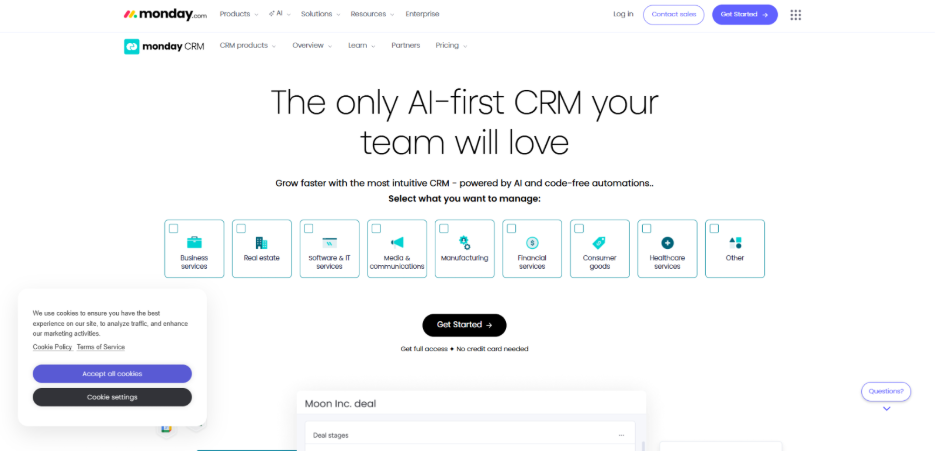
Monday.com didn't start as a CRM, and that context actually explains why it appeals to teams that found traditional CRMs too rigid. The board-based interface is visually intuitive and endlessly customizable; you can reshape it to mirror almost any sales process.
Best for: teams already using Monday for operations who want CRM built into the same visual workspace.
Key Features:
- Fully customizable boards with unlimited field types and pipeline stages
- Multiple views: Kanban, timeline, chart, calendar, and map
- 200+ pre-built workflow automations with custom logic options
- Email integration with Gmail and Outlook two-way sync
- Lead capture forms that embed directly on websites
- Activity timeline showing every customer touchpoint
- Collaboration features, including mentions, file attachments, and update threads
- Mobile app for iOS and Android
Pricing:
- Basic CRM starts at $12/user/month (3-user minimum)
- Standard plan starts at $17/user/month
- Pro plan starts at $28/user/month
- Enterprise: Custom pricing
10. Zendesk Sell
Zendesk Sell was built for companies where sales and customer support are deeply intertwined. When a prospect becomes a customer, their entire interaction history, tickets, sales emails, calls live in one unified profile.
Best for: B2B companies of 25–200 employees where post-sale support directly affects retention and expansion revenue.
Key Features:
- Unified customer profile combining sales pipeline data and support ticket history
- Visual sales pipeline with deal progression tracking
- Built-in calling and SMS with automatic activity logging
- Email integration with tracking, templates, and sequences
- Lead scoring and enrichment with automatic data population
- Forecasting with rep-level and team-level quota tracking
- Mobile app with offline mode and location check-ins
Pricing:
- Sell Team: $19/user/month
- Sell Growth: $55/user/month
- Sell Professional: $115/user/month
- Sell Enterprise: $169/user/month
11. Copper CRM
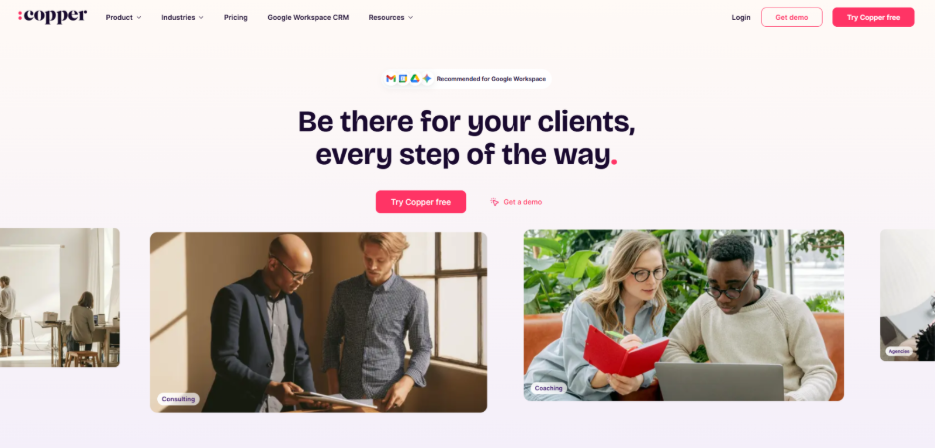
Copper's entire identity is built around one idea: the CRM should live inside Gmail, not alongside it. Contact records, pipeline stages, and deal notes appear as a sidebar while you're reading and writing emails.
Best for: Google-native businesses of 5–75 people.
Key Features:
- Gmail sidebar showing full contact and company records while reading emails
- Automatic contact and company creation from Gmail threads
- Pipeline management with customizable stages directly within the Gmail interface
- Chrome extension displaying CRM data on LinkedIn profiles
- Google Calendar syncs with automatic activity logging
- Google Drive file attachment to CRM records
- Mobile app with Google account sync
Pricing:
- Basic starts at $23/user/month
- Professional plan starts at $59/user/month
- Business at $99/user/month
12. Insightly
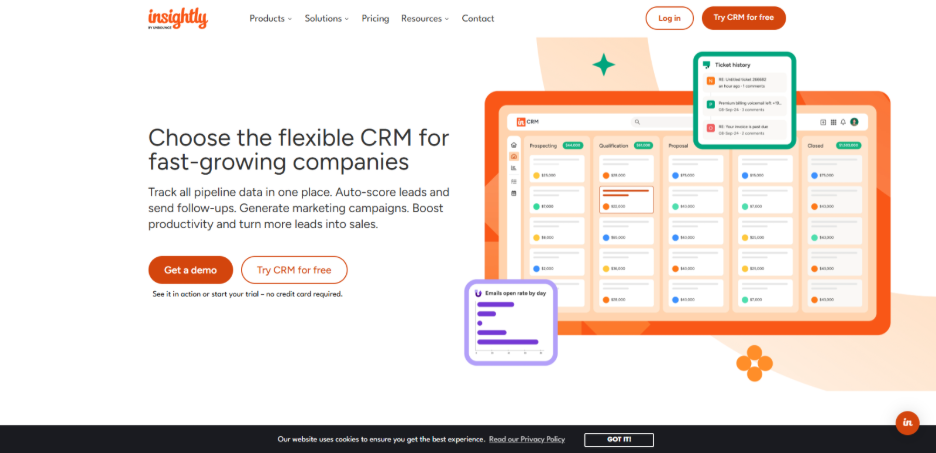
Most CRMs treat the deal close as the finish line. Insightly treats it as the starting line for the next phase of the customer relationship. Insightly combines CRM pipeline management with project tracking, so account managers can move seamlessly from "deal won" to "project kicked off" without switching tools.
Best for: service-oriented businesses of 10–100 employees
Key Features:
- Relationship linking connecting contacts, organizations, deals, and projects in one view
- Project management with tasks, milestones, and pipeline stages post-close
- Workflow automation with conditional logic and multi-step sequences
- Mobile app for iOS and Android
Pricing:
- Plus: $29/user/month
- Professional: $49/user/month
- Enterprise: $99/user/month
13. Nimble CRM
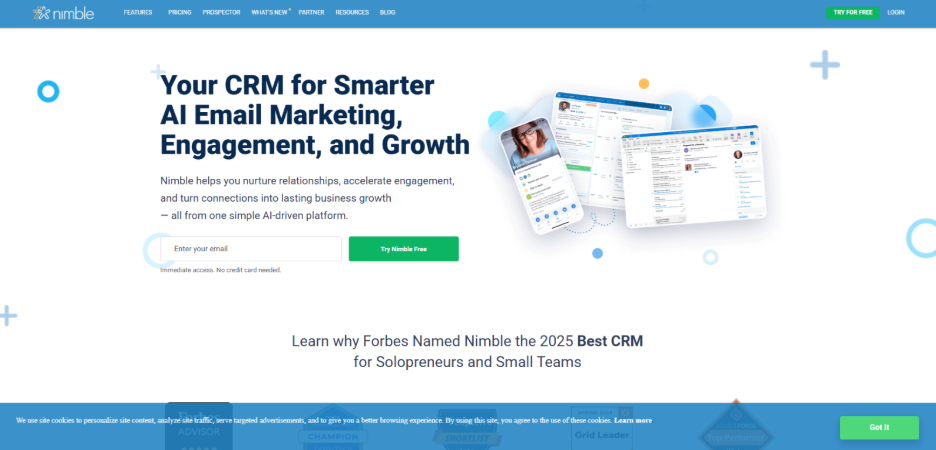
Nimble is the “relationship” CRM. It automatically aggregates contact data from 160+ sources like social profiles, email history, and company databases into rich, unified records. A browser extension surfaces this data anywhere you work on the web, including LinkedIn profiles.
Best for: small sales teams and solo entrepreneurs who prioritize relationship quality over transaction volume.
Key Features:
- Automatic contact enrichment pulling data from 160+ sources, including social profiles
- Nimble Prospector browser extension showing CRM data on any website or LinkedIn profile
- Unified inbox combining email, Twitter, and LinkedIn messages
- Social listening for tracking brand mentions and engagement opportunities
- Visual pipeline management with customizable deal stages
- Group messaging for personalized outreach to segmented contact lists
- Today's page with prioritized action items and relationship follow-up reminders
Pricing:
- Single tier: $24.90/user/month (annual billing)
- Monthly billing: $29.90/user/month
14. Keap (formally Infusionsoft)
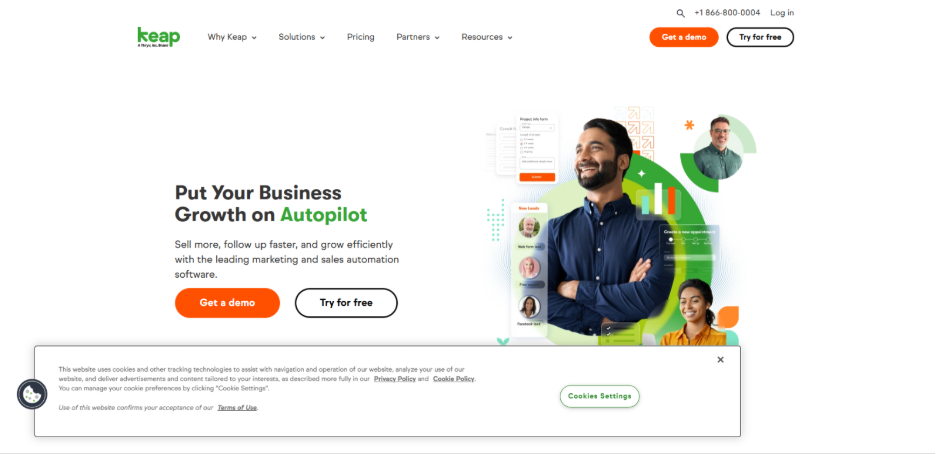
Keap is what happens when marketing automation and CRM get serious about digital product businesses. Coaches, course creators, and online service providers will find a platform that handles complex sales funnels, payment processing, membership sites, and automated nurture sequences under one roof.
Best for: entrepreneurs and small businesses selling online services, courses, or digital products.
Key Features:
- Visual campaign builder with flowchart-style marketing funnel creation
- Marketing automation with tag-based segmentation and behavior-triggered sequences
- E-commerce with payment processing, invoicing, and subscription management
- Landing page and email template builders with A/B testing
- Appointment scheduling embedded in emails or a website
- Lead scoring based on engagement behavior and demographic fit
- Pipeline management with a visual drag-and-drop interface
Pricing:
- Pro at $159/month
- Max at $229/month
- Ultimate: Custom pricing
- Note: Pricing increases incrementally as the contact database grows beyond the included limits
15. Agile CRM
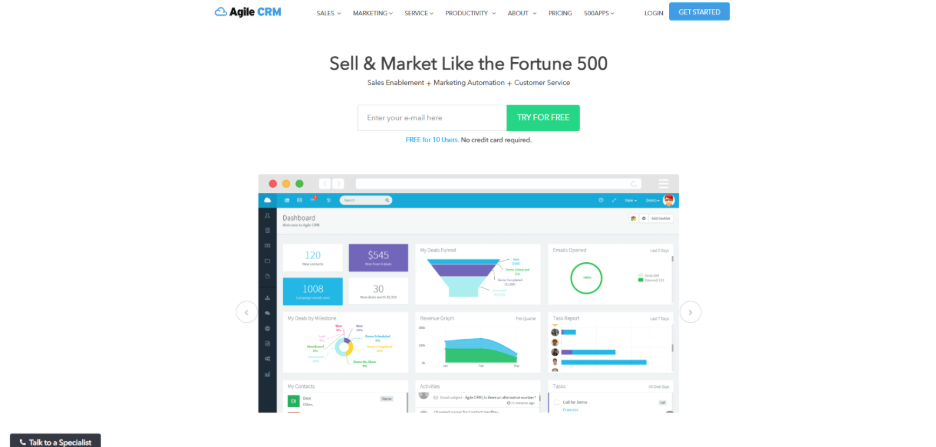
For a startup that needs sales, marketing, and customer support tools but can't afford three separate subscriptions, Agile CRM makes a practical case. It offers sales automation, email marketing, helpdesk ticketing, and telephony on one platform. It is a CRM for small businesses.
Best for: small teams that operate on low budgets and need sales, marketing, and service capabilities.
Key Features:
- Contact management with tagging, lead scoring, and timeline views
- Marketing automation with email campaigns, landing pages, and drip sequences
- Built-in telephony with click-to-call, call recording, and voicemail
- Mobile app for iOS and Android
- Helpdesk ticketing is integrated directly with customer contact records
- Appointment scheduling with calendar availability syncing
- Web analytics tracks visitor behavior and on-site engagement
Pricing:
- Free up to 10 users, 1,000 contacts, core features
- Starter: $8.99/user/month
- Regular: $29.99/user/month
- Enterprise: $47.99/user/month
16. Bitrix24
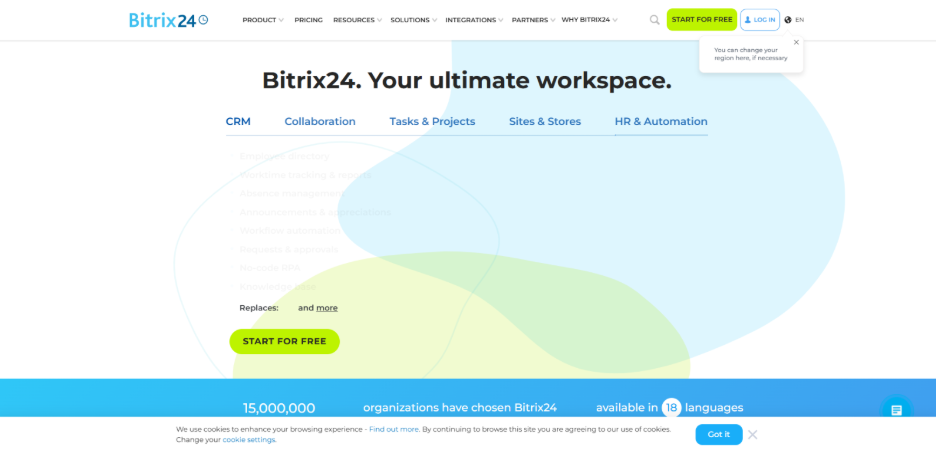
Bitrix24 is essentially a business operating system with a CRM inside it. You get project management, internal messaging, HR tools, telephony, website builder, and a free tier for unlimited users all in one platform.
Best for: small businesses of 10–100 who want all operations consolidated and are willing to trade some CRM sophistication for that consolidation.
Key Features:
- CRM with contact management, deal tracking, invoices, and quotes
- Task and project management with Gantt charts and workload planning
- Internal social network with activity stream and group workspaces
- Built-in telephony with VoIP integration and call center tools
- Website and online store builder included in the platform
- HR tools covering time tracking, vacation planning, and employee directory
- Document management with version control and real-time co-editing
Pricing:
- Free: unlimited users, limited features across all modules
- Basic plan starts at $49/month
- Standard plan starts at $99/month
- Professional plan starts at $199/month
- Enterprise plan starts at $399/month
17. La Growth Machine
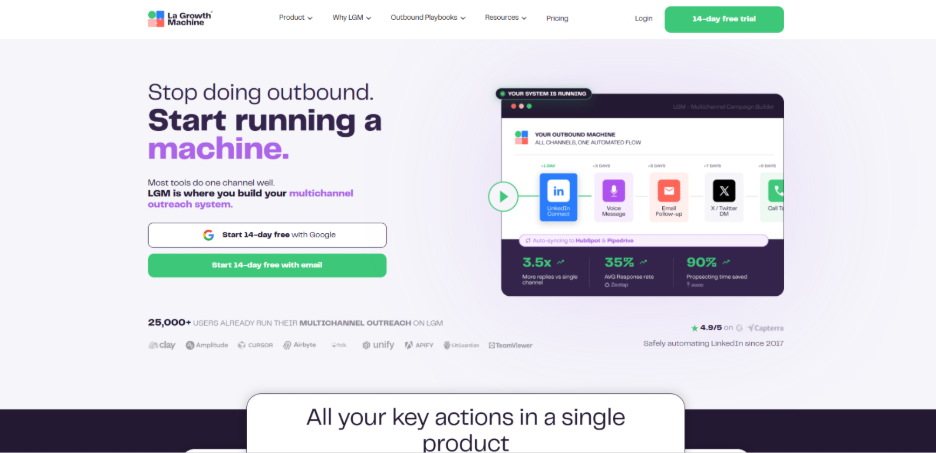
Where traditional platforms store contacts and track leads, La Growth Machine automates the act of reaching those contacts across LinkedIn and email simultaneously from within the same platform.
Best for: B2B sales teams that need CRM contact management integrated with outbound prospecting automation.
Key Features:
- Multi-channel sequences coordinating LinkedIn and email touchpoints in one workflow
- LinkedIn Voice Messages with AI-generated personalized audio
- Native email enrichment to locate professional and personal addresses without using third-party tools
- Company Database with 27M+ companies for account-based targeting
- Social Warming technology that progressively increases LinkedIn activity to avoid restrictions
- Multichannel Inbox unifying LinkedIn and email replies in one view
- Built-in A/B testing for send times, messages, and sequence structures
- Lead scoring based on engagement signals, including profile visits, email opens, and link clicks
- Native integrations with HubSpot and Pipedrive; Salesforce via Zapier
Pricing:
- Basic at $54.50/month per identity
- Pro at $109.00/month per identity
- Ultimate at $163.50/month per identity
- All plans are billed annually; each "identity" corresponds to one sales rep or LinkedIn account
CRM Software Comparison Table: Features & Pricing Compared
Compare these CRM software examples side by side to quickly identify the right fit based on pricing, use case, and key features.
| Enterprises using the Microsoft ecosystem | Starting Price | Best For | Standout Feature |
|---|---|---|---|
| HubSpot CRM | Free | Teams 5-100 scaling into marketing automation | Useful free tier |
| Salesforce | $25/user/month | Large enterprises (100+ employees) | Unlimited customization |
| Pipedrive | $14/user/month | Small sales teams | Visual pipeline visibility |
| OutRight CRM | $82/month | SMB wanting AI-automation | AI-powered sales automation |
| GuestPostCRM | Free: 500 credits/month | SEO agencies & link building teams | Guest post & link insertion automation |
| Zoho CRM | Free (up to 3 users) | Budget-conscious teams (5-50 sales rep) | Enterprise features at SMB pricing |
| Microsoft Dynamics 365 | $65/user/month | Enterprises using Microsoft ecosystem | Deep Microsoft ecosystem integration |
| Freshworks CRM | Free | Teams needing built-in calling | Built-in phone system |
| Monday.com | $12/user/month | Teams using visual workflows | Fully customizable board interface |
| Zendesk Sell | $19/user/month | Sales + support businesses | Unified sales + support view |
| Copper CRM | $23/user/month | Google Workspace users | Lives natively inside Gmail |
| Insightly | $29/user/month | Service-based businesses | CRM + project delivery in one |
| Nimble CRM | $24.90/user/month | Relationship-focused selling | Contact enrichment from 160+ sources |
| Keap | $159/month | Coaches & digital businesses | Marketing automation + e-commerce |
| Agile CRM | Free (up to 10 users) | Startups on tight budget | Sales + marketing + service bundle |
| Bitrix24 | Free | Businesses wanting all-in-one platform | All-in-one business platform |
| La Growth Machine | $54.50/month per identity | B2B outbound sales team | Multi-channel LinkedIn + email sequences |
Final Thoughts: How to Choose the Right CRM Software for Your Business
Here's a truth: the platform you pick matters far less than how consistently your team uses it. A $15/month CRM with high adoption outperforms a $150/month enterprise platform that sales reps ignore. The businesses that get the most from CRM invest in three things beyond the software itself: clean data from day one, a sales process that the CRM reflects rather than fights against, and manager accountability that treats the CRM Strategy as the single source of truth.
From this list of CRM Software Examples, pick the tool that matches where you are right now; not the one that impresses at a demo. Start simple, build habits, and upgrade when you've genuinely outgrown what you have. That's the sequence that works.
FAQs About CRM Software Examples
Q. What are CRM software examples?
CRM software examples include HubSpot, Salesforce, Zoho CRM, and Pipedrive, which help manage customer relationships and sales pipelines.
Q. Which CRM is best for small businesses?
HubSpot CRM, Zoho CRM, and Agile CRM are popular choices for small businesses due to affordability and ease of use.
Q. What features should I look for in a CRM?
Look for contact management, pipeline tracking, automation, reporting, integrations, and ease of use.
Q. Are there free CRM software options available?
Yes, tools like HubSpot CRM and Agile CRM offer free plans with essential features.
Q. How do I choose the right CRM software?
Choose based on your team size, budget, sales process, required features, and scalability needs.


.png)
.png)
.png)
.png)