





.png)
.png)
Domain and subdomain allow users to find your content online. However, they are used in a very different scenario. As a beginner, you might feel confused about these technical terms or know when to use them. There are major differences between domains and subdomains. For instance, a domain is the main address of your website, whereas a subdomain is a dedicated branch within that address. Furthermore, their purposes and structures are different. In this blog, we will understand in detail what domains are and what subdomains are. Then we will outline the key differences between them and explain when to use each.
What Is a Domain?
Each website has a main domain name, i.e., a web address, which is how your visitors locate your content on the internet. Meanwhile, web servers use IP addresses to serve the correct website when requested. However, IP addresses are long strings of numbers that are difficult for humans to remember. How many contact numbers can you remember? 4, 5, 7? Now, imagine having to remember all these IP addresses to visit a website when you need to.
To spare humans the pain of remembering these IP addresses, the Domain Name System (DNS) maps them to usernames that are easier to remember. So, when you visit a website, the URL (Uniform Resource Locator) displayed in the address bar is the root domain of the site (See the screenshots).
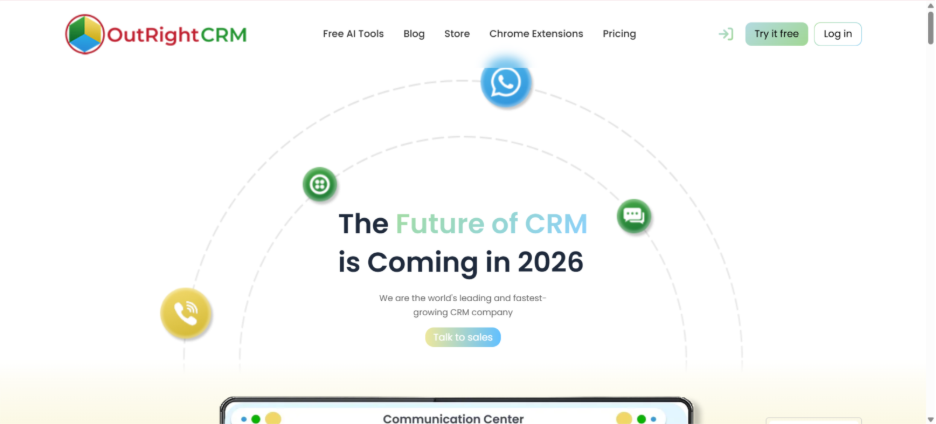
Often, the room domain comes with a prefix (www), which means World Wide Web. And it ends with a domain extension like .org, .com, .in, .ae, etc. Here, our domain is guestpostcrm.com.
A few notable domains that you might be familiar with already are as follows:
- https://www.guestpostcrm.com/
- www.semrush.com
- www.ahrefs.com
- www.outrightsystems.org
- www.outrightcrm.com
- Wordpress.org
The main domain can also be called the root domain since all subdomains are branches of your primary domain.
What is a Subdomain?
As explained above, a subdomain is a branch within that root domain and is generally separated from your core content. You can also understand it like this: The root domain is the parent domain, and the subdomain is the child domain.
Subdomains can clearly organize and structure your content, which gives simple navigation for visitors. Furthermore, subdomains can also allow search engines to better understand and index your website structure.
Most websites utilize a subdomain when they want to generate specific types of content that are not relevant to the core website. A subdomain presents a simple way to do this without creating a new website.
For instance, if you want to sell products in a particular section of your website, you can use a subdomain such as “store.yourdomain.com.” An example of this is the store.outrightcrm.com, which is the subdomain of outrightcrm.com.
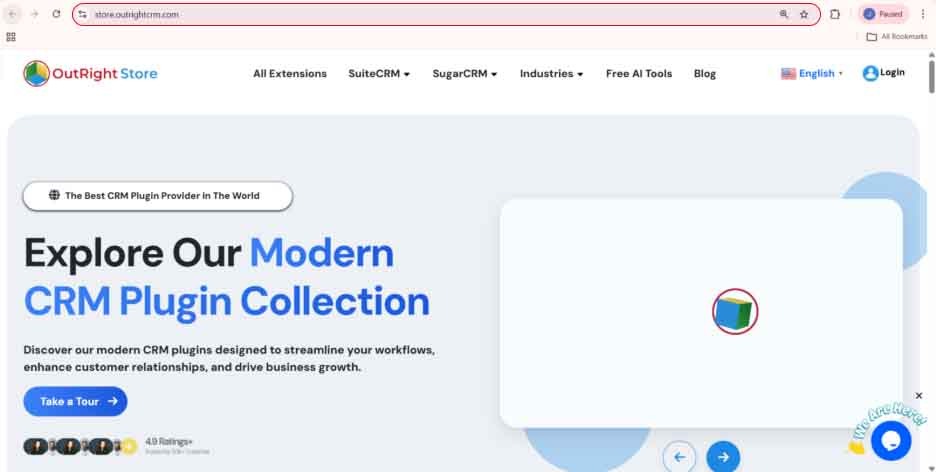
Furthermore, there can be other application areas of sub-domains. For example, if you create a staging website to run updates or test new platforms, you will generally access this via a subdomain such as “staging.yourdomain.com.” For example, there is a subdomain called trynow.outrightcrm.com, which we use to test new extensions or updates.

Domain Vs Subdomain: 6 Main Differences
Now, you know something about every type of domain. So, let us take a deeper look at some of the main differences between a domain and a subdomain.
- Structure: The root domain comprises the domain name as well as the domain extension, so it looks like “yourdomain.com.” However, a domain can contain an extra part to indicate what sort of content it represents.
- Purpose: You will require a domain for your website. However, you can establish new subdomains for particular purposes such as e-commerce stores, company blogs, or customer support pages.
- Search Engine Optimization (SEO): Subdomains are always referred to as new domains from the perspective of SEO. However, they can benefit from the domain authority of the root domain. Furthermore, you can ensure linking between both domains to enhance search engine rankings.
- Branding: The root domain operates as the face of your website and is instantly recognizable to visitors. The subdomain caters to a specific purpose. However, there are cases where subdomains are broadly recognized (especially subdomains specific to a location).
- Monitoring: You can monitor your root domain to gain insights about your website domain and traffic. However, you need to establish separate analytics for every new subdomain.
- Security: To ensure that the data remains secure on new websites, you can proceed to install an individual SSL certificate for every subdomain of your main website (unless you utilize a wildcard certificate).
It is significant to keep note that specific factors such as SSL certificates and domain tracking might vary as per your analytics software and web host. If you are constantly facing low traffic, it is advisable to redesign your website from the perspective of SEO and ensure proper structure in your domain and subdomain.
When to Utilize Domains and Subdomains?

Each website needs a domain name so that servers can show your content whenever a user requests a page. Domains are also an intrinsic facet of branding.
Furthermore, they render a quick way to set up trust and credibility with visitors (specifically if you utilize recognizable extensions such as .net or .com). In addition, you can execute keywords within your main address. This is much simpler than producing a separate website.
There are numerous situations when it makes sense to set up a unique URL that will align with your main address. The common use cases of a subdomain are as follows:
- Create a blog domain for your business website.
- Create a forum space to engage your online community.
- Create a resource center or a dedicated customer support pool.
- Create a digital store to sell services or products.
- Redesigning a website in a private staging environment.
- Create a clear distinction between your mobile website and main website.
- Target particular keywords with your subdomain.
- A large website would benefit from distinct subdomains for diverse locations.
SEO Impact of Domain vs. Subdomain

Let us see the SEO impact of the domain vs. the subdomain and which one is right for your requirements:
Crawlability and Indexation:
Google’s crawlers generally revisit root domains about twice as much as subdomains. For SMEs with less than 5,000 URLs, wasting a crawl budget on individual properties can delay slow new-page discovery and indexation.
Authority and Link Equity:
Subdomains are generally separate from their parent domain in high authority flows. In fact, there is a drop in organic traffic when blogs are separated on subdomains versus folders. If your growth strategy is on each backlink, ensure that it is closely related to the content on the main domain.
Signaling Content Relevance:
Creating multiple pages on a particular topic (or having a separate subdomain) boosts your topic authority. Subdomains still have a place for having niche or support content that can maximize your expertise range.
Email Deliverability and Marketing:
There are key challenges in email marketing that generally revolve around the reputation of the sender. Since all mail coming from the root domain depends on a single domain authority, a downgrade in bounce rate can hurt each campaign.
Also Read: https://www.guestpostcrm.com/blog/guest-posting-websites/
Domain Vs Subdomain: What to Choose?
Selecting a domain vs. a subdomain depends on numerous factors, including your marketing or business goals and your technical needs. Here are a few considerations that can help you with your decision-making process:
- Content Separation: If your business strategy caters to a wide assortment of services and products, like cooperation with diverse domains, subdomains can delineate every section clearly while saving expenses. This strategy can be helpful, specifically when you are targeting diverse audience markets or segments.
- Brand Cohesion: If uniform branding is vital, ensuring a cohesive user experience across a single domain is suggested. The choice greatly depends on brand recall and boosts the overall presence of your brand.
- Flexibility and Finance: For startups and small companies that remain cautious of financial outlays, subdomains remain flexible to improve your digital presence without the instant expense of getting numerous domains. This enables sustainable growth while ascertaining the consistency of brands.
- Strategy: When you are emphasizing search engine optimization (SEO), utilizing a concise domain name with relevant keywords can enhance your credibility and visibility in search results. Subdomains are often treated as separate entities by search engines. It can also target niche keywords, improving rankings for particular content.
Conclusion
Selecting between a domain and a subdomain hinges on the structure, goals, and SEO strategy of your website. A root domain develops brand authority and centralizes link equity, while subdomains provide organized separation of content without launching a completely new website. For the majority of small businesses, ensuring that your content remains within the main domain boosts your rankings. However, subdomains cater to regional targeting, staging ecosystems, or different product sections. Assess the requirements of content, budget, and lasting growth before choosing.
Also Read:



.png)
.png)