





.png)
.png)
Search engines give visibility to those websites that earn their trust through ethical practices. And this trust is measured in terms of one quality backlink at a time. For organizations focusing on lasting visibility, white hat link building emerges as the most reliable and safest path to better rankings. Contrary to shortcuts that can lead to penalties, this approach mainly emphasizes relevant content, real value, and genuine relationships with other websites. In this blog, let us focus on what the practice really means and understand practical techniques that provide support to sustainable SEO growth.
What Is White Hat Link Building?
White hat link building is the technique to earn backlinks via transparent, ethical, and search-engine-friendly methods. Instead of artificially manipulating rankings, it emphasizes genuine outreach, quality content, and relevance.
So, what is white hat link building in straightforward terms? It is the overall practice of getting other reputable websites to connect back to your content since it adds value to their audience genuinely. This is quite the opposite of black hat tactics like buying links, spamming comment sections or private blog networks.
Main features of white hat SEO link building are as follows:
- Links placed naturally in the helpful and research-driven content.
- Outreach as per the genuine relevance, not mass emailing.
- Complete compliance with search engine guidelines.
- A better focus with lasting authority instead of quick wins.
Why White Hat SEO Link Building Matters for Sustainable Growth?
Search engines consistently fine-tune how they assess backlinks, and websites depend on manipulative tactics generally see sharp drops in ranking after major updates in algorithms. A well-structured SEO framework allows businesses to establish a backlink profile that serves them for long and withstand such changes instead of collapsing after one Google update overnight.
This has become even more significant after the events such as Google May 2026 Core Update, which reinforced the significance of user-first, authentic, and genuine link signals. Websites that had invested in white hat SEO practices already were in a better position to maintain their rankings, while those who had leveraged manipulative link schemes faced great setbacks.
A few clear advantages of being within the white hat boundaries are as follows:
- Minimized risk of algorithmic devaluation or penalties.
- Better domain credibility over time.
- More effective alignment with evolving expectations of search engines.
- Lasting stability of traffic instead of short-lived spikes.
Best White Hat Link Building Techniques for Sustainable SEO
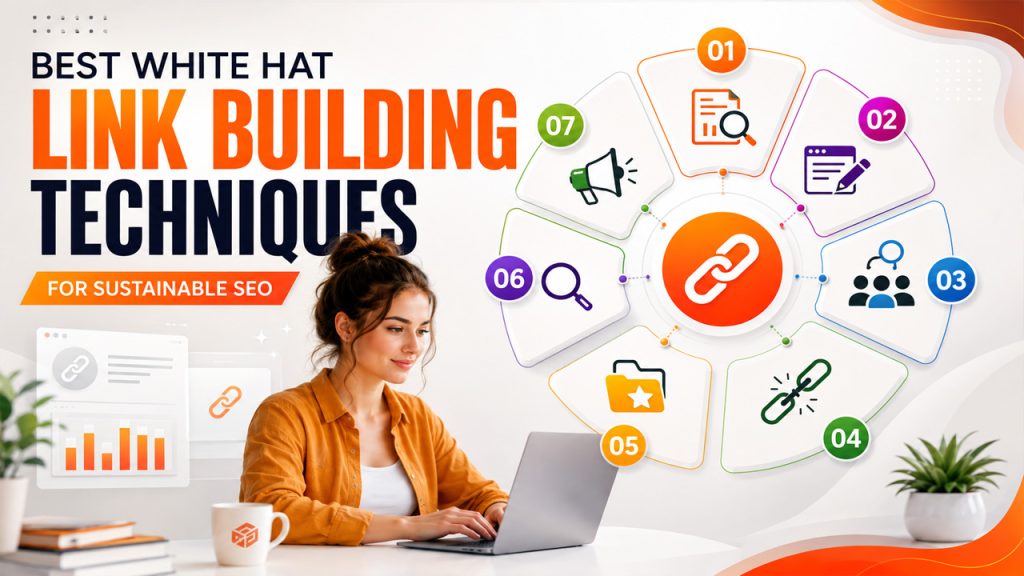
Earning backlinks in the right way takes a lot of patience. However, the results last longer than shortcuts. Here are a few effective techniques that provide support to white hat link building without affecting the integrity of the website.
1. Create Authentic, Research-based, and Helpful Content: Detailed guide, original research, and data-driven articles attract links naturally since other websites want to reference reliable sources.
2. Pursue Relevant Opportunities in Guest Posting: Contributing articles that are well-researched to topic-relevant and reputable websites is still an effective white hat SEO link building method. As a website, if you consistently receive emails on link insertion and guest posts and do not want to miss out on content partnership opportunities, this is where a Link Building Guest Post CRM becomes helpful for monitoring follow-ups, tracking pitches, and published placements in a single place.
3. Establish Relationships Through Digital PR: Connecting with bloggers, journalists, and industry publications creates visibility and coverage. This also gives you an opportunity to place organic backlinks, which boosts your SEO position especially if you are connecting with reliable news outlets and influencers.
4. Offer to Fix Broken Links on Authoritative Websites: Recognizing broken links on authoritative websites and suggesting your content as a replacement is a high-value and low-risk tactic.
5. Utilize Directories and Resource Pages: Getting listed on industry-specific and curated resource pages adds relevant and credible backlinks without affecting search engine guidelines.
6. Adjust Content for How People Really Search for It: As search behavior evolves across conventional search, AI-driven answers as well as voice queries, understanding GEO vs SEO vs AEO aids in shaping content that aids in earning links and visibility across numerous discovery channels, not just classic results.
7. Reclaim Brand Mentions That Are Unlinked: If a website suggests your brand without connecting to it, a polite outreach request can generally convert that mention into a quality backlink.
What Are the Core Mistakes You Can Avoid?
Even if your link-building efforts are well-intentioned, they can go wrong. A few common pitfalls are listed as follows:
- Paying too much attention on the number of backlinks instead of backlinks quality.
- Leveraging mass and generic outreach templates.
- Ignoring diversity in anchor text, which can make your links appear unnatural.
- Overlooking the overall requirement to keep track and audit health of your backlinks on a consistent basis.
Conclusion
White hat link building is not a fast solution. However, it remains one of the most dependable ways to set up lasting search visibility. By focusing on genuine outreach, valuable content, and ethical practices, businesses can enhance their backlink profile without facing any penalty risk. As search algorithms evolve consistently, investment in white hat SEO establishes the groundwork for consistent and sustainable rankings in the future.


.png)
.png)