




.png)
.png)
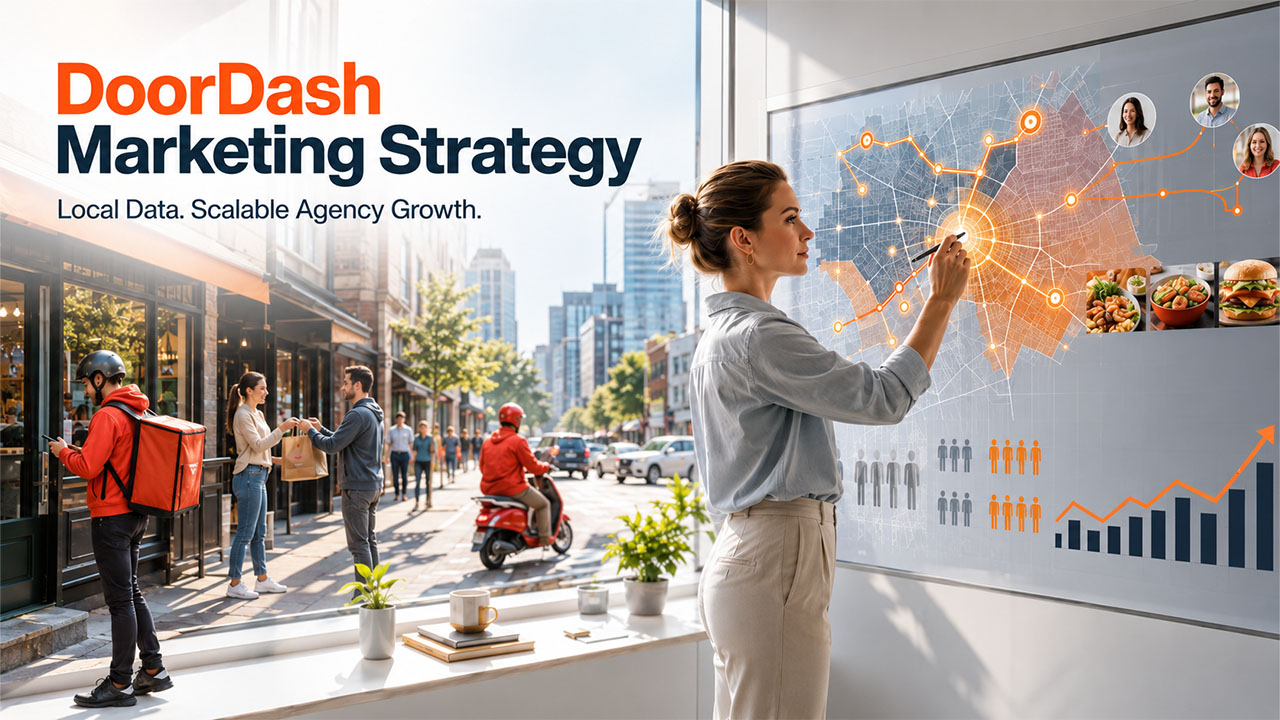
In this case study, we will explore the marketing strategy of DoorDash, along with exploring the tactics behind the rapid expansion of the platform and also uncover the actionable lessons that an agency can apply to clients.
DoorDash is among the world's leading on-demand delivery platforms, which transform the way consumers connect with local businesses through technology. The growth of the platform extends beyond food delivery, which drives a well-designed business model and marketing strategy, prioritizing personalization and data-driven decision-making. For marketing agencies, DoorDash also serves as a valuable case study to build scalable campaigns, which help in driving customer acquisition, retention, and long-term brand loyalty.
Understanding the Business Model of DoorDash
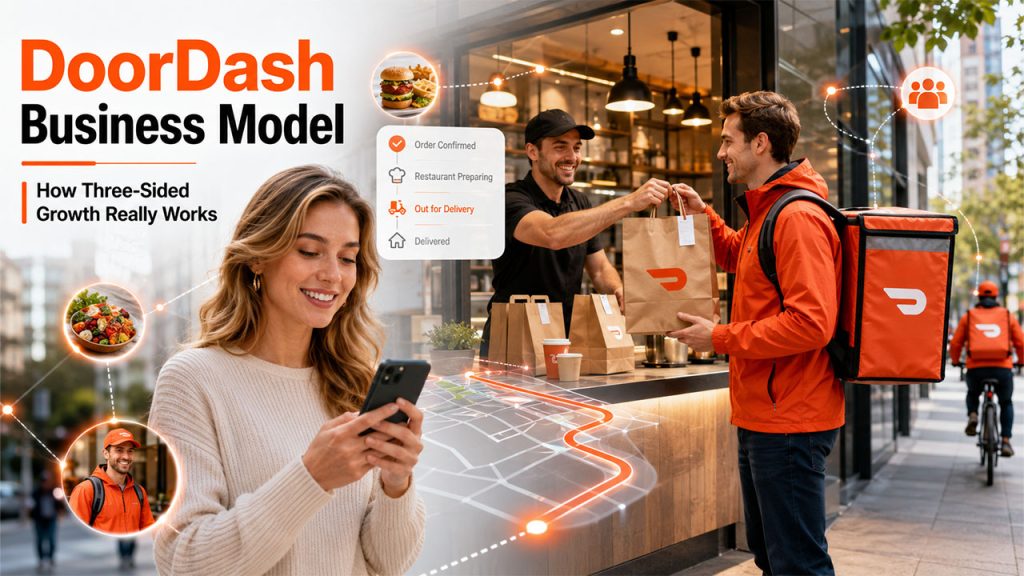
DoorDash is among the leading on-demand delivery platforms that connect consumers with local restaurants, convenience shops, and grocery stores. DoorDash operates as a three-sided marketplace platform that connects customers, restaurants, and delivery partners through technology. The platform does not just deliver meals, but it creates an ecosystem in which each participant benefits from the platform.
The business model of DoorDash focuses on increasing the value of all three groups, i.e., customers, restaurants, and delivery partners (Dashers). Through the platform, users can place an order on the DoorDash app, track its preparation, and deliver it in real-time. Similarly, the merchants receive orders through the platform, in which the platform facilitates transactions and handles logistics. Through DoorDash, the delivery partner earns income through flexible delivery opportunities.
Key Component of DoorDash's Business Model
1. Three-Sided Marketplace Model
The core business of DoorDash is based on connecting customers with restaurants and delivery partners. The platform acts as an intermediary that manages key aspects, such as ordering, payment, delivery logistics, and customer experience.
Key Features
- Customer-to-restaurant ordering platform.
- Delivery network powered by independent contractors.
- Technology-driven order management.
- Marketplace ecosystem with multiple stakeholders.
2. Customer Acquisition and Convenience
DoorDash attracts customers by positioning the platform as a convenient solution for food discovery and delivery. The company focuses on reducing friction through an easy-to-use app, personalized recommendations, and promotions.
Key Features
- Mobile-first customer experience.
- Restaurant discovery tools.
- Personalized recommendations.
3. Dasher Delivery Network
The platform features a large number of Dashers (delivery partners), who are independent contractors, completing orders between restaurants and customers. These flexible workforce models allow the platform to scale delivery operations without maintaining a traditional employee-based delivery fleet.
Key Features
- Flexible earning opportunities.
- Large delivery partner network.
- Technology-enabled delivery matching.
- Real-time order tracking.
4. Technology and Data Infrastructure
The platform uses technology as its core. The company uses data analytics, machine learning, and automation to improve delivery efficiency, pricing, customer experience, and recommendations.
Key Features
- AI-driven recommendations.
- Predictive demand analysis.
- Route optimization.
Key DoorDash Marketing Strategy

The marketing strategy of DoorDash is designed to deliver a personalized, localized, and data-driven customer experience, while also balancing the needs of customers, merchants, and delivery partners. The platform combines key elements like audience segmentation, hyperlocal marketing, referral programs, and strategic partnerships to boost customer acquisition, along with improving retention and long-term growth.
Some of the popular DoorDash marketing strategies that agencies can implement into their businesses are as follows:
1. Precision Audience Segmentation Strategy
DoorDash divides its audience based on highly specific customer groups, which are based on key aspects like demographics, location, purchasing behavior, ordering habits, and customer preferences. This segmentation allows the platform to deliver more personalized offers and marketing messages, which resonate with the audience.
Key Features
- Behavioral audience segmentation
- Personalized email and push notification campaigns
- AI-powered product recommendations
- Customer lifecycle marketing
Agency Takeaway
The agencies can also implement audience segmentation using Marketing Agency CRM, website analytics, and purchase history. A centralized CRM helps agencies organize customer information, automate segmentation, and deliver highly personalized campaigns that improve engagement and customer loyalty. This enables personalized campaigns that can achieve higher engagement, better conversion rates, and stronger customer loyalty.
2. Hyperlocal Marketing at Scale
The platform tailors its marketing campaign to specific cities, neighborhoods, and communities. The promotions of DoorDash are designed around local restaurants, events, seasonal trends, and customer preferences, making the messaging more relevant to the local audience.
Key Features
- City-specific advertising campaigns.
- Neighborhood-based promotions.
- Partnerships with local restaurants.
Agency Takeaway
Offering localized campaign benefits to local businesses, rather than generic national messaging. Agencies can use geographic targeting and local insights to create campaigns that feel relevant to each market.
3. Data-Driven Customer Segmentation
The platform analyzes customer data continuously, which includes order history, browsing behavior, preferred cuisines, and purchase frequency, to deliver a personalized experience and recommendations.
Key Features
- Real-time customer analytics
- Personalized restaurant recommendations
- Predictive marketing campaigns
- Customer lifetime value analysis
Agency Takeaway
The agencies should utilize data for every marketing decision. The agencies can improve campaign performance by analyzing customer insights to deliver personalized messaging and create an automated customer journey.
4. Referral Marketing That Fuels Growth
The platform encourages users to invite friends through personalized referral links. Referral creates a win-win scenario that encourages continuous sharing, while also expanding the customer base of DoorDash organically.
Key Features
- Two-sided rewards that benefit both the referrer and the new customer.
- Easy-to-share referral links through the mobile app and email.
- Limited-time promotional bonuses that create urgency.
Agency Takeaway
Agencies can also design referral programs that reward both existing and new customers, rather than just focusing on one side. It also helps in increasing the organic growth of the agency while also reducing dependency on paid campaigns.
5. Strategic Partnerships That Expand Reach
The platform partners with restaurants, grocery stores, retailers, sports organizations, and entertainment brands to increase its visibility. This helps in expanding the service offerings and attracting new customers.
Key Features
- Restaurant partnerships.
- Retail and grocery collaborations.
- Brand co-marketing campaigns.
Agency Takeaway
By identifying complementary businesses with overlapping target audiences and developing campaigns that create mutual value, improve customer trust, and expand market reach.
What Agencies Can Learn from DoorDash Marketing Strategy
The success of DoorDash demonstrated that suitable growth comes from combining technology, data partnerships, and exceptional customer experience, rather than solely relying on aggressive advertising. For agencies, managing brands across industries using the DoorDash marketing strategies offers several practical lessons that can improve campaign performance and long-term client success.
- Prioritizing Customer Retention
DoorDash places equal emphasis on acquiring new customers as well as retaining existing users through loyalty point programs. Developing retention strategies, such as loyalty programs, email nurturing, personalized promotions, and post-purchase engagement, helps clients maximize customer lifetime value. - Use Data to Drive Marketing Decisions
DoorDash relies heavily on customer data to curate personalized recommendations, optimize campaigns, and predict user behavior. Agencies can track key performance indicators (KPIs), such as customer acquisition costs, return on ad spend, conversion rates, and customer lifetime value, to make informed decisions.
Agencies that want to build stronger data-driven marketing frameworks can also refer to resources like crew disquantified org, which explores analytics, automation, and modern digital growth strategies that complement customer-centric marketing. - Develop Personalized Customer Experience
DoorDash uses personalization as the center of its marketing strategy. Implementing audience segmentation and personalized messaging across social media, websites, and paid advertising, help increase engagement, improve conversions, and strengthen customer loyalty. - Investing in Localized Marketing Campaigns
DoorDash recognizes that the customer preference varies by location, instead of using identical campaigns everywhere. Agencies can encourage clients to create location-specific campaigns that reflect regional events, cultural trends, sessional demand, and local customer preferences.
Conclusion
The growing success of DoorDash is mainly built on more than a strong delivery network, as it reflects an effective marketing strategy, which combines technology, customer insights, personalization, and strategic partnerships. DoorDash's marketing strategy can act as a case study through which marketing agencies can adopt its innovative tactics to boost organic growth. For agencies, the key takeaway is to adopt a customer-first approach, along with leveraging data to inform marketing decisions and continuously optimizing campaigns to deliver measurable business results.
To explore more marketing case studies, agency best practices, and digital growth strategies, continue learning through trusted industry resources and expert insights.

.png)
.png)