




.png)
.png)
WordPress site owners searching for a way to handle rankings generally come across the same name: SEO Framework. The SEO Framework is a simplified SEO plugin specialized to automate and streamline search engine optimization for WordPress users. Contrary to numerous competing plugins, it does not bombard users with ads, upsells, or bloated features. For teams that look to start implementing search engine optimization strategy without handling a dozen settings panels, that single choice is important more than it appears.
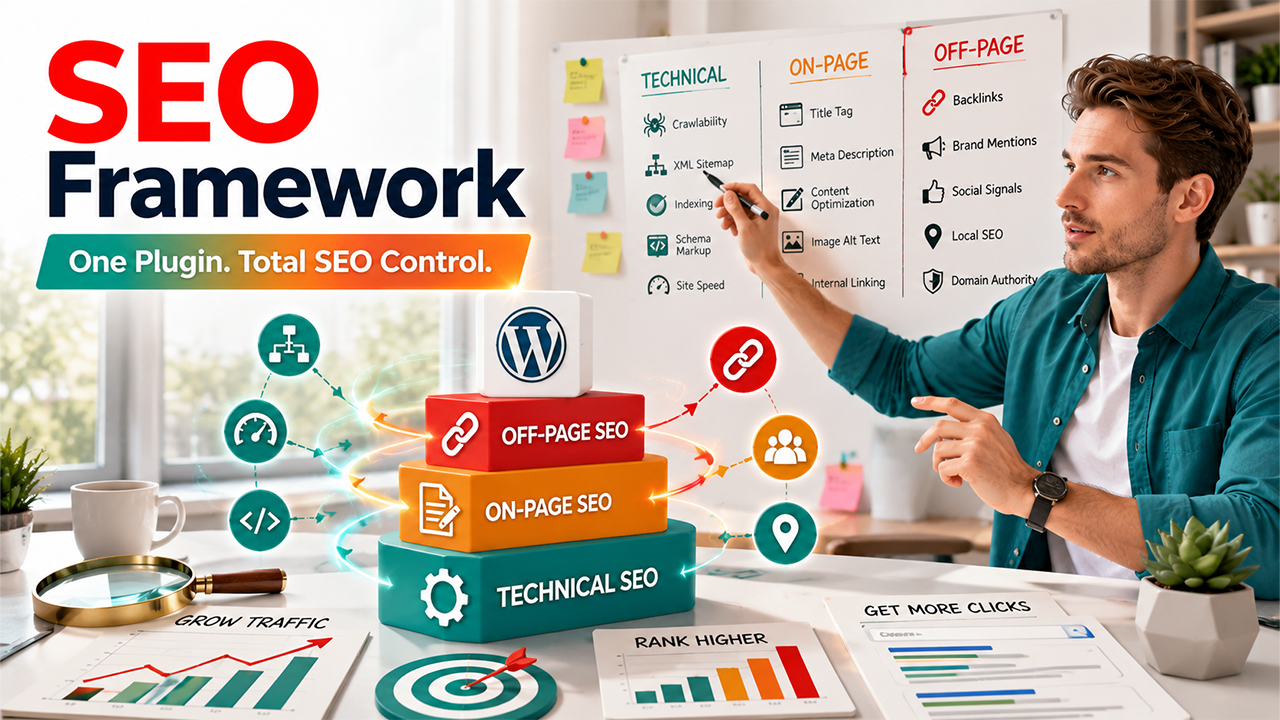
In this breakdown, we will cover how the SEO framework manages three optimization layers: the technical foundation that makes a website crawlable, the one-page tools that influence titles and metadata, and the extensions that provide support to a wider off-page SEO strategy. It also positions the plugin along with Yoast SEO because comparison is the question that a lot of WordPress users generally ask before any installation.
What Is SEO Framework?
The SEO framework is a popular plugin, which was created by the Dutch developer Sybre Waaijer. He built the plugin in 2015 and initially named it AutdoDescription. It processes the WordPress environment of the website to automate tasks like meta description generation, title generation, meta description generation, robotics tag generation, open graph generation, Facebook tag generation, twitter card generation, and structured data creation. Practically, this implies that the plugin covers the same fields covered under search engine basics, indexing instructions, crawlability, and metadata, without needing manual entry on each page.
The plugin instantly activates and automatically prefills meta tags. This removes a lot of the manual setup work that other SEO tools need. This automation is a critical facet of SEO framework: instead of asking users to learn about SEO theory before publishing. It first applies meaningful defaults and allows manual modifications to become an optional step instead of a requirement.
SEO Framework: Core Technical SEO Capabilities

Technical SEO defines whether a website can be indexed or crawled properly, and this is where the SEO framework focuses on much of its free functionality.
Main Technical Characteristics Are:
- Automated generation of XML sitemap, so new pages can be found without manual submission.
- Management of canonical tags, which aids in avoiding canonical errors across pages, categories, subdomains, and multisite domain mapping.
- Schema markup and structured data automatically applied across page types.
- Robots meta control, enabling indexing rules to be set at the post or page level.
- Caching mechanisms in real-time that minimize database load during page creation.
- Compatibility confirmed by WPML (WordPress Multilingual Plugin) for building multilingual WordPress sites, with the plugin's developer working closely with WPML on continuous compatibility.
As far as performance is concerned, independent testing reports the plugin loading is approximately 5.6 times quicker than Yoast SEO and around 16 times than All in One SEO, which is directly important for technical SEO since page speed is a ranking factor itself.
What Are the Plugin’s On-Page SEO Capabilities?
On-page optimization is where most WordPress users directly interact with the plugin, through the meta box that shows up on each page and post.
Key tools for on-page SEO includes:
- Meta description and title fields with real-time guidance on character count.
- Automatic fallback whenever a field is left empty. Thus, pages are not published without standard metadata.
- Fields for social metadata for Twitter Card Previews and Open Graph.
- The Focus extension, which helps writers through targeted focused keyword along with its synonyms and inflections, reduces the gap with competitors who follow a checklist-style SEO strategy.
- The transport extension, which migrates the present SEO metadata from Rank Math, Yoast SEO, or SEO Press directly into the SEO Framework, which is valuable when changing plugins mid-project.
This combination provides support to an effective SEO strategy framework for content teams: the free version manages the basics of metadata, while paid extensions add the keyword guidance and migration tools that bigger content operations tend to require.
Off-Page SEO Strategy Support Via Extensions

A plugin cannot create backlinks or manage outreach. However, it can help in optimizing how a website shows up to the sources that impact off-page page signals. This is where the off-page SEO strategy facet of the SEO framework comes through its extension library instead of its core settings:
Relevant extensions involve:
- Local, which includes business address, name, phone number, and location data to a website, providing support to a periodic Local SEO Audit for location-dependent businesses or service-based businesses.
- Articles, which include organized data for news content and blog posts, enable Google News inclusion and improve search result displays.
- Cord, which links a website to third-party services like Meta Pixel and Google Analytics, including referral traffic related to off-page citations and mentions.
- Monitor, which keeps track of SEO health of the website and sends alerts if something goes missing or breaks.
In digital marketing, the focus has considerably shifted toward AI-generated responses. Thus, businesses that compare GEO vs SEO approaches must keep in mind that organized data and precise business details, both supported by the above extensions are generally considered to impact how generative engine source and cite a website and apart from impacting on how conventional search engines rank it.
SEO Framework vs Yoast SEO: A Practical Comparison
For WordPress users that decide between the two, the difference boils down to guidance versus minimalism:
- On-page checklists: Yoast SEO involves an in-built checklist on each post that enables users to set a focus keyphrase and assess content against on-page right practices, while the SEO framework ships with lesser checklists out of the box, mainly focusing on automatic title and description generation, with in-depth keyword guidance available through premium Focus extension.
- Speed and bloat: The SEO Framework is generally considered a privacy-focused and compact plugin utilized by close to 250,000 websites, running with zero database overhead and involves 70+ real-time SEO checks. Yoast SEO, by comparison, ships with in-built panels and notifications.
- Pricing: Yoast SEO charges per every website for its premium add-ons and plugin, with bulk licensing for ten websites reach close to $841.50/year, whereas The SEO Framework bundles each premium extension into a single plan that remains considerably cost-effective across numerous websites. The Essentials tier costs close to $84/year and unlocks each extension on up to two sites.
- Simplicity: Yoast SEO tends to be more friendly with beginners through its checklist-based and guided experience, while The SEO Framework provides a more minimum interface focused on users who have prior SEO experience already.
For teams operating numerous WordPress websites under one continuous SEO framework, the performance and pricing gap generally pushes the decision toward the SEO framework, while teams that require in-built writing guidance from day one might go for Yoast SEO.
Frequently Asked Questions
Can I use SEO Framework plugin free-of-cost?
Yes, the core plugin is totally free and involves XML sitemaps, automated meta generation, structured data, and social media optimization without any additional costs.
Does The SEO Framework directly aid with off-page SEO?
Not directly. It does not create backlinks. However, extensions such as Articles and Local boost the structured data and business data that off page mentions and citations depend on.
How is The SEO Framework different from Yoast SEO for beginners?
Yoast SEO offers more built-in guidance through checklists, while The SEO Framework depends on automated defaults and assumes users have good SEO knowledge.
Can The SEO Framework replace a present SEO plugin without ever losing data?
Yes, the Transport extension migrates metadata from Yoast SEO, Rank Math, and SEOPress directly into The SEO Framework.
Is The SEO Framework recommended for multilingual websites?
Yes, experts suggest The SEO Framework for developing multilingual websites and confirms complete compatibility between the two tools.
Conclusion
The SEO framework is a SEO plugin that covers on-page metadata, technical groundwork, and extension-based support for off-page signals, all from a unified and compact settings page. Its privacy stance, speed, and bundled extension pricing make it a great fit for any search engine optimization strategy covering numerous WordPress websites, while its lighter on-page guidance means writers who need in-depth checklists may still go for Yoast SEO. Either way, combining the plugin with deliberate off-page SEO strategy and recurring Local SEO Audit makes sure that optimization efforts remain consistent as your website grows.

.png)
.png)