

.png)
.png)
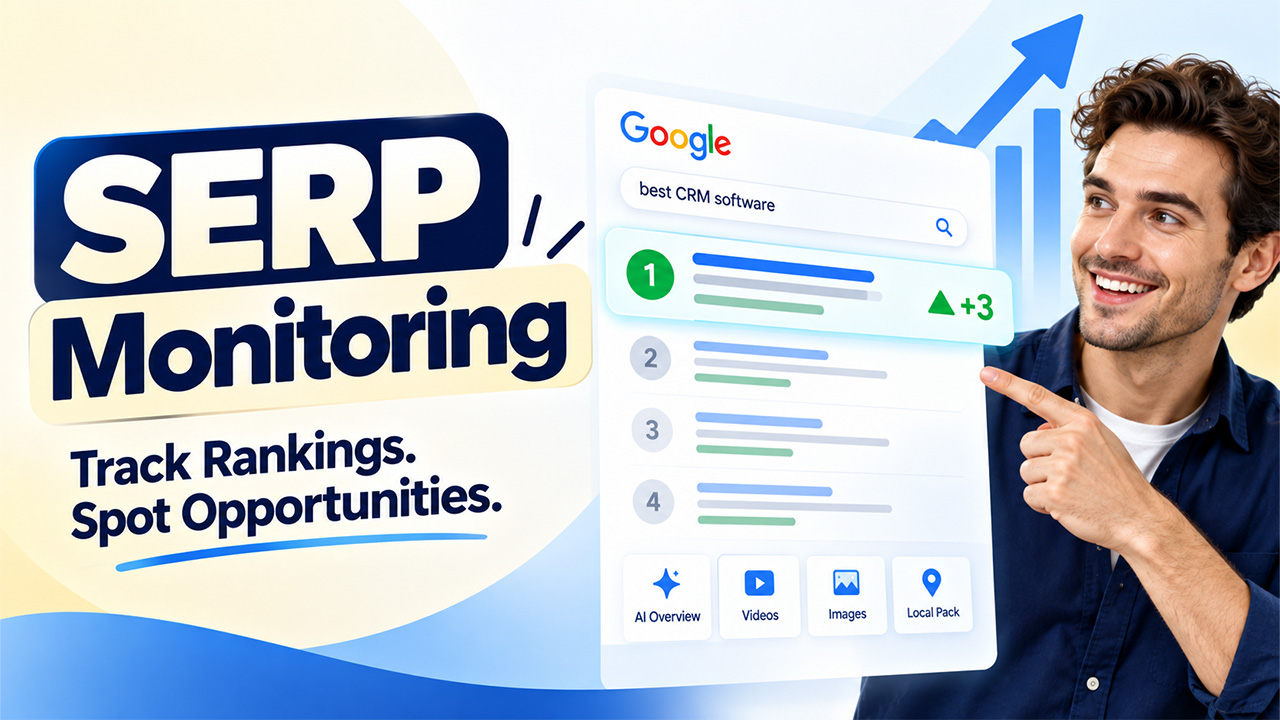
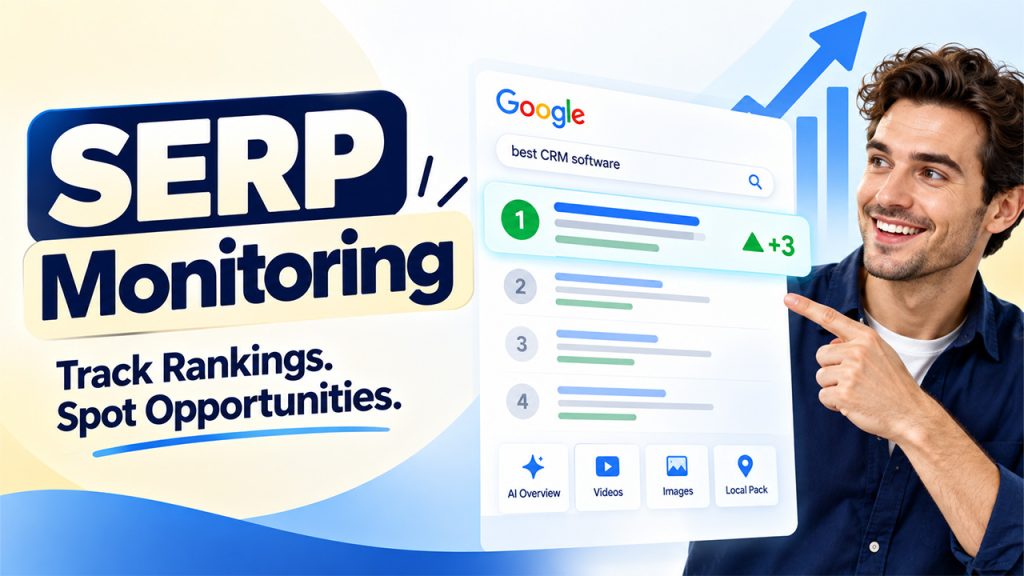
Google search results are highly volatile. A page that performs well today may drop in the rankings tomorrow due to competitors launching new content, search intent evolution, or changes in the way Google displays the results. Through SERP monitoring, you can see how your selected keywords change their position in the search results and discover information regarding the performance of your pages. You will be able to track changes in position and receive data on competitors, different SERP features, locations, devices, and trends. Monitoring also becomes vital in 2026 because of the introduction of AI Overviews and other search experiences.
What Is SERP Monitoring?
SERP is an acronym that refers to the Search Engine Results Page. Basically, it is the page that appears on a search engine after a user enters a query. The search results on the page can include organic listings, paid search ads, local listings, video listings, image packs, featured snippets, and other search features. According to Google, the search features on the SERP can vary depending on the query. Results can also differ based on the user’s location, language, and device type.
SERP monitoring refers to checking search results periodically and collecting data on a page’s position, changes in competitors, and alterations in search features for specific queries over time. By constantly tracking these changes, you can ensure that your page is ranking well, not losing positions, occupying any SERP features, and outperforming rivals. For instance, if your company tracks the search query “CRM software for small business” and your page drops from the fourth position to the eighth, you will analyze the alterations and consider what changes to make in order to improve your ranking.
How SERP Monitoring Works
The process of SERP monitoring starts with keywords that matter to your business. You then set the search engine, country, language, device, and tracking frequency. A rank tracking system collects search result data for those keywords at regular intervals. It records your position, competitors, SERP features, and historical trends. Some platforms send alerts for major ranking changes.
Track More Than Position: Position is useful, but it does not describe the complete search experience. Google provides features such as featured snippets, videos, images, local results, and AI features. A SERP features monitor identifies features that appear for target queries and whether your site appears in them. A keyword may have a featured snippet, video carousel, local pack, or AI Overview above organic listings. This gives context when rankings stay the same.
Why SERP Monitoring Matters for SEO?

SEO is more effective when decisions are based on the latest search data instead of manual, infrequent checks. Google Search Console provides data on impressions, clicks, queries, and other site performance in Google Search, but there are a number of functions for which it cannot be used instead of rank monitoring. The data collected through another method can help make sense of competitor movements, historical rankings, new search features, and search results based on location or device.
What else can SERP tracking be used for? Looking into the causes of unusual movement is another good reason to track keywords. If there is a sudden decline or rise across multiple important keywords, it can help you to compare the date and time with technical changes, content updates, new competitor activity, or potential improvements and changes to the Google search results. Now that Google has published updates to its search documentation, it's a good idea to follow the official changes.
For broader analysis, combine ranking data with SERP insight, traffic, conversions, and page performance. This prevents rankings from becoming the only measure of SEO success.
Benefits of SERP Monitoring
The main benefit is clear visibility into search performance over time. You can identify patterns and investigate changes. It also helps you make informed SEO decisions based on actual ranking trends rather than assumptions.
- Identify Ranking Changes: A monitoring system shows whether target pages move up, down, or stay stable. Historical data helps compare performance before and after SEO changes.
- Watch Competitors: You can monitor competing domains for the same keywords and see when they enter or leave important positions. This can reveal topics where competitors gain visibility.
- Find SERP Feature Opportunities: Search features can create additional ways to appear in results. Tracking them shows which queries trigger features and whether your pages appear there. Google recommends appropriate search appearance features and structured data when they apply.
- Detect Potential Problems: A sudden ranking decline can point to a problem. Possible causes include indexing issues, technical changes, content changes, stronger competition, or shifts in search intent.
- Measure SEO Work: Historical rankings help SERP monitoring compare performance around content updates and SEO projects. Combine this information with clicks, impressions, and conversions to measure business results. Businesses can also improve SEO with CRM software by connecting search performance insights with customer and lead data.
Tools for SERP Monitoring
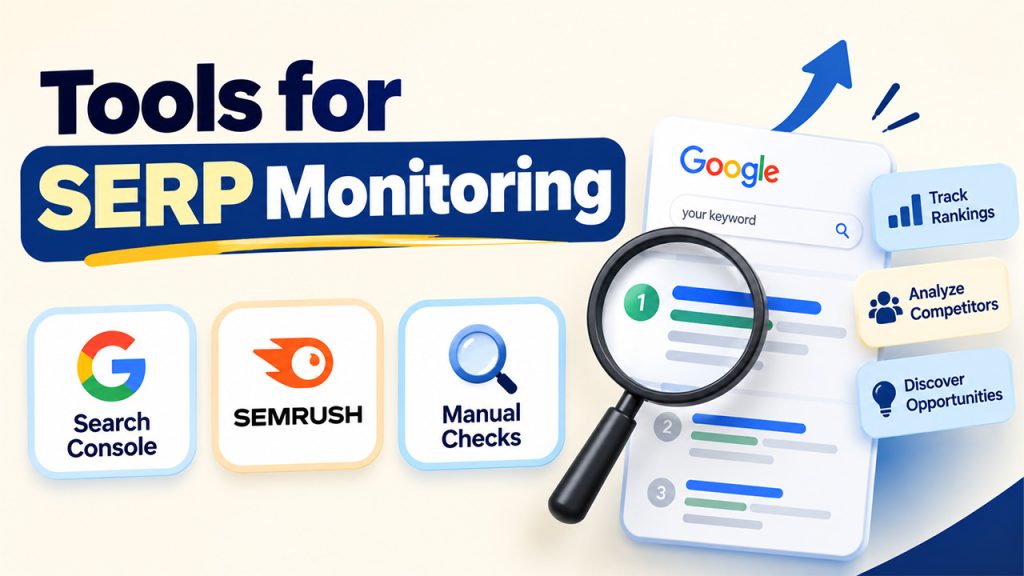
You can use Google Search Console for first-party performance data, while SERP monitoring tools provide deeper rank and competitor tracking. The right setup depends on your keyword set and reporting needs.
Google Search Console
Google Search Console offers direct insight from Google into your search performance. It displays queries, pages, clicks, impressions, click-through rate, and average position. It helps you discover the queries that bring users to your website and any movement in organic performance. You can also explore Google documentation and Google search updates to learn about changes in search appearance and SEO.
Dedicated Rank Tracking Platform
If you prefer to keep track of your site's ranking trends on a daily basis, a SERP tracking software platform can be a helpful tool. Your chosen provider should allow for keywords, as many competitor sites as well as location tracking, historical data, alerts, and tracking of SERP features all in one platform.
For example, SEMrush Position Tracking allows for daily updates, competitor monitoring, location and device tracking, visibility measurements, and features performance. When testing tools, look at keyword limits, update frequency, locations supported, mobile tracking, competitor functionalities, historical data, reporting, and alert capabilities to find what works for your SEO team.
Manual Checks
When you want to see what's happening on the results page visually, manual searches are a good practice. You can perform searches to examine titles, snippets, types of content, formats, and results. Manually checking can be difficult to manage at scale, and results may differ by language, location, and device. Use Google search operators to perform specific types of searches; for example, searching for indexed pages or filtering by a site. This type of check not only reveals results but can help supplement data from tools.
Conclusion
SEO specialists require an organized method in order to be knowledgeable about search visibility changes and react to impressive ranking variations. SERP monitoring follows rankings, competition, SERP features, and market movements instead of waiting for manual checks to be performed. Google Search Console gives the opportunity to use its own performance data, while third-party applications offer comparison between competitors, alerts, geo-location tracking, and historical statistics. In 2026, be aware of changes in the search landscape going beyond traditional searches, including AI Overview results. Do not keep chasing ranking changes, but leverage the data to reveal interesting occurrences, find out their reasons, and relate search performance to website visitors and outcomes of the business.

.png)
.png)