





Every impression of a search advertisement, result, or email link is a chance to get a visit, but only a fraction of viewers click on it. Click through rate refers to a metric that captures this fraction. It showcases whether a snippet, headline, or CTA is persuasive enough to get attention. It also provides marketers with an early signal before revenue and conversions are measured. In this guide, let us cover the CTR meaning, the formula, realistic benchmarks, and possible steps to improve clicks without reducing traffic quality.
What Is Click Through Rate?
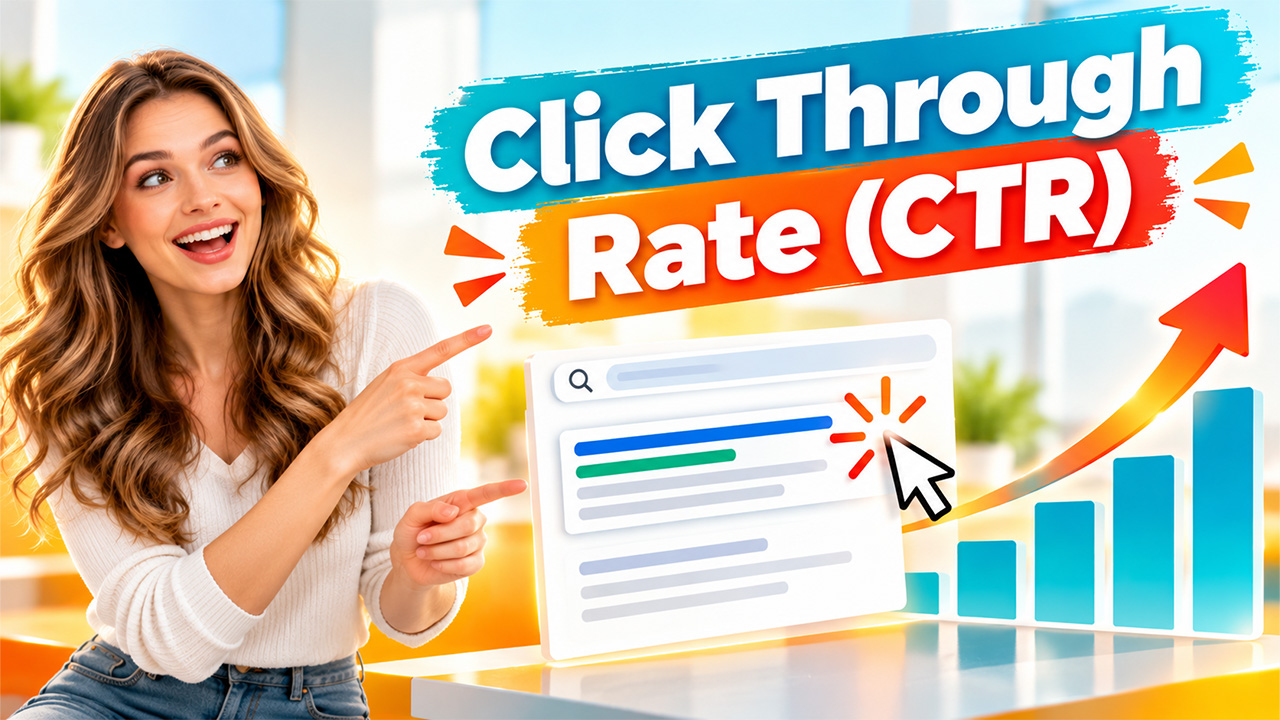
What is click through rate? Click-through rate (CTR) is the percentage of people who click on a link after seeing it. It assesses how effectively an advertisement, a search listing, or social post captures prompt and attention action.
CTR is applied across different channels:
- Paid Search and Display Advertisements.
- Organic Search Results
- Link Previews and Social Media Posts
- Email campaigns
A straightforward example makes it extremely clear: If an advertisement gets 1,000 impressions and 10 clicks, its CTR is around 1%.
CTR only counts direct clicks. A person who finds an advertisement and returns to the website later through another channel cannot be included in the calculation. A figure in the higher range indicates strong creative, relevant targeting, or a compelling offer, but it must always be read along with business metrics and conversion.
How to Calculate Click Through Rate?
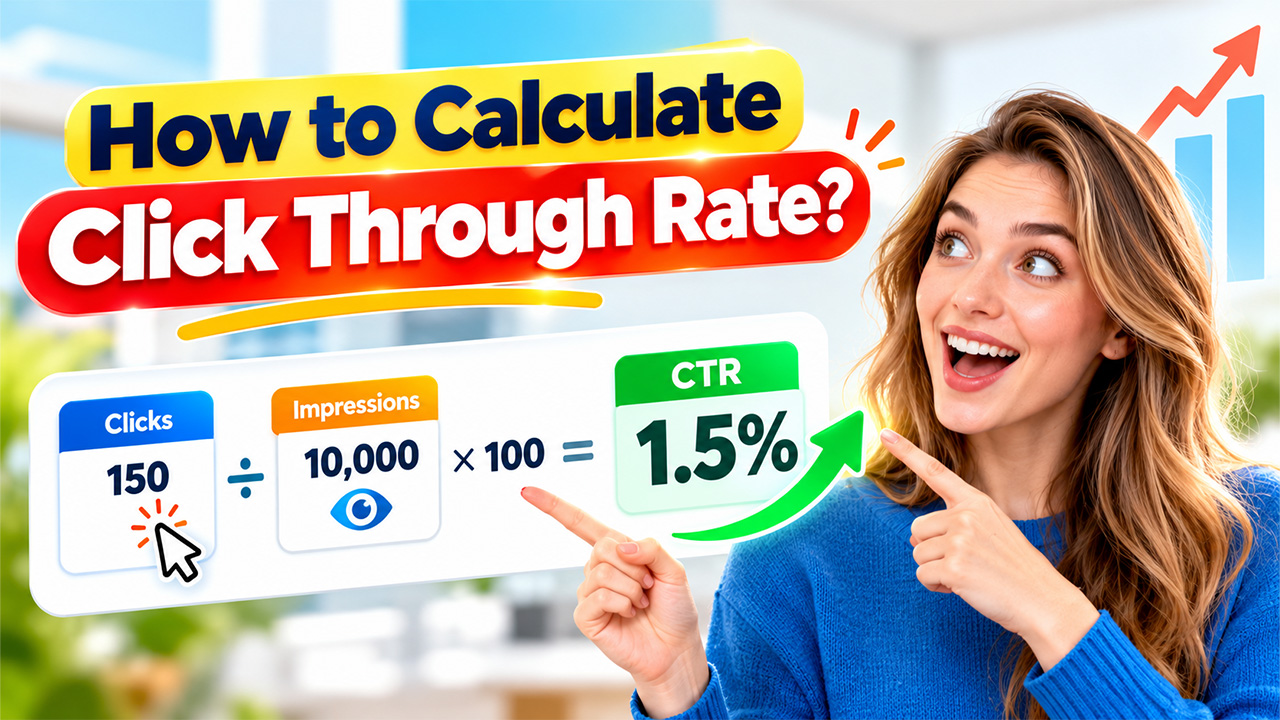
There is a formula to calculate click through rate where we divide clicks by impressions and then multiply the resultant by 100.
CTR = (Clicks ÷ Impressions) × 100
- Clicks refer to the total number of times users selected the advertisement or link.
- Impressions are the total number of times the advertisement or link was shown.
For instance, 150 clicks from 10,000 impressions means CTR is 1.5%. A mobile campaign that has 500 clicks and 10,000 impressions reaches 5%. If you are manually calculating, you can measure impressions and clicks over the same period, so you do not get a skewed result.
CTR vs. Conversion Rate:
CTR indicates the number of times people have clicked on your link. Conversion rate means the number of visitors who have completed your objective, which could be a sign-up or purchase. However, a strong click through rate does not guarantee a profitable campaign.
Take the example of two ad networks. Network A has around a 10% CTR and close to a 5% conversion rate. Network B has approximately 7% CTR and a 20% conversion rate. Network B will give you better returns despite having a smaller number of clicks. This is why CTR is effective as a diagnostic signal instead of a standalone measure of success.
What Is a Good Click Through Rate?
There is no one magic number that can be considered as a “good click through rate.” It depends on the channel, industry, device, audience, ad format, and campaign goal. For Google Search Network Advertisement, Google states that a CTR of 1% or greater is often believed to be good.
Programmatic channels indicate much lesser figures. Choozle’s campaign data for the first half of 2026 has reported the following averages:
- Video: 0.14%
- Display: 0.09%
- Native: 0.09%
- Audio: 0.02%
Display figures are significantly lower than search figures since search users express intent via a query, while display advertisements connect with people who are browsing other content. The most helpful benchmark is therefore a comparable campaign on the same channel, which your own historical data supports.
Combining CTR with a Website Traffic Checker includes context. It aids in showing whether a change in click behavior sits alongside rising or falling overall visits.
Click-Through Rate in Organic Search
In organic search, CTR relies extensively on SERP results, since page 1 results significantly attract a higher number of clicks. However, Google has not confirmed CTR to be the direct ranking factor. Yet, Semrush notes that pages with higher-than-expected click rates typically see better search visibility over time.
SERP features like People Also Ask boxes, featured snippets, and AI overviews can also minimize clicks, specifically on informational queries, since some users prefer getting answers without ever clicking on a website. Teams that want to improve organic search visibility must consider CTR as a guide for optimizing titles as well as snippets, not as a number you can chase in isolation.
How You Can Keep Track and Improve Click Through Rate?
Tracking CTR
You can get your organic CTR data from Google Search Console. You can implement the following steps:
- Open Search Console and choose your website property.
- Then, go to Search Results under Performance.
- Enable Average CTR to see it alongside impressions, clicks, and average position.
Filter by query or page to compare different results. Pages with higher impressions but lesser CTR typically leads to biggest opportunities. Checking these figures inside a Performance Analytics routine makes it simpler to identify trends, compare different pages, and choose which listings you need to optimize first. For paid campaigns, Google Ads and Facebook Ads Manager showcase CTR at the ad group, campaign, and ad level.
Ways to Improve CTR
Enhancing click-through rate CTR typically needs testing numerous elements instead of changing a single aspect. Such steps can assist you:
- Write Titles and Descriptions Based on Benefit: Clear as well as specific wording that showcase what the reader has gained often gets you more clicks than common and generic phrasing. Do not use jargon that can confuse people who are just scanning the results quickly.
- Use Clear CTAs: Phrases like the “Get an Estimate” or “Download the Guide” precisely tell users where they will be routed if they click on the link.
- Make Your Message Aligned with the Landing Page: A mismatch can lead to clicks without conversions or engagement.
- Test Only a Single Element at a Time: Perform A/B testing of the two images, two headings, or two CTAs so you can pick the one that can deliver better results.
- Structure Your Content for SERP Features: Utilize direct Q & A formats, with concise answers of approximately 40-60 words, to enhance the possibilities of appearing in featured snippets.
- Regularly Refresh Creative: Exposure to the same ad can minimize engagement over time, so keep track of frequency and rotate creative when your CTR comes down.
- Mobile Optimization: Copy, images, and landing pages must quickly load and show-up clearly on smaller screens.
Targeting is also important. Displaying content to a more relevant audience via contextual, behavior, or location-based targeting minimizes wasted impressions and tends to enhance results.
Conclusion
Click through rate is a straightforward but revealing metric. It showcases how successfully an advertisement, a listing, or a message converts impressions into visits, and the click-through rate formula is simple to apply across any channel. Its value improves when it is compared against appropriate benchmarks, monitored over time, and read along with conversion rate and other business results.
The practical approach is quite steady. Keep track of CTR in your ad platform or Search Console, optimize calls to action and titles, carefully test changes, and emphasize attracting the right visitors, not just more visitors. When you apply it consistently, such habits lead to better engagement and higher helpful traffic.