



.png)
.png)
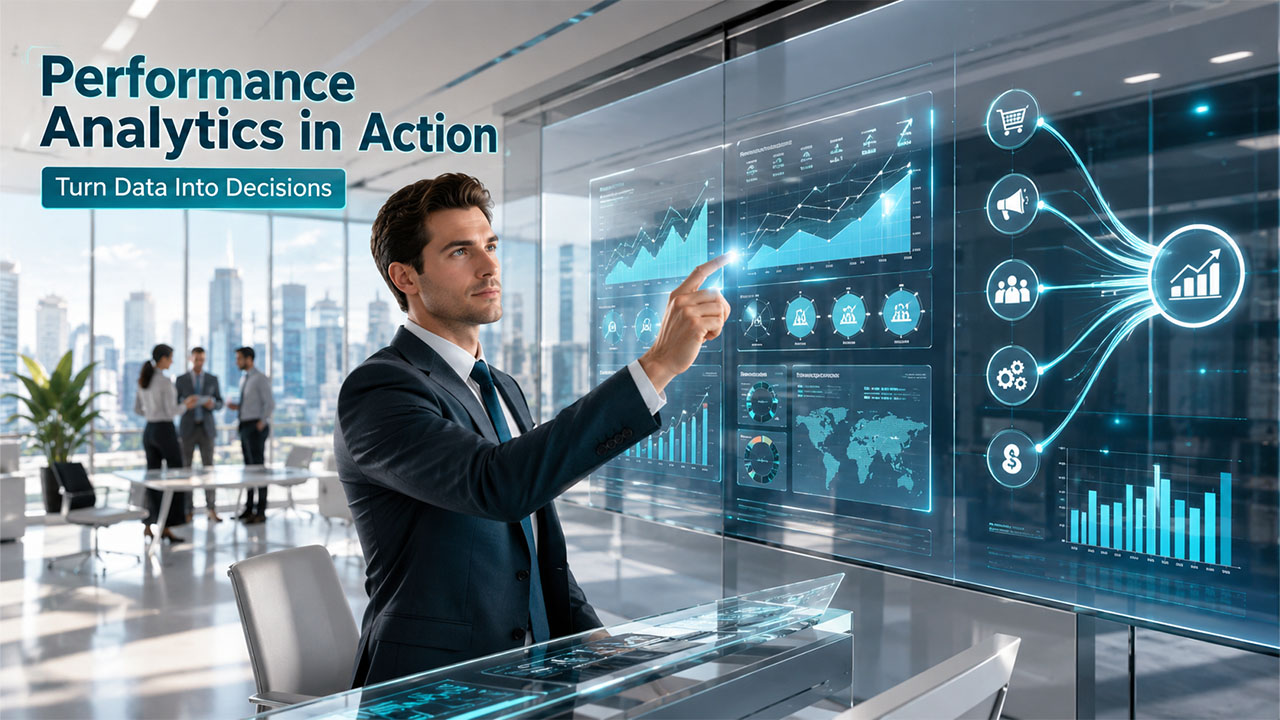
In the current highly competitive business landscape, organizations across the globe generate huge amounts of data every single day. From sales transactions to customer interactions and employee productivity metrics, businesses have various valuable pieces of information. This is where performance analytics plays a crucial role.
Performance analytics help organizations seamlessly evaluate how effectively they are achieving their goals, simply by analyzing various key performance indicators (KPIs), trends, and operational outcomes. Using performance analytics, businesses can also make much more informed decisions, identify opportunities for improvement, reduce inefficiencies, and gain a competitive edge over competitors.
What are Performance Analytics?
Performance analytics can be explained as the practice of collecting, measuring, and analyzing data to evaluate how effectively a business or process is performing against predefined goals or objectives. Performance analytics transforms raw data into meaningful insights through which businesses can understand their strength, identify areas for improvement, and make informed decisions.
Performance analytics is designed to convert raw data into meaningful insights and measurable outcomes. It offers a clear view of business performance by tracking key performance indicators (KPIs), like revenue growth, customer satisfaction, employee productivity, and operational efficiency.
Key Features of Performance Analytics
Performance analytics offers various key features that enable businesses to transform raw and unstructured data into actionable intelligence for smarter decision-making.
Some of the key features of performance analytics are as follows:
- Real-Time Performance Monitoring: Performance analytics tracks business activities and metrics continuously in real time, allowing organizations to quickly monitor progress, identify performance issues, and respond to changes.
- Key Performance Indicator Tracking: Performance analytics measures and monitors KPIs to evaluate success and identify improvement opportunities.
- Trend and Pattern Analysis: It analyzes historical and current data to identify trends and recurring patterns. It also enables businesses to understand what factors contribute to success or failure. Businesses can further enhance their market insights by combining these findings with platforms like Analyzingmarket.com, which provide broader perspectives on industry trends and competitive performance.
- Automated Reporting: Performance analytics tools can automatically generate reports at predefined scheduled intervals. This significantly reduces manual effort and ensures data accuracy.
Why Performance Analytics Matters for Enterprises
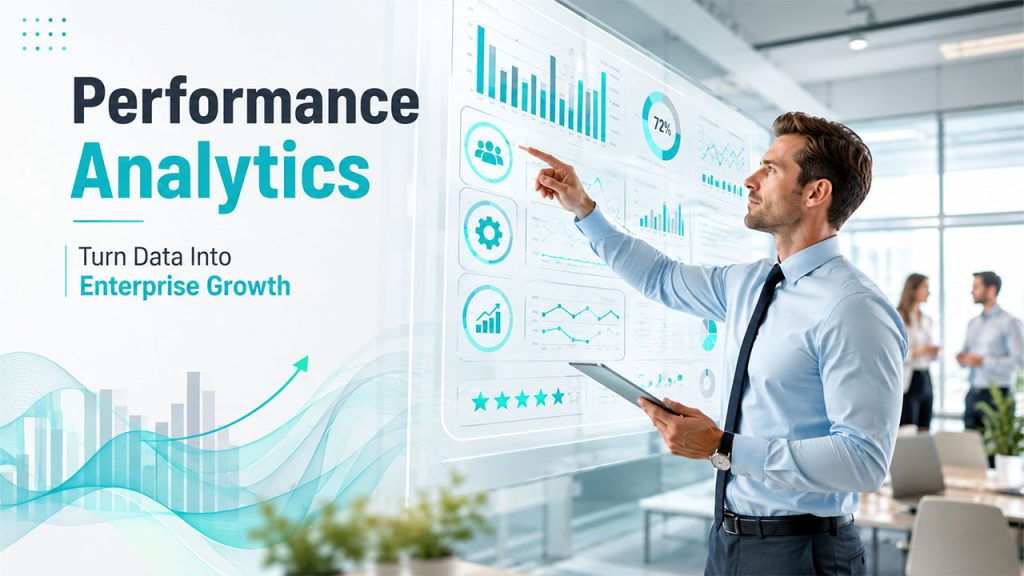
Organizations generate large volumes of data from sales, marketing, operations, finance, customer interactions, and employee activities daily. Performance analytics helps enterprises efficiently convert data into meaningful insights and drive better business outcomes.
Some of the key factors why performance analytics is essential for enterprises are as follows:
- Enables Data-Driven Decision Making: Performance analytics offers accurate and measurable insights into business performance. It allows teams to make strategic decisions based on facts, rather than assumptions.
- Improves Operational Efficiency: Performance analytics analyzes workflow, processes, and resource utilization to identify inefficiencies and bottlenecks.
- Monitor Business Performance: Performance analytics allows businesses to continuously track KPIs, ensuring real-time visibility. It also helps in quickly identifying issues, measuring progress, and taking corrective actions.
- Improves Customer Experience: It helps organizations understand customer behavior, preferences, and feedback. Performance analytics help businesses improve service quality, offer personalized experiences, and increase customer satisfaction.
Core Components of Performance Analytics
Performance analytics is built on several essential components that work together to collect data, measure performance, and offer actionable insights. These components enable businesses to track progress effectively and make informed decisions.
Some of the key components of performance analytics are as follows:
- Key Performance Indicators (KPIs) are a type of measurable value that indicates the effectiveness of an organization or team in achieving its objectives.
- Dashboards offer a visual representation of performance data in real time. It allows teams to quickly access performance and identify areas that require attention.
- Benchmarking helps in comparing the performance of an organization against industry standards, competitors, and historical results.
- Predictive Analytics uses historical data and advanced technologies like machine learning models to forecast future outcomes.
How Does Performance Analytics Work?
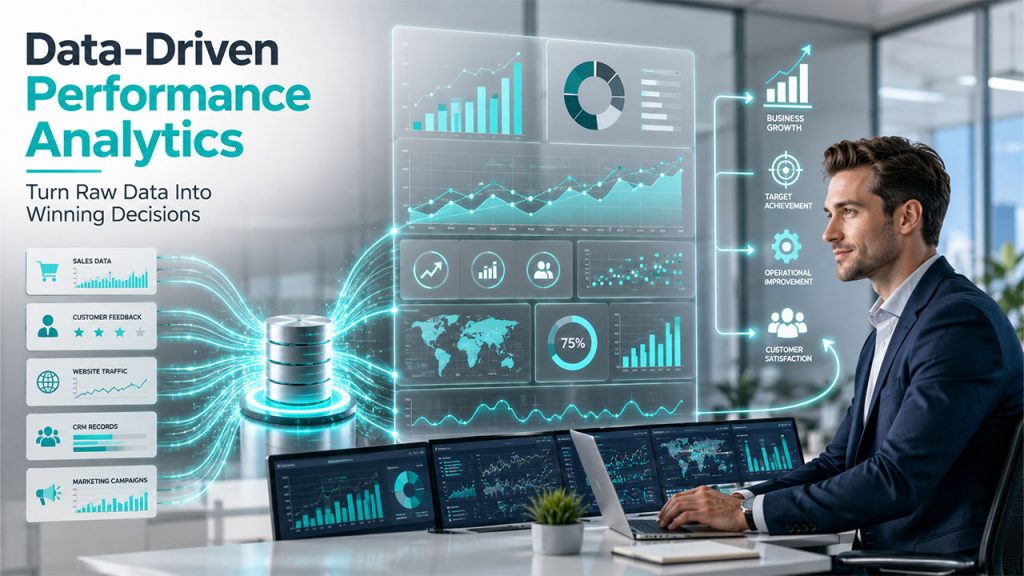
Performance analytics works as a structured process that automatically converts raw business data into actionable and meaningful insights. These insights can support businesses in making better and more informed decisions.
The workings of performance analytics are explained below:
- Data Collection
Data collection is the first step, which involves gathering data from multiple internal and external sources. This data can be related to sales figures, customer feedback, or website traffic.
- Data Integration
All the data collected from different sources is consolidated into a centralized platform, which eliminates data silos and ensures consistency across the organization. Implementing effective data management strategies is essential for maintaining data accuracy and ensuring reliable analytics outcomes.
- Data Analysis
Various advanced tools evaluate the collected data to identify trends, patterns, anomalies, and relationships.
- Visualization and Reporting
Results are presented through dashboards, charts, graphs, and reports to make the information easy to understand.
- Decision Making
Through performance analytics, organizations can use these insights to make strategic and operational decisions aimed at improving performance and achieving organizational goals.
- Continuous Monitoring
Performance analytics is an ongoing process. Through this, organizations can continuously track metrics and adjust strategies based on new information.
Types of Performance Analytics
There are six major types of performance analytics, which include business, marketing, employee and HR, sales, operational, and product. Each category focuses on a specific function and also helps organizations improve decision-making and overall performance.
Quick comparison of all the types of performance analytics is as follows:
| Type | KPIs | What it Measures | Ideal For |
| Business Performance Analytics | Revenue, profit margin, growth rate, market share. | Overall organizational performance | Business leaders, strategic planning |
| Marketing Performance Analytics | ROI, conversion rate, CTR, customer acquisition cost. | Marketing campaign effectiveness | Marketing teams, digital marketers |
| Employee and HR Performance Analytics | Employee productivity, retention rate, turnover rate, hiring success rate. | Workforce performance and HR effectiveness | HR managers, talent acquisition teams |
| Sales Performance Analytics | Sales revenue, conversion rate, pipeline value, deal closure rate. | Sales efficiency and revenue generation | Sales teams, sales managers |
| Operational Performance Analytics | Production efficiency, cost per unit, delivery time, process efficiency. | Day-to-day operational efficiency | Operations managers, supply chain teams |
| Product Performance Analytics | User engagement, churn rate, feature adoption, product revenue. | Product usage, customer satisfaction | Product managers, development teams |
- Business Performance Analytics: Business performance analytics focuses on overall organizational performance. It tracks key financial and strategic metrics, such as revenue, profits, and growth rates.
- Marketing Performance Analytics: It measures the success of marketing activities, such as campaigns, customer engagement, and conversion performance. Businesses often rely on frameworks for evaluating digital marketing performance to understand ROI and optimize campaign strategies.
- Sales Performance Analytics: Sales performance analytics tracks various sales activities, like revenue generation, lead conversion, and sales team effectiveness.
- Operational Performance Analytics: It analyzes day-to-day business operations, efficiency, cost control, and process performance.
- Product Performance Analytics: This assesses how well a product performs in the market, which is based on usage, customer satisfaction, and profitability.
- Employee and HR Performance Analytics: Evaluates the efficiency of the workforce, employee engagement, hiring effectiveness, and retention rates. Many organizations also leverage productivity tools to improve employee performance and streamline daily workflows.
Limitations of Performance Analytics
While performance analytics is among the most powerful tools for businesses, especially in improving decision-making and business efficiency, it also includes various key limitations. These limitations affect the accuracy, usability, and overall effectiveness of analytics.
Some of the major limitations of performance analytics are as follows:
- Data Quality Dependency: Performance analytics is only as good as the data it uses. If the data collected by the system is outdated, inconsistent, inaccurate, or incomplete, the insights generated will also be unreliable.
- High Implementation Cost: The setup process of performance analytics often requires significant investment in infrastructure, software, and skilled professionals. Small and medium-sized businesses generally find advanced analytics solution implementations expensive.
- Data Integration Complexity: Businesses often use multiple systems, like CRM, ERP, marketing platforms, and HR tools, which makes it complex to integrate data from different sources into a single system.
Conclusion
In recent years, performance analytics has evolved significantly, from a helpful reporting tool to a strategic necessity for modern organizations. The performance analytics system transforms raw data into actionable insights, which empower businesses to make smarter decisions, improve operational efficiencies, and enable organizations to achieve sustainable growth.
Whether in sales, marketing, finance, or human resources, performance analytics offers advanced intelligence and visibility, which are needed to navigate a complex business environment. With the advancement of technology, the role of performance analytics will only grow stronger, making it an essential component for business strategy and long-term organizational performance.
Frequently Asked Questions
How does performance analytics help businesses?
Performance analytics help businesses identify trends, improve operational efficiency, optimize resource allocation, enhance customer experience, and make informed decisions.
What is the role of KPIs in performance analytics?
KPIs serve as a measurable benchmark that helps organizations track progress, evaluate success, and identify areas requiring improvement.
How does predictive analytics support performance analytics?
Predictive analytics uses historical data, along with machine learning, to forecast future outcomes, helping businesses predict trends and make proactive decisions.
What are the core components of performance analytics?
The core components of performance analytics include data collection, data integration, KPIs, dashboards, benchmarking, predictive analytics, reporting, and performance monitoring.

.png)
.png)