

.png)
.png)
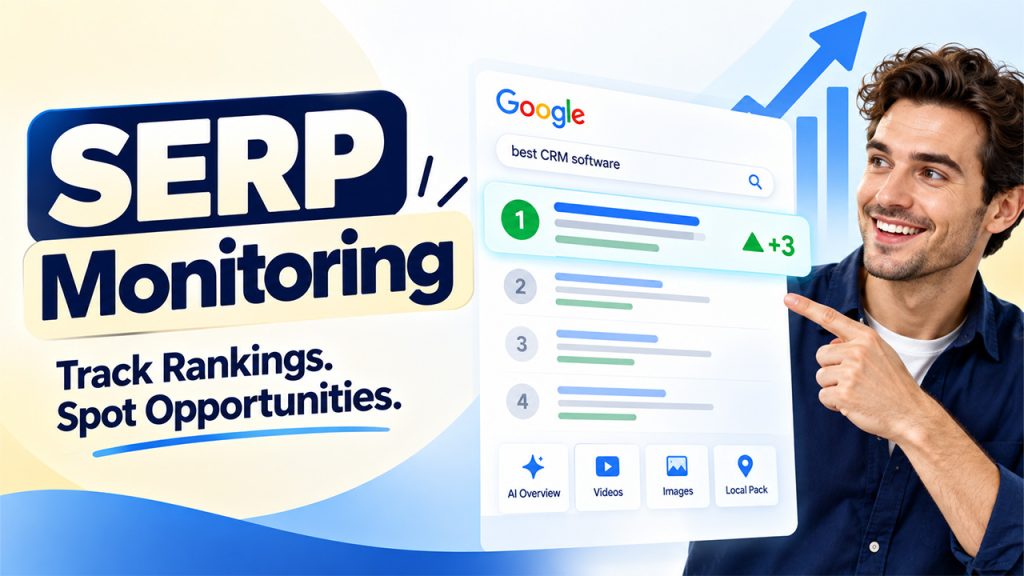
Suppose you search for your own business on Google, and you see yourself sitting on top. You feel good about it only for ten seconds. Then you open your reports, and the visits are barely moving. So, what went wrong? Often, nothing is really wrong with the ranking itself. The page around it has changed. Now, answer boxes, videos, maps, and AI summaries take up much of the screen. So, just because you sit at a top spot, it doesn't necessarily mean that people see you.
That's why organic search visibility matters more than any single ranking. It shows how often your site appears across many searches, not just one. And the best way to grow it is to check your results honestly and often, then act on what you find. Let's walk through how, step by step.
What Is Organic Search Visibility?
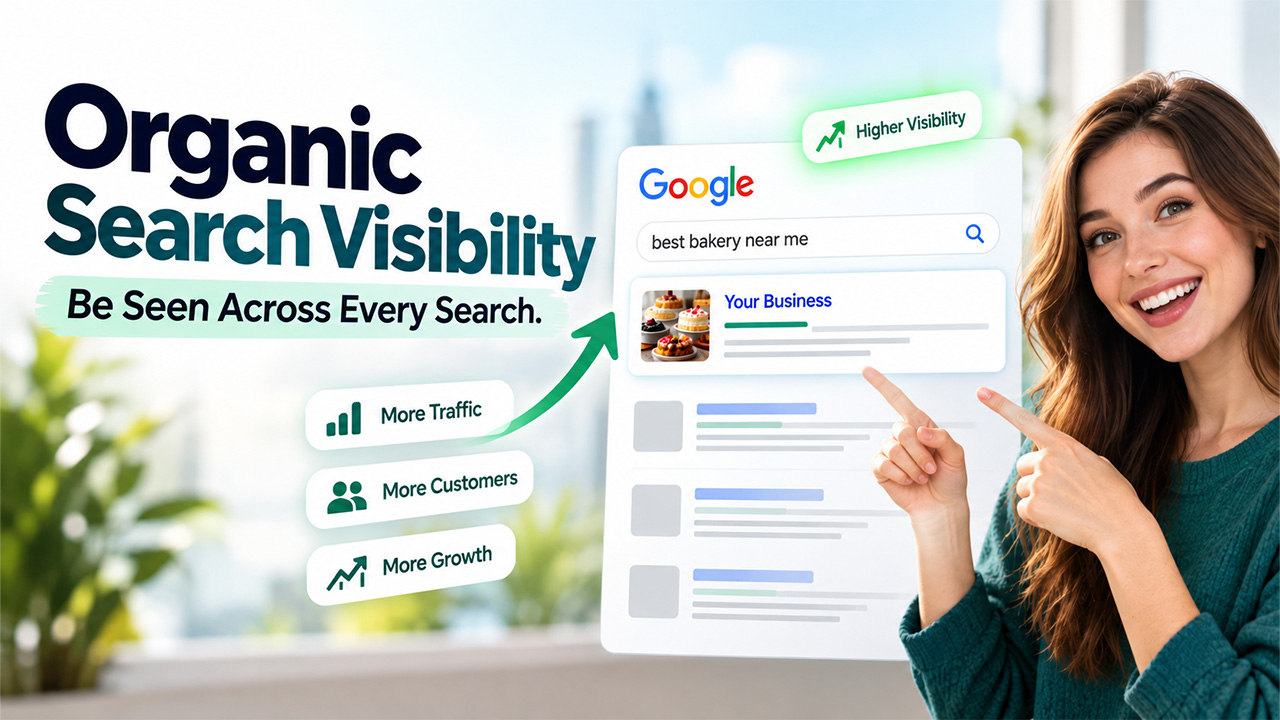
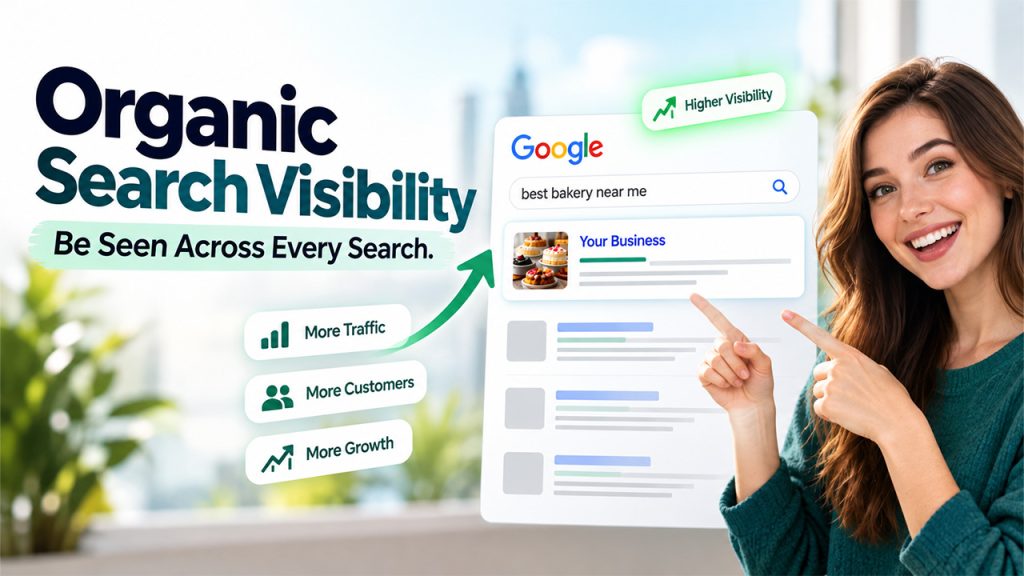
Organic search visibility refers to how often and prominently your website shows up on Google without any paid ads. Whenever someone searches for something, Google shows a list of results. The pages that appear there without anyone paying for them are the "organic" ones. Your visibility is how often your pages show up in those lists, and how high they sit.
Let's understand this with an example. Think of two bakeries. One is famous for a single chocolate cake and ranks first for it. The other appears in hundreds of small searches, like "birthday cake near me" or "eggless muffins." The second bakery gets seen by more people, so it has higher visibility. It also depends on your search engine positioning, meaning where your pages stand against others. The wider you appear, the more people find you online.
What Factors Influence Organic Search Visibility

There are several things that quietly increase or lower your visibility. Some are visible to you while others stay hidden in the background.
Crawlability and Website Security: Search engines send small crawlers to read your pages. If there are broken links or blocked pages that stop these crawlers, then your content can't be shown. Additionally, website security also matters. A secure address (https) also builds trust.
Mobile-Friendliness and User Experience: Today, most traffic comes from people who search on phones. If your pages are hard to read on a small screen, visitors and search engines both notice it.
Page Speed and Technical SEO Health: When pages load slowly or don't load at all, it frustrates people and gets read less often. Clean page titles, tidy structure, and clear descriptions help search engines understand each page.
Content Quality, Relevance, and Freshness: Original, useful, plagiarism-free and up-to-date pages that answer real questions perform well on search engines. Old pages slowly fade, and two similar pages can end up competing with each other.
Backlinks and Website Authority: These are the links on other reputable websites that point back to yours. Google considers them a vote of trust. However, links from relevant, respected sites carry more weight than a pile of random ones.
Topical Authority and Content Depth: When a site covers one subject deeply and keeps it fresh, search engines learn to trust it for that subject. Additionally, domain age and URL structure add a little weight too.
None of these works alone. They stack, and a weak spot in one can hold back the rest. A regular SEO performance evaluation shows you which spot that is.
How to Track Organic Search Visibility
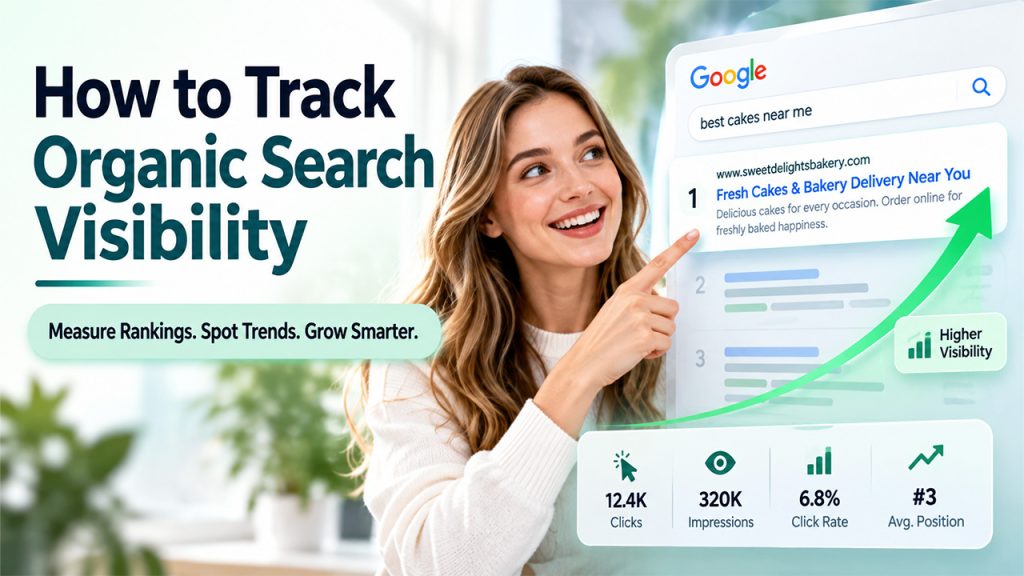
Doing an organic search visibility SEO performance evaluation sounds complicated, but it's really just a regular check-up for your website. You look at a few numbers, spot patterns, and decide what to fix. Here's a simple routine.
Identify the Searches That Matter: Make a list of all topics, keywords, or phrases that your customers use to look up anything on Google. Skip your own brand name, since you'll rank first for it anyway. That way, you can see the bigger picture without a bias.
Establish Your SEO Performance Baseline: Connect your site to Google Search Console, a free tool from Google, and check where you stand today or how your site performs in present. For a broader view of your results, tracking SEO metrics with CRM can help connect search performance with leads, customer activity, and other business outcomes.
Group Keywords by Search Intent and Topic: Instead of watching each phrase alone, watch them in groups, such as "cakes" or "delivery." Groups show the bigger picture and jump around less than single keywords do.
Read Four Numbers Together: Clicks are visits from search. Impressions are the times your page showed up in someone's search. Click rate is the share of people who clicked after seeing you. Average position is the spot where your page usually appears in the results. SERP insight can add more context by helping you understand what appears around your listings, such as competing pages and different search result features. One number alone can be misleading, but together they show the full story.
Review Organic Search Performance Monthly: Compare your organic search performance with last month and with last year and note anything you changed so you know what worked and what didn't. Adjust your strategy accordingly.
Keyword Rankings vs. Organic Search Visibility
Here's how the two views differ:
| Keyword Ranking | Organic Search Visibility | |
| What it shows | Your spot for one phrase | Your presence across many searches |
| Stability | Can jump around daily | Steadier, shows trends |
| Blind spot | Misses answer boxes and videos | Needs a good keyword list |
| Best used for | Checking one key page | Judging overall organic search performance |
One more thing. Sometimes people get their answer right on the results page and never click. Those views still count. Watch whether more people search for your brand name over time.
How to Improve Organic Search Visibility
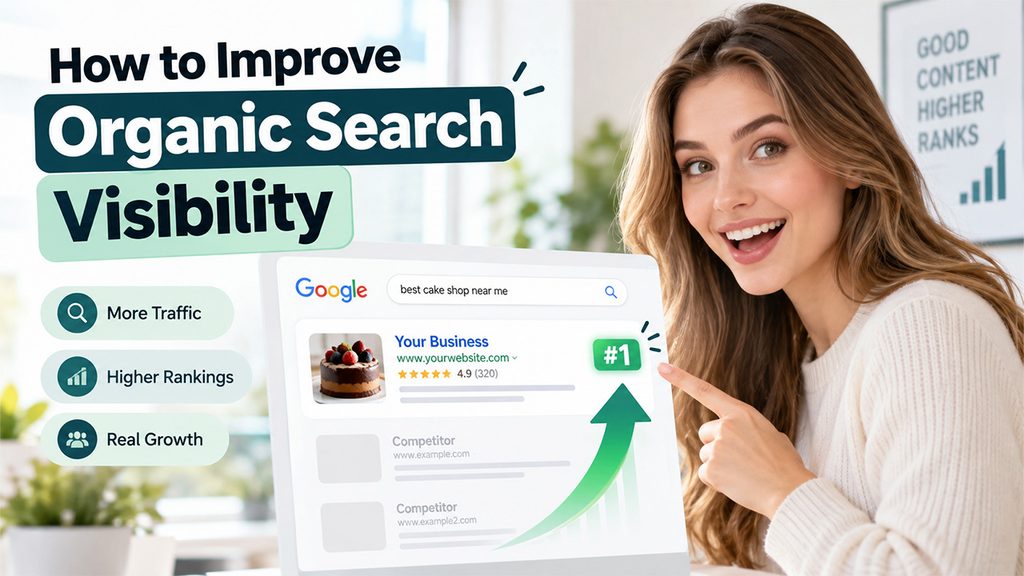
Once you know where things stand, choose the fixes that fit. If you're new to this, the search engine optimization basics are a good place to start, and then these ideas build on them.
Create Content That Answers Real Questions: Don't write for search engines. Write for people by answering real questions clearly and precisely. Share your personal experience about what you've actually observed or done and use keywords strategically and naturally. Keyword stuffing does more harm than good, and Google's helpful content advice points the same way.
Build Relevant Topic Clusters: Write one main page on a big subject, add smaller pages on related questions, and link them together. This helps visitors move around easily, and search engines see real depth.
Target Specific, Long-Tail Search Queries: "Eggless birthday cake in Pune" performs better than just "cake." There are fewer sites that compete for this exact keyword, and the people searching know what they want. Local searches work the same way.
Improve Page Speed and User Experience: Speed up slow pages, fix broken links, keep menus simple, and make sure buttons work smoothly on a phone. Google's free PageSpeed Insights tool can help you identify problems, so that you can fix them before they hurt your visibility.
Use Structured Data and Clear On-Page Signals: Add structured data, a small piece of code that labels what your page is about, such as a recipe or a review. It can help you show up in answer boxes. Add short alt text for images and write clear page titles and summaries.
Earn Relevant, High-Quality Backlinks: Guest posting is one of the fastest and most effective ways to earn quality backlinks. Reach out to reputable, niche websites and pitch original research, expert tips, or guides that other writers want to mention. A few links from respected, relevant sites beat many weak ones.
Refresh and Consolidate Existing Content: Update facts, add new examples, and merge pages that contain repetitive content. Fresh, focused pages help protect your organic search performance.
Conclusion
It feels great to be number one, but it's only one small piece of the picture. What really moves the needle is how often the right people meet your site across all the searches that matter. That's what organic search visibility measures, and it's why you should check your results regularly to get concrete answers. Start small. Choose your topics, check your numbers once a month, and fix one thing at a time. At first, progress will feel slow and that's normal.
Search results reward steady work, not quick tricks. Over time, each helpful page, each good link, and each improvement adds to the last. Your brand becomes easier to find, easier to trust, and harder to overlook. So, look at your numbers this week and begin.

.png)
.png)