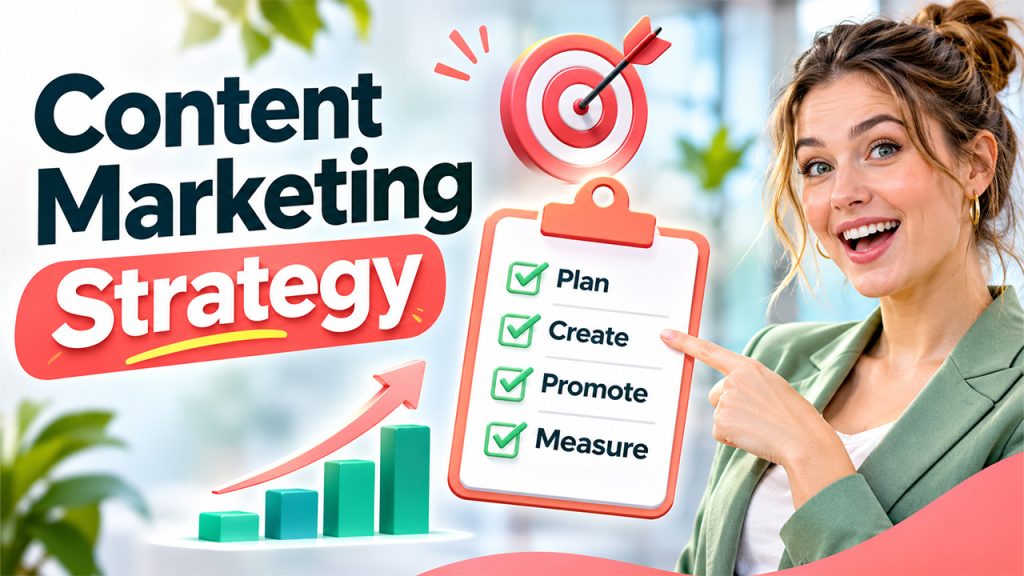



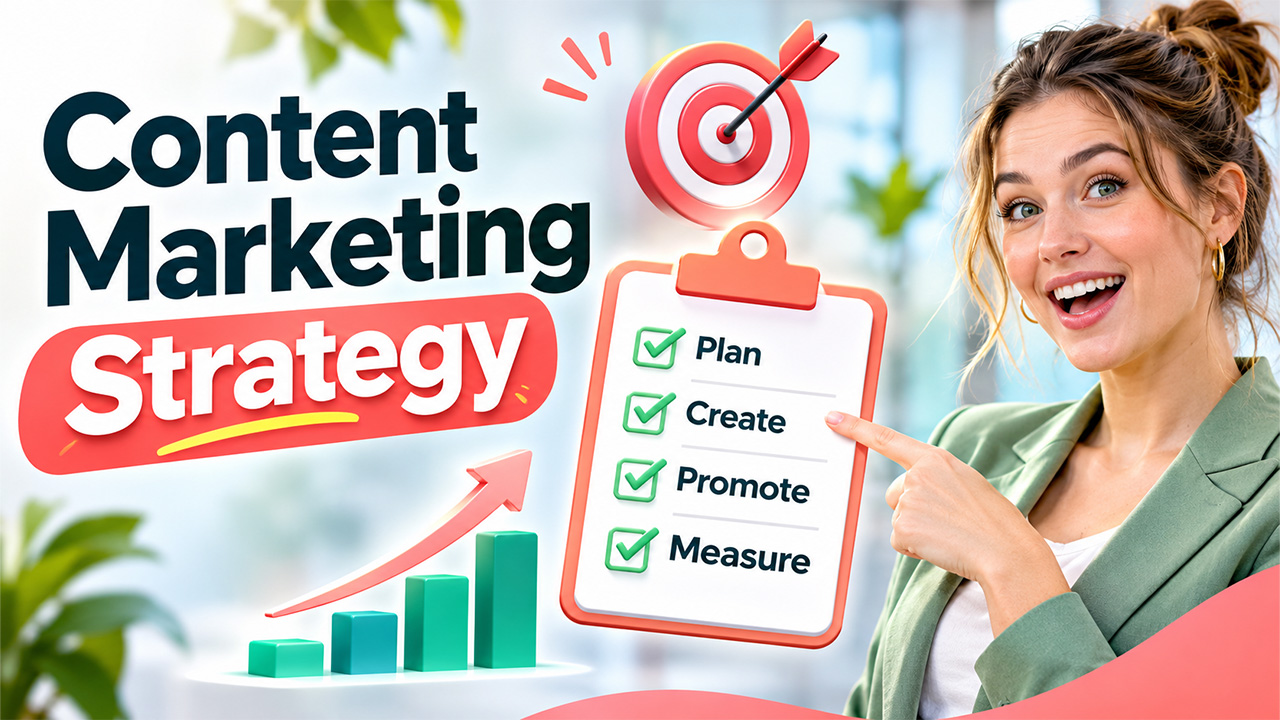
Many businesses publish blog posts, videos, and social updates without a clear plan, then wonder why nothing works. The fix is simple: build a content marketing strategy before you create anything. A strategy tells you who you are talking to, what to say, where to say it, and how to measure results.
This guide walks you through the process in plain language. You can follow it whether you run a small business, work in a marketing team, or manage your own website.
What Is a Content Marketing Strategy?
A content marketing strategy is a documented plan for creating and sharing valuable content that attracts and keeps a clearly defined audience. Its end goal is to drive profitable action, such as sales, sign-ups, or inquiries.
People often confuse a content strategy with a content marketing plan, so here is the difference:
- Content strategy is the big picture. It covers your goals, audience, brand voice, and the reason your content exists.
- Content marketing plan is the practical schedule. It covers what you publish, when, where, and who is responsible.
You need both. The strategy gives direction, and the plan turns that direction into daily action.
Why Your Business Needs a Strategy
Without a strategy, content turns random. You may write about topics your audience does not care about, post at odd times, or forget to promote what you made. A documented approach helps you:
- Stay consistent with your message
- Spend your budget and time on what works
- Attract the right visitors instead of just more visitors
- Measure progress against real goals
Step-by-Step Guide to Building Your Content Marketing Strategy
Step 1: Set Clear Goals
Start by asking what you want content to achieve. Goals should be specific and measurable. "Get more traffic" is vague. "Increase organic website visits by 30% in six months" is a goal you can track.
Common goals include brand awareness, lead generation, sales, customer education, and better search rankings. Choose one to three main goals so your efforts stay focused.
Step 2: Know Your Audience
You cannot create helpful content if you do not know who it is for. Build a simple audience profile, sometimes called a buyer persona. Think about:
- Their age, job, and location
- Their biggest problems and questions
- Where they spend time online
- What kind of content they enjoy (articles, videos, podcasts)
Talk to your customers, read reviews, check social media comments, and look at your sales team's notes. Real feedback beats guesswork every time.
Step 3: Audit What You Already Have
Before creating new content, review the old. A content audit means listing all your existing posts, pages, and videos, then checking how each one performs.
Ask yourself which pieces bring traffic, which are outdated, and which can be improved or combined. Often, updating an older article takes less effort than writing a new one and delivers faster results.
Step 4: Research Keywords and Topics
Keyword research shows you what people actually type into search engines. Tools like Google Keyword Planner, Ubersuggest, or Semrush can help you find topics with good search demand and manageable competition.
Group your keywords into themes. For example, a fitness brand might have themes such as "home workouts," "healthy eating," and "recovery." Each theme can then branch into many specific articles. Also look at what competitors rank for to spot gaps you can fill.
Step 5: Choose Your Content Types and Channels
Not every format suits every audience. Pick the ones that match your goals and your people. Blog posts are great for search traffic, videos work well for explaining products, and email newsletters are excellent for building relationships.
Do not try to be everywhere. It is better to do two or three channels well than ten channels poorly.
Step 6: Plan the Customer Journey
People do not buy the moment they find you. They move through stages, and each stage needs different content. The table below shows a simple way to map this.
| Stage | What the Audience Wants | Best Content Types | Example |
| Awareness | Understand a problem | Blog posts, infographics, short videos | "What Is Email Marketing?" |
| Consideration | Compare solutions | Guides, webinars, case studies | "Top 5 Email Tools Compared" |
| Decision | Choose a provider | Demos, testimonials, free trials | "See Our Tool in Action" |
| Loyalty | Get more value | Newsletters, tutorials, community | "Advanced Tips for Customers" |
Covering every stage makes sure you guide readers from "I have a problem" to "I trust this brand."
Step 7: Build Your Content Marketing Plan and Calendar
Now turn your ideas into a content marketing plan. A content calendar is the best tool for this. It can be a simple spreadsheet showing:
- Topic and target keyword
- Content format
- Writer or owner
- Publishing date
- Promotion channels
Start with a realistic pace. Publishing two quality articles a week beats seven rushed ones. Leave some space for timely topics and trends too.
Step 8: Create High-Quality Content
Quality matters more than quantity. Strong content is clear, useful, and easy to read. Keep these habits in mind:
- Write for people first, search engines second
- Use short paragraphs and simple words
- Add headings, images, and examples to break up text
- Back up claims with data or experience
- End with a clear next step for the reader
Step 9: Promote Your Content
Great content does not spread by itself. Share it on social media, send it to your email list, repurpose it into other formats, and reach out to partners who might share it. Turning one long article into a short video, a few social posts, and an infographic is an easy way to get more from the same effort.
Step 10: Measure, Learn, and Improve
A strategy is never finished. Check your results regularly against the goals you set in Step 1. Useful metrics include website traffic, time on page, conversion rate, leads generated, and search rankings.
Review your numbers monthly. Double down on what works, fix what does not, and adjust your calendar. Over time, this habit of improving is what separates strong strategies from average ones.
Common Mistakes to Avoid

Even good marketers slip up. Watch out for these:
- Skipping research. Publishing based on assumptions wastes time.
- Ignoring consistency. Posting in bursts then going silent hurts trust.
- Focusing only on selling. Content should help first.
- Forgetting to update. Old information damages credibility.
- Not tracking results. If you cannot measure it, you cannot improve it.
Final Tips for Long-Term Success
Be patient. Content builds value slowly, and most businesses see real momentum after three to six months of steady effort. Stay curious about your audience, keep learning from your data, and refine your approach as your business grows. If you want to go deeper into the fundamentals, explore more resources on Content Marketing to strengthen every stage of your plan.
Conclusion
A solid content marketing strategy does not need to be complicated. Set clear goals, understand your audience, research your topics, plan your calendar, create helpful content, promote it, and measure the results. Follow these steps, refine your content strategy as you learn, and keep your content marketing plan flexible. If you also want to grow your reach through quality backlinks and guest posting, tools like GuestPostCRM can help you manage outreach more efficiently.