




Look for almost any topic or a concept online, and you are likely to see a blog appear in the results. However, many people who read blogs on a daily basis cannot define one with total confidence. So, what is a blog, and how is it distinct from a single article or a regular website? In this guide, let us understand the definition, structure, types, and main purpose of a blog. It also explains how important blogs are for business growth. Irrespective of whether you are writing content for personal expression or brand, the section given below provides a practical foundation.
What Is a Blog?
A blog is a consistently updated website, or a website section, where written content is posted in a conversational tone. Posts show up in reverse chronological order; the latest entry is always first displayed. The word blog is short for weblog, which is a blend of words "web" and "blog." The term dates go back to 1997. Early blogs were in the form of online journals, and simple publishing tools came in around 1999 and enabled people without any coding skills to publish content online.
Main features of a blog are as follows:
- Regular updates: Fresh blog posts help readers with a reason to come back.
- Reverse chronological order: Visitors can look for the latest content quickly.
- Conversational Style: The tone is quite approachable instead of technical.
- Reader Interaction: Many blogs turn on comments, which allow readers to share their thoughts and encourage discussions.
- Clear Focus: Most blogs focus on a particular audience or niche.
- Multimedia: Posts typically combine text with videos, images, or podcasts.
A related question audience also ask is "What is a blogging." Blogging is the consistent practice of planning, creating content, publishing, and maintaining content on a blog post. It is now considered a discipline in content on its own, and a lot of people pursue it as a full-time career.
On the other hand, a website refers to a collection of connected web pages hosted with a single domain name. A blog is a specific section of a website dedicated to organizing and publishing articles. Not every website can be considered a blog, but every blog is a website.
What Is a Blog Post, and What Does It Contain?
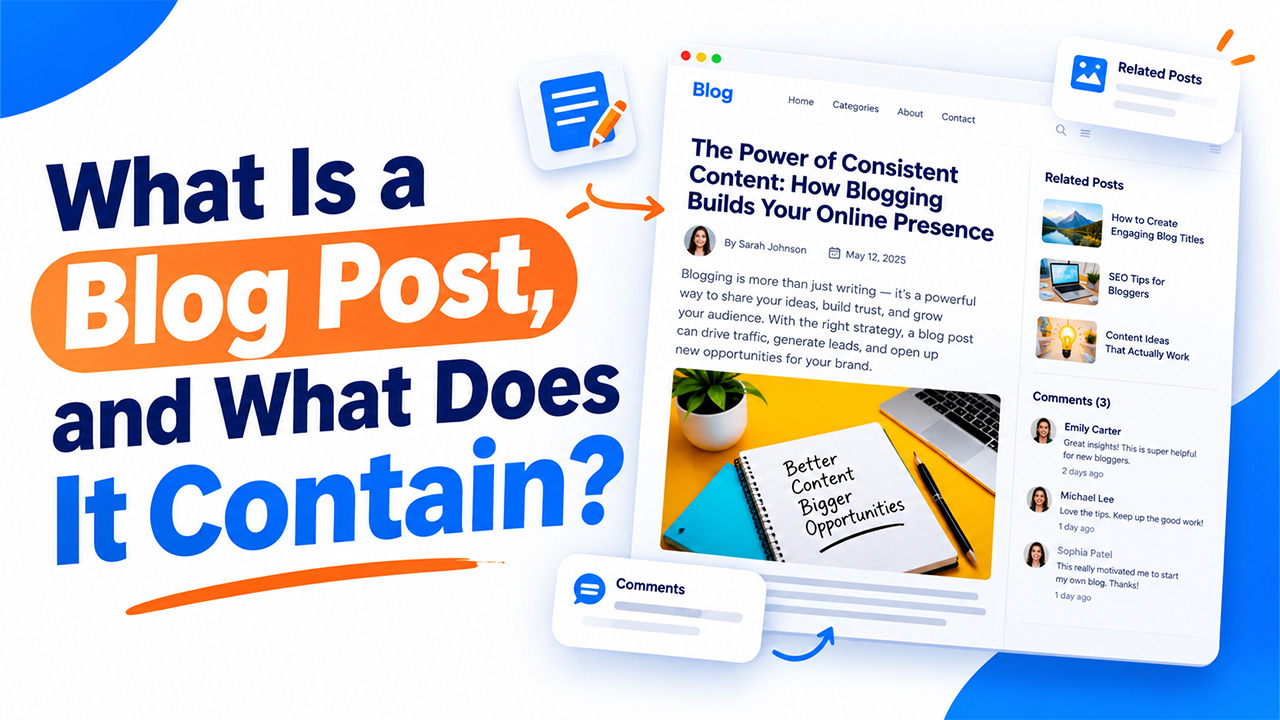
So, what is a blog post? A blog post is a single page of content (an article) published on a blog. Consider the blog to be a library of items where each blog post is an item on its shelves. Posts are typically sorted through categories and tags, which aids readers to find related topics.
A typical post comprises a title, the name of the author, the main body, and the publication date. The body can carry images, text, videos, and other media.
The blog itself typically contains a few common elements:
- Header: Shows the title of the blog or logo and navigation menu.
- Content body: Displays the posts that readers can come to read.
- Sidebar: May involve recent posts, search, social links, and categories.
- Comments section: Allows readers to respond as well as communicate with the author.
- Footer: Contains policy links, copyright details, and subscription forms.
Layouts differ by design and platform. Most of the bloggers depend on a content management system like Wix, WordPress, or Squarespace, along with a web hosting and domain name.
Types of Blogs
Blogs encompass a broad range of subjects, and every type caters to a distinct goal and audience. The table below explains four key categories:
| Type of Blog | What It Covers | Typical Topics |
| Personal Blog | Individual thoughts, experiences, and daily life | Learning a new skill, family, personal journeys |
| Hobby blog | News, tips, pictures, and stories around a single interest. | Chess, stamp collecting, and gardening. |
| Business blog | Product details, company news, and advice associated with the offerings of the company. | How-to guides, product updates, and customer questions |
| News and Informational blog | Updates, facts, and explanations on particular subjects. | Science, technology news, history |
Apart from such categories, blogs are also categorized by subjects. Prominent examples include travel, food fitness, health, finance, fashion, and technology blogs.
Business blogs need special attention since they are a main part of content marketing. Instead of driving an instant sale, they allow readers to become familiar with a brand so that it comes to their mind when they are ready to purchase.
What Is the Purpose of a Blog?

For businesses, the core purpose of a blog is to attract traffic from online searches and increase awareness of a product, brand, or service. This is directly related to SEO (Search Engine Optimization). It is the practice of improving quantity and quality of organic and unpaid traffic to a website by elevating rankings in search engine indexes. In SEO, you either post blog on your website (on-site) or on others' (offsite). You might wonder why you should post blogs on external websites. Well, it has its own SEO benefits as explained in our guide- "What is Guest Posting?"
A blog that is well-managed provides support to different goals:
- Brings visitors to the website of the company.
- Enhances SEO performance through relevant and fresh pages.
- Gives you material for social media and email campaigns.
- Creates an email list and creates leads at the top of the sales funnel.
- Establishes trust and expertise with the right audience.
Blogs can also drive income via affiliate marketing, display advertising, sponsored content, and the own services or products of the blogger.
Steps to Create and Promote a Blog
Good blog content does not start when you begin drafting the content. It should be preceded by detailed research and planning. A straightforward approach operates well:
- Establish Content Pillars: Select a few broad themes that align with the interests of the audience.
- Research Keywords: Check what people are looking for and the language they are using.
- Mix Trending and Evergreen Topics: Evergreen posts remain relevant over time, while trending topics can attract quick traffic.
- Create an Outline: Create the structure through your research before writing.
Drafting tools can expedite the whole process. AI Writing Assistants can assist with the first drafts, outlines, and rewarding, though each piece still requires human review for tone as well as accuracy.
Readability is just as important. Most people process the online content instead of reading through each line, so clear subheadings, short paragraphs, and bullet points make sure that blog posts are structured and easy to follow. Publishing content on a steady schedule and refreshing outdated posts can also secure the trust of the reader.
Once your blog post goes live, it requires promotion. Effective channels including email newsletters, social media, paid advertising, SEO, and guess blogging. Guest posting, as briefly mentioned earlier, implies writing a blog for another website and linking it back to your own blog. Teams that do guest posting at scale typically depend on Blogger Outreach Software to manage connections with website owners and keep track of conversations at one place.
Ultimately, evaluate the results. Helpful metrics such as social shares, blog visitors, and newsletter sign-ups from posts, and leads from gated downloads. Gaining rankings from a blog post can take anything from a few months to even six months, so assess performance over a reasonable timeframe.
Conclusion
A blog is a website or a section on a website that is regularly updated. The posts are presented in reverse chronological order and converse with readers in a conversational tone. A post is a single piece of content on a website, and blogging is the discipline of developing and managing content over time.
If you understand "what is a blog," then it would make it much easier for you to select the right type, establish realistic objectives, and check why blogs are important for visibility, authority, and trust of the audience. With effective planning, readable formatting, regular publishing, and smart promotion, a blog can become a reliable asset for both individuals and businesses.