



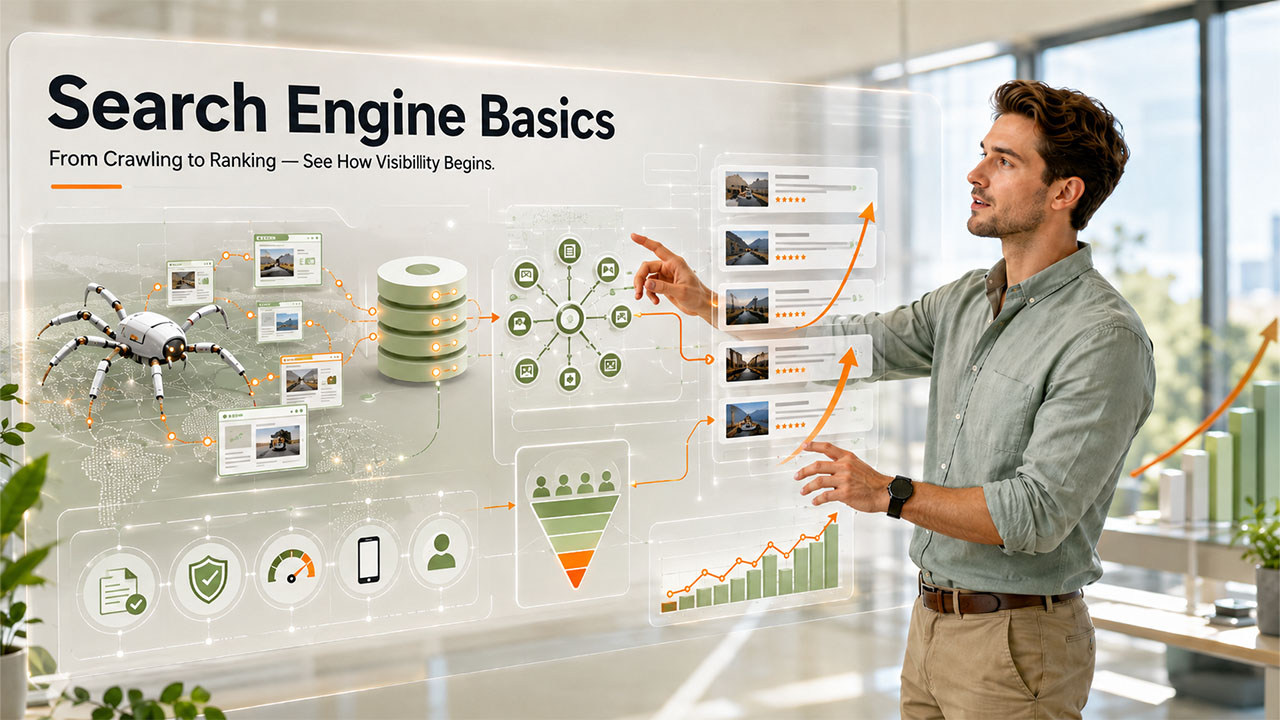
In the current digital landscape, search engines have grown to become an essential part of everyone's daily life. Whether it's simply looking for information, shopping online, finding local businesses, or researching a topic, search engines offer all the relevant results within seconds.
This makes understanding of search engine basics important for website owners, marketers, and content creators. By discovering search engine basics, users can learn how to efficiently organize their website and improve online visibility.
Understanding Search Engine
A search engine is a digital tool that helps users find relevant information on the internet by searching through billions of web pages. When users enter a query, the search engine analyzes the request and provides a list of results, which includes web pages, images, videos, and other relevant content.
A search engine primarily acts as a bridge between users and online content. Through a search engine, users can quickly access relevant information within seconds, rather than manually browse through countless websites.
A search engine performs three key functions, which include:
- Crawling: It uses automated bots, called crawlers or spiders, to discover new and updated web pages across the internet.
- Indexing: The information collected is stored and organized in a database, called an index.
- Ranking: The search engine evaluates the indexed pages and ranks them based on relevance, quality, authority, and user intent.
In a search engine, web crawling and indexing play a significant role in collecting and storing relevant data.
Modern search engines do more than just match keywords. They analyze content, understand natural language, and interpret user intent. In a modern search engine, various factors affect website search engine positioning, which include content quality, website authority, page speed, mobile-friendliness, and user experience.
How a Search Engine Works
A search engine is a system that is designed to help users find relevant information efficiently and quickly. The working of a search engine can be understood in four main stages: crawling, indexing, processing, and ranking.
1. Crawling: Discovering Web Pages
The first step of a search engine's work is crawling. The platform uses automated programs which are called crawlers or spiders. These bots are used to explore the internet and follow links from one page to another.
2. Indexing: Organizing Information
Once a web page is discovered by the crawler, the search engine processes the data and stores it in a massive database, called an index. During indexing, the search engine analyzes the following:
- Page text and keywords
- Heading and structure
- Images and metadata
- Page topic and relevance
- Overall quality signals
3. Processing
When a search query is entered by the user, the search engine tries to understand the actual meaning behind the query.
4. Ranking
After understanding the query, the search engine looks for the relevant files in its index and ranks them based on relevance, quality, authority, and user intent.
Why Is a Search Engine Essential

The search engine primarily acts as the gateway between the users and the vast amount of data available on the internet. Instead of manually browsing through millions and billions of websites, the search engine offers instant and accurate access to useful information with a simple query.
The main importance of a search engine is as follows:
- Instant Access to Information: The search engine offers users answers to queries within seconds
- Organizing Massive Content Data: The internet contains billions of webpages, videos, images, and documents. A search engine uses various tools to efficiently collect and organize data into a structured database.
- Helps in Growth of Businesses: For businesses, a search engine acts as a powerful tool that can help with marketing and visibility. The search engine helps in attracting targeted traffic, increasing brand visibility, and generating leads and sales.
- Improves Decision Making: The search engine offers users easy access to reviews, comparisons, and detailed information, helping in an improved and informed decision-making process.
- Digital Marketing Performance: A search engine plays an important role in improving the digital marketing performance of businesses. Search engines help in driving high-intent traffic and also provide organic visibility for free.
Search Engine Basics: Types of Search Engines
There are 5 main types of search engines, which are classified based on how each collects information, processes data, and delivers results.
1. Crawler-Based Search Engine
These are the most common types of search engines, which uses automated bots to scan websites, collect information, and store it in a massive database. It offers various key features like automatically discovering new web pages, continuously updating its database, and offering highly relevant and faster results.
Example
- Microsoft Bing
2. Directory-Based Search Engine
The directory-based search engine mainly relies on human editors instead of automated bots. It features a human-review listing, which is organized into categories and is more structured. This type of search engine offers limited scalability to the user.
Example
- Yahoo Directory
3. Meta Search Engine
Meta search engines do not maintain their own database. The search engines pull results from multiple search engines and combine them into one list. This type of search engine offers users a broader perspective and features no independent crawling systems.
Example
- Dogpile
- Startpage
4. Hybrid Search Engine
The hybrid search engine combines the features of crawler-based results with directory listings. This type of search engine uses automated crawling, but also includes manually curated or paid listings.
Example
- Older version of Yahoo Search
5. Vertical Search Engine
This type of search engine focuses on a specific type of content, instead of the entire internet. It offers specialized results, higher relevancy within a niche, and a better user experience basics.
Example
- YouTube
- Amazon
Search Engine Basics: Benefits and Challenges
Benefits of Search Engines
The search engines offer various benefits to individuals and businesses. Some of the key benefits of the search engine are as follows:
- Quick Access to Information: Search engines allow users to find relevant answers within seconds, saving valuable time and effort.
- Large Information Coverage: Search engines index billions of web pages, offering wide coverage of any topic.
- Easy Navigation: With a search engine, users can simply search and reach the correct website quickly.
- Local Search Convenience: With a search engine, the user can find local services, like hospitals, restaurants, and shops, by using location-based results. Readers can also check out the blog on Local SEO for Beginners, to better understand the benefits of local search.
Challenges of Search Engine
Some of the major challenges with search engines are as follows:
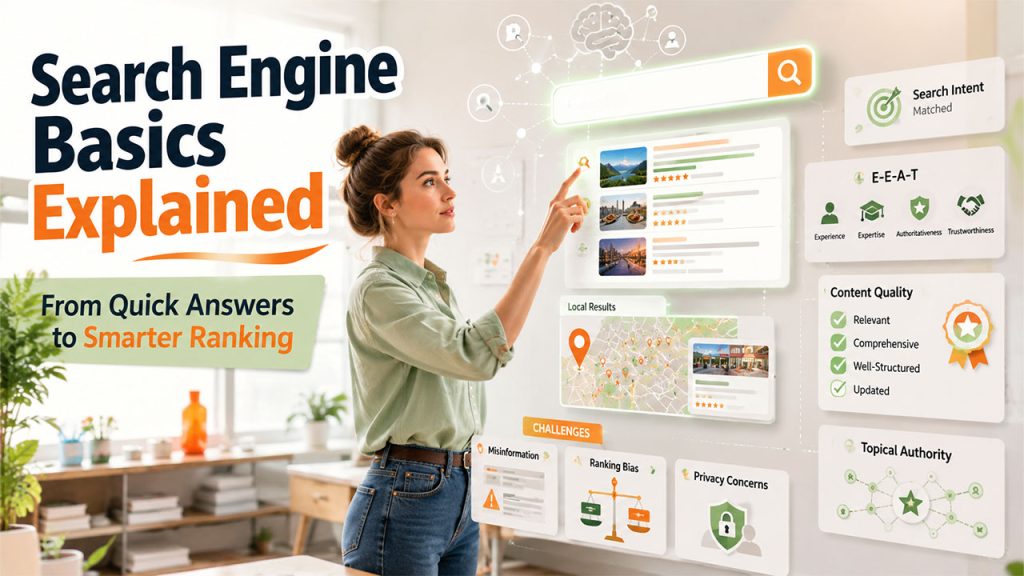
- Misinformation: Not all indexed content is reliable. Some websites might contain false or misleading information.
- Ranking Bias: The algorithm of the search engines may favor certain websites, which may lead to useful content of less popular websites appearing lower.
- Privacy Concerns: Search engines often track user behavior to offer more personalized results.
Search Engine Basics: Factors Affecting Ranking in 2026
In 2026, search engine ranking is influenced mainly by a mix of traditional SEO signals and AI-driven evaluation systems. Various modern search engines focus more on understanding user intent and content quality, rather than just keywords.
Some of the major factors affecting ranking in 2026 are as follows:
- Search Intent and Content Relevance: Search engines prioritize content that best matches the actual intent of the user.
- E-E-A-T: E-E-A-T stands for Experience, Expertise, Authoritativeness, Trustworthiness, acts as a major ranking factor in 2026. According to this rule, search engines prioritize high-trust websites.
- Content Quality and Depth: In 2026, comprehensive and detailed content is given more priority. High-ranking content includes factors like well-structured content, which is easy to read and is updated regularly.
- Topical Authority: Websites that publish content consistently around a specific niche perform better in SEO rankings.
How AI Is Changing Search Engine Results
With the rise of AI-powered search experiences, search engines are no longer limited to displaying a list of links. Modern platforms now generate summaries, answer questions directly, and provide contextual information within the search results page.
One of the biggest developments is the use of AI Overview, which provides users with AI-generated summaries for informational queries. These summaries pull insights from multiple sources and aim to deliver quick answers without requiring users to visit several websites.
As AI search continues to evolve, website owners should focus on:
- Publishing accurate and trustworthy content
- Demonstrating expertise and first-hand experience
- Using clear headings and structured information
- Answering common user questions directly
- Keeping content updated regularly
Websites that provide helpful and reliable information are more likely to gain visibility in both traditional search results and AI-generated search experiences.
Best Practices to Improve Search Engine Visibility
Understanding how search engines work is only the first step. To improve visibility and rankings, website owners should follow proven SEO best practices.
Some important recommendations include:
- Create high-quality and original content
- Optimize title tags and meta descriptions
- Improve website loading speed
- Ensure mobile-friendly design
- Use descriptive internal linking
- Build high-quality backlinks
- Update older content regularly
- Focus on user experience and readability
Many businesses today are also evaluating the differences between traditional optimization and newer AI-focused approaches. Understanding GEO vs SEO can help marketers determine how to optimize content for both search engine rankings and AI-generated search results.
By consistently following these practices, websites can improve organic traffic, user engagement, and long-term search performance.
Conclusion
A search engine plays a crucial role in collecting, organizing, and delivering information to users across the internet. Understanding search engine basics helps users in gathering valuable insight on how search engine optimization and online visibility work. From business owners to bloggers or website administrators, understanding search engine basics helps improve the foundation of SEO performance. By focusing more on high-quality content, stronger user experience, and technical optimization, users can significantly improve their online visibility and reach their targeted audiences.
Frequently Asked Questions
What is crawling in a search engine?
Crawling is the process through which automated bots scan websites and discover new or updated pages across the internet.
What is indexing in SEO?
In SEO, indexing is the process of storing and organizing web page information in the database of a search engine.
What is search intent in SEO?
In SEO, search intent is the main purpose behind the user's query.
How do search engines help businesses?
Search engines help businesses in attracting organic traffic, generating leads, improving visibility, and growing their online presence.



.png)
.png)