


.png)
.png)
Suppose you saw two salespeople at a mall. One stands outside the store, trying to grab every passerby’s arm and get them to come in and look at shoes they never asked about. You start walking faster and avoiding eye contact. On the other hand, the second salesperson is inside the store, actually helping someone who walked in on their own. The second conversation went smoother because the person wanted to be there in the first place.
That's basically the difference between old-school marketing and inbound marketing. One is chasing people down. The other is being ready to help the moment someone shows up looking for exactly what you offer. Inbound marketing is built entirely around being that second salesperson who is present, useful, and easy to find, instead of being pushy and impossible to avoid.
What Is Inbound Marketing?
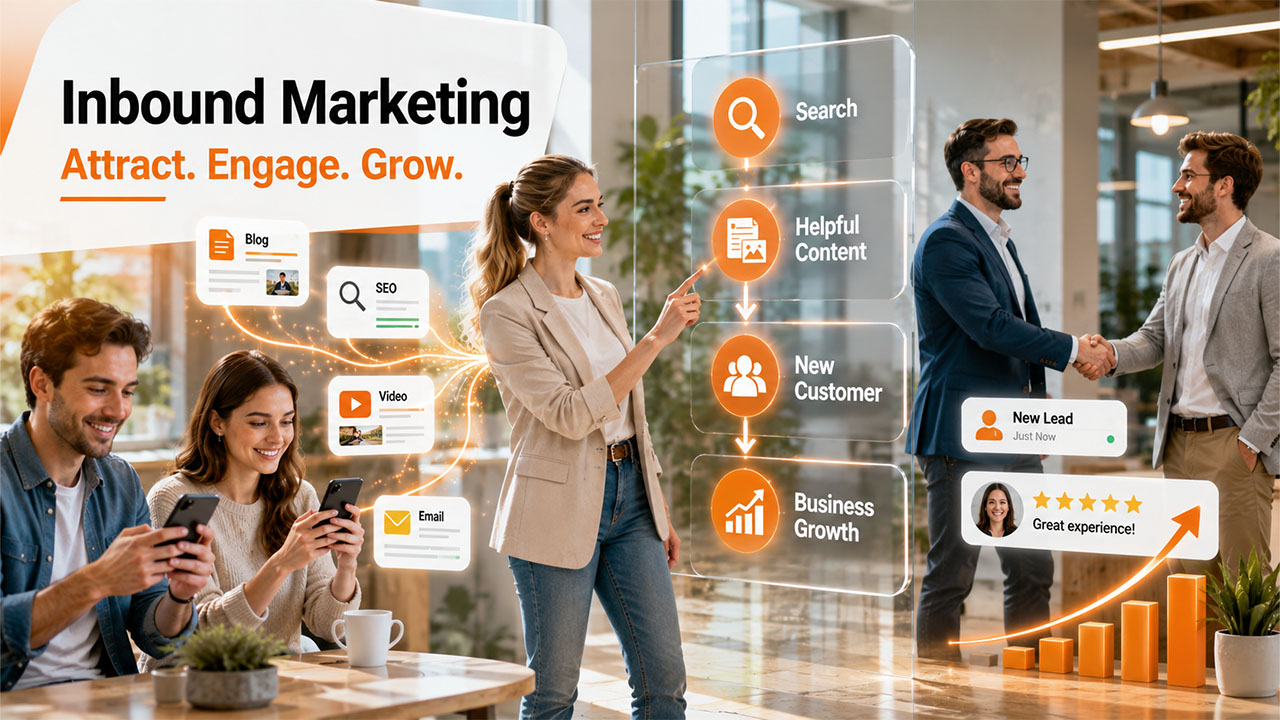
Inbound marketing is a way of growing a business by attracting customers instead of chasing them. This makes it fundamentally different from direct marketing, which reaches out to people directly through methods like mailers, cold calls, or promotional emails, regardless of whether they've shown any interest. Rather, it attracts people with content that actually answers their questions and solves problems. This is a way of earning attention, not buying it.
For instance, a business publishes something like a blog, tutorial video, or how-to guide that is genuinely useful, and people find it because they’re already looking for answers. They don’t feel forced or ambushed. They came looking for it and found it worth their time.
Here's a quick side-by-side to make the difference even clearer:
| Inbound Marketing | Outbound Marketing |
| Earns attention through helpful content | Buys attention through ads and cold outreach |
| Permission-based; people choose to engage | Interruption-based; messages are pushed out |
| Built on blogs, SEO, email nurturing, video | Built on cold calls, TV ads, purchased lists |
| Reaches people already looking for solutions | Tries to create demand from a broad audience |
| Grows more effective over time | Costs stay steady or rise with more reach |
How Inbound Marketing Works: The 3-Step Process Explained
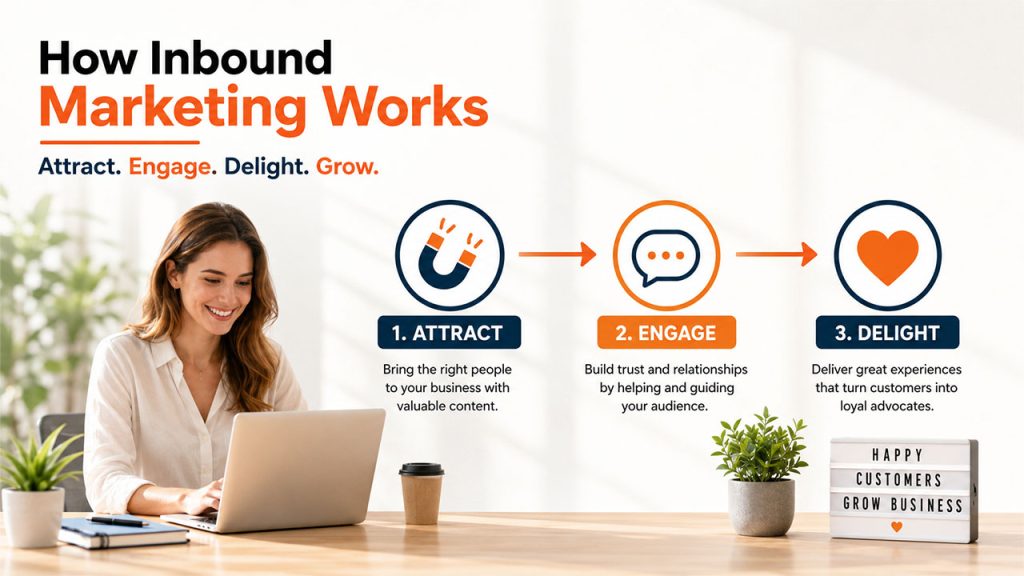
Inbound marketing depends on three stages that are interconnected with each other. Let's find out what these stages are:
Attract
Everything starts here. It's not about drawing more people, but the right people to your business. A blog post, a helpful video, or a well-optimized landing page are the tools that pull someone in when they're searching for a solution that you happen to offer.
Engage
It kicks in the moment someone starts paying attention. Here, you build a relationship instead of pitching your ideas. It might mean answering questions through live chat, sending a helpful follow-up email, or having your sales team lean into real Sales Techniques like selling solutions instead of selling products. This makes conversation feel like advice, not a hard sell. The chances of people buying from you increase if they feel you understand their problems.
Delight
This stage comes after someone becomes a customer. This determines whether you’re still helping them, checking in, or answering their questions. A delighted customer brags about your business in their circle, which brings in new prospects without you having to lift a finger. This creates the flywheel effect, which means happy customers become your best marketing channel.
Core Fundamentals of a Successful Inbound Marketing Strategy
It's imperative to understand the basics of inbound marketing before you go any further.
Buyer Personas: First, clearly define your target audience who you’re actually trying to reach. Understand their pain points, goals, frustrations, and what keeps them up at night. Without this, your content remains useless, serving no one in particular.
Content Creation: Create content in preferred formats that fit your audience, such as blog posts, video, how-to guides, or social media posts. The content must be SEO-optimized, informative, and genuinely helpful to the audience. It must not just exist for the sake of publishing something.
SEO Strategy: No matter how great your content is, it becomes useless if people can’t find it. Use the right and semantic keywords that help your content show up on search results when people are actually searching for it.
Lead Generation and Nurturing: Once someone shows interest, you need a way to stay connected with them. You can usually do that through email sequences or providing downloadable resources, so they don’t just disappear.
A Defined Buyer's Journey: People move through stages before they buy. First, they come across your business, they consider whether they should make the purchase or not, and finally they take action. Your content should meet them at whichever stage they're actually in.
Once you understand these fundamentals, you can easily build an inbound marketing strategy.
Inbound Marketing Automation: How to Scale Lead Generation Efficiently
However, doing all of this manually, for every single lead, doesn’t help your business scale. That's where marketing automation comes into the picture.
Automation basically runs your entire inbound strategy without you having to manage every single interaction manually. For instance, someone downloads a guide about your product, and that action automatically triggers a chain of events, like a welcome email is sent, possibly a case study a few days later, then maybe an e-invite to a webinar. Your sales team automatically gets notified once that person’s engagement crosses a certain threshold. There is no need for anyone to sit there and track it by hand.
As per recent marketing industry data, most marketers are increasingly automating their business to keep up with reporting and data analysis. Additionally, a large share of customer journeys now mostly run on autopilot. This is because managing thousands of individual touchpoints just isn’t realistic once your audience grows past a certain size. However, keep one thing in mind: automation is not meant to replace the core thinking behind inbound marketing. It only aims to automate repetitive, hard work to free up your team, so they can spend more time on strategy and less time hitting “send” over and over.
How to Build an Effective Inbound Marketing Strategy (Step-by-Step Guide)
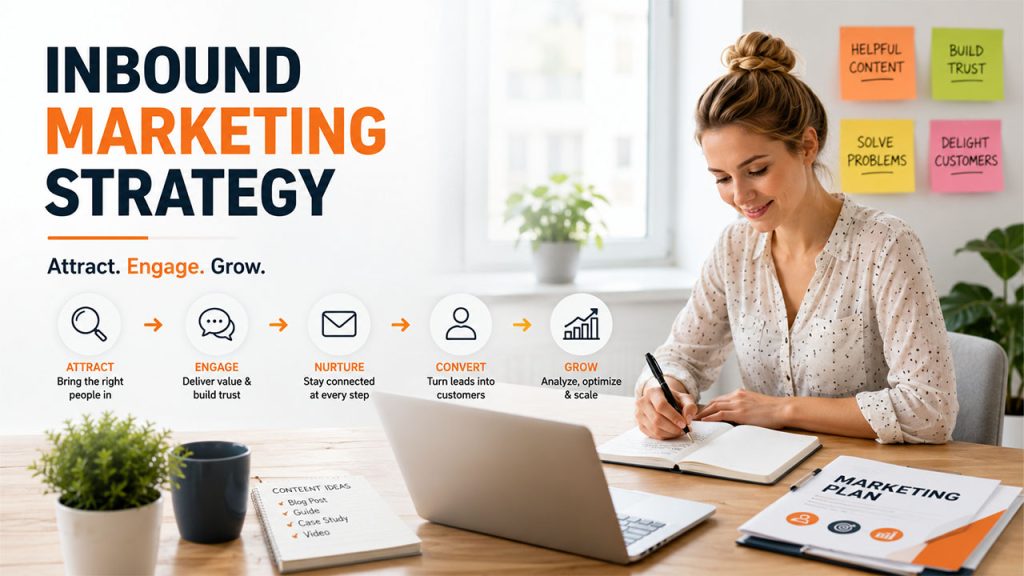
If you’re new to this, here’s how to build an inbound strategy from scratch. Follow these simple steps to get started:
- Define Your Ideal Buyer Personas: Get specific about who you're trying to reach. What problems do they have and where are they looking for solutions?
- Map the Customer Buyer's Journey: Figure out what someone needs to know at each stage, such as when they're just becoming aware of a problem, when they're comparing options, and when they're ready to decide.
- Create Content for Every Stage of the Buyer's Journey: Awareness-stage content should educate people by providing valuable information. Decision-stage content should build trust and make the choice easier.
- Optimize Your Content for Search Engines (SEO): Do thorough keyword research and find keywords that your audience is using to search for their problems or solutions and build your content around those terms naturally. Do not stuff keywords awkwardly.
- Capture, Nurture, and Convert Leads: Add forms, offer downloadable resources, and build simple email sequences that keep the conversation going after someone shows interest.
- Measure Performance and Continuously Optimize: Look at what's actually working, which content brings in leads, which emails get opened and put more effort into what's performing.
None of this needs to be complicated at the start. A single blog post, one email sequence, and a simple way to capture leads is a perfectly reasonable place to begin.
Real-World Inbound Marketing Examples That Drive Results
Sometimes the idea clicks faster with real examples, so here are a few ways inbound marketing shows up in practice:
- A Software Company Publishing How-to Guides: When someone is looking for “how to migrate data between platforms” and lands on a detailed blog post from a software company and downloads a related checklist; that one search just became a lead.
- A Local Bakery Sharing Recipe Videos: Instead of just running ads and hoping for people to find the shop, a bakery owner shares a short video of their baking process to get people interested. When people engage and share the post, they eventually stop by because they feel connected to the brand.
- A Large Brand Building Loyalty Through Helpfulness: Even the DoorDash Marketing Strategy follow this principle. Instead of only pushing promotions, the brand invests in making the ordering experience itself feel effortless and rewarding, which keeps people coming back without needing a constant stream of ads.
- A B2B Company Offering Free Tools or Calculators: These free, useful tools attract exactly the right audience. When people are already interested in the problem, the company solves without a single cold email being sent; they stick by.
Final Thoughts
Nobody walks faster just to avoid a helpful salesperson. Rather, they run to avoid the pushy salesperson who grabs their arm outside the store. Inbound marketing portrays the idea of being the person inside the store who is ready to assist the moment someone shows up, already looking for what you offer. It does not support chasing people down who never asked for your pitch in the first place. It's true that it takes more patience than just buying ad space. However, it builds something that ads alone can’t: trust that actually lasts longer and customers who actually come back because they were willing to, not because they were talked into it.

.png)
.png)