


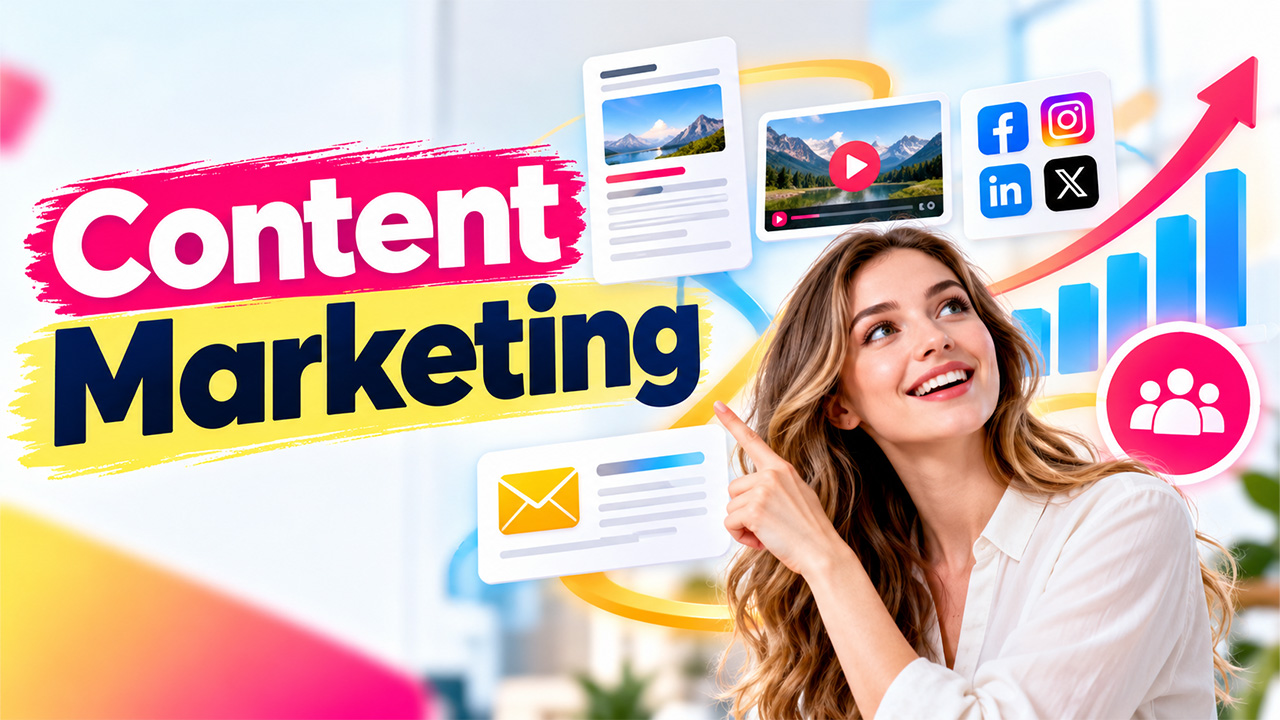
Marketing content is more than just advertising your business to get the customers you need through the doors; you also need valuable information to answer questions, fix problems, and understand your business. That's what makes it so valuable for your company's marketing mix. Content marketing allows you to build relationships with targeted customers by providing relevant, valuable content rather than over-selling. From blog posts and videos to email newsletters and social media updates, there are many different ways for your company to share content and reach the right audience, improve brand awareness, and facilitate growth; this article is best to get started.
What Is Content Marketing?
Content marketing is a type of marketing that involves the creation and sharing of relevant, useful, consistent content in order to attract and acquire a clear target audience, in order to get the customer to take the action you want. Afterall this isn't selling; it's educating.
However, unlike conventional marketing, it is focused on creating an interest that lasts over a period of time. It aids a customer through their buying cycle, from identifying the problem, researching several solutions, to finally making a purchase. Content can take on a variety of mediums, for example, articles, videos, podcasts, newsletters, infographics, and the list goes on. The medium you opt for is largely determined by your target audience, purpose, and resources.
What are the Types of Content Marketing?
Another content piece can be used across a variety of formats to reach your audience through channels. They all have their own specific purpose and audiences.
- Blog: You create excellent content as blog posts to be at the top of customer questions and to promote your knowledge in the subject matter. In this "what is a blog" beginner's guide, discover the truth about blogs and how new articles rank online.
- Video: Product videos, tutorials, interviews, explainer videos, and the videos that present the information in an interesting way. Videos are very useful when it comes to explaining the process or simply doing a demonstration.
- Content on Social Media: Companies can share news and content of value for their audiences and reach them on the most appropriate networks with short content publications, carousels, infographics, conversations, etc.
- Email Newsletters: The content of the email that is sent out to subscribers consists of advice, information on the company, products, and education.
- E-book and Downloadable Guides: Cover specific topics and are used to convert prospects into leads by offering them to business owners in exchange for an email.
- Podcasts: Creating audio content allows businesses to comment on the news, interview industry experts, and reach those thousands of listeners who prefer to listen.
Choosing the correct format is under your control, what point on the funnel they are able to buy into, and what your business can do to open that up.
What Are the Advantages of Content Marketing?

There are many reasons to have a carefully thought-out content marketing strategy. The reason for convincing you to start your path is mentioned below.
- Boosts Brand Awareness
It makes the company known to a much larger target audience. Search engines, social media, and email marketing channels allow new customers to discover content they did not know about the company.
- Helps with SEO Benefits
Content that can answer a search engine query question helps the search engines index your site for topical relevance. The content is what enable it to acquire organic traffic.
- Establishes Trust and Credibility
Potential customers are comfortable dealing with companies that provide valid, valuable data. Educational material reinforces your competence and shows buyers what you have to offer.
- Forges and Cultivates Leads
Content gives your prospects and leads an incentive to interact with you. Guides, webinars, newsletters, and case studies convince your audience to become a subscriber, a prospect, or the BDR's new best friend.
- Strengthens Customer Relationships
Useful material does not become ineffective upon purchase of the product. Being successful with tutorials, product instructions, and keeping updates lets buyers be fascinated with the product, and they get the same value out of it.
They take time to manifest. You need to make regular posts, on-topic, and reach the correct audience.
How to Create Effective Content Marketing Strategies
Successful content marketing strategies connect business objectives with audience needs. The following steps help businesses create a practical plan.
- Define Clear Goals
Start by identifying what the business wants to achieve. Goals may include increasing website traffic, improving brand awareness, generating qualified leads, or supporting customer retention. Specific goals make it easier to evaluate progress.
- Identify the Target Audience
Understand the audience's interests, challenges, preferences, and buying behavior. Customer feedback, website analytics, surveys, and sales conversations can reveal which topics deserve attention.
- Research Topics and Keywords
Find the questions people ask about the business's products, services, and industry. Keyword research helps identify relevant search terms and opportunities to create useful resources. Focus on matching search intent rather than repeating keywords unnecessarily.
- Choose Suitable Content Formats
Select formats based on the topic, audience preferences, and available resources. For instance, a detailed tutorial may work best as an article, while a product demonstration may be more effective as a video.
- Create a Content Calendar
Plan topics, publishing dates, formats, responsible team members, and distribution channels. A content calendar helps maintain consistency and reduces last-minute planning.
- Create and Distribute Valuable Content
Produce accurate, original, and easy-to-understand material. Use relevant examples, clear headings, and practical advice. Tools such as AI content writing can help with brainstorming, outlining, and editing, but human review remains important for accuracy, originality, and brand voice.
Businesses can also explore related publishing opportunities, such as learning What Is Guest Posting, to understand how contributing content to other relevant websites can support visibility and audience reach.
How to Measure Content Marketing Performance

Measuring performance helps businesses understand whether their content supports their goals. The right metrics depend on the purpose of each campaign.
- Website Traffic: Track page views, unique visitors, and traffic sources to understand how people discover content.
- Engagement: Monitor time on page, scroll depth, comments, shares, and email click-through rates. These metrics provide clues about audience interest, although no single engagement metric proves content quality.
- Search Performance: Review organic clicks, impressions, search rankings, and click-through rates to evaluate visibility in search results.
- Lead Generation: Measure newsletter subscriptions, guide downloads, contact form submissions, and qualified leads generated through content.
- Conversion Rate: Calculate the percentage of visitors who complete a desired action, such as requesting a demo or making a purchase.
- Return on Investment (ROI): Compare the value generated by content with the costs of planning, production, distribution, and maintenance. Attribution can be complex, so businesses should consider how content contributes to the broader customer journey.
Use analytics tools and regular reporting to compare results against the original goals. You can also take the help of AI writing Assistants to generate suitable content formats for yourself.
Conclusion
Content marketing helps businesses attract audiences, answer customer questions, build credibility, and support long-term growth. Its effectiveness depends on choosing suitable content formats, understanding audience needs, setting clear goals, and publishing useful information consistently. A well-planned strategy also includes distributing content through relevant channels and measuring performance against meaningful objectives. Businesses should treat content as an ongoing process rather than a one-time activity. By reviewing results, updating existing resources, and responding to changing customer needs, they can improve their approach over time and create stronger relationships with potential and existing customers.