


Managing link-building campaigns for multiple clients can quickly become challenging for SEO agencies. Each client has different SEO goals, target keywords, competitor websites, backlink requirements, budgets, and reporting expectations. What works for one client may not work for another. Without a structured process, agencies can struggle with missed deadlines, duplicated outreach, inconsistent reporting, and poor campaign visibility.
This is where link building client management becomes essential. A well-organized management process helps agencies handle multiple campaigns, maintain communication, monitor backlink placements, and deliver measurable results without overwhelming their teams.
Whether an agency manages five clients or fifty, having the right workflows, tools, and tracking systems can make a significant difference. Let's explore how SEO agencies can use a Link Building CRM to manage multiple link-building clients efficiently while maintaining campaign quality and client satisfaction.
1. Create a Separate Link-Building Strategy for Every Client
One of the biggest mistakes agencies make is applying the same link-building strategy to every client. Although certain outreach techniques may work across industries, each website has different requirements.
For example, a SaaS company may need backlinks from technology blogs, software review platforms, and business publications. Meanwhile, an eCommerce business may benefit more from niche product blogs, industry publications, and relevant resource pages.
A structured link building client management process starts with understanding individual client requirements.
Before launching a campaign, agencies should identify:
- Target keywords and landing pages.
- Industry and niche relevance.
- Competitor backlink profiles.
- Preferred website authority and quality.
- Monthly backlink targets.
- Campaign budget and deadlines.
- Existing backlink gaps.
Documenting these details helps account managers create campaigns that align with each client's SEO objectives.
2. Organize Clients and Campaigns in a Centralized System
Managing several clients through spreadsheets, emails, and separate documents can become confusing. Important information gets scattered, and team members may struggle to identify the latest campaign updates.
A centralized management system provides a single location for organizing client information and monitoring campaign progress.
Agencies should maintain separate client profiles containing:
- Client website and industry.
- Assigned account manager.
- Campaign objectives.
- Target URLs and anchor texts.
- Outreach contacts and publishers.
- Approved and rejected websites.
- Backlink placement records.
- Payment and campaign status.
This approach makes SEO client management more organized because team members can access the information they need without repeatedly searching through different platforms. Using dedicated client management software also helps agencies maintain separate client records, organize campaign details, and coordinate tasks from one centralized location.
For growing agencies, a dedicated link-building CRM can make this process easier by keeping client records, publisher information, campaign activities, and communication history connected.
3. Build a Standardized Workflow for Every Campaign
When multiple campaigns run simultaneously, inconsistent processes can create unnecessary delays. One team member might complete publisher research, while another starts outreach without checking whether the website has already been contacted.
A standardized workflow helps everyone follow the same process.
A practical link-building workflow can include:
Step 1: Client onboarding: Collect SEO goals, target pages, keywords, and campaign expectations.
Step 2: Website research: Identify relevant publishers and evaluate their quality.
Step 3: Prospect approval: Share potential websites with the client when approval is required.
Step 4: Outreach execution: Contact publishers and manage conversations.
Step 5: Content coordination: Prepare, review, and submit guest posts or other approved content.
Step 6: Link verification: Check published URLs, anchor text, link attributes, and destination pages.
Step 7: Reporting: Update campaign records and share progress with clients.
A consistent process reduces confusion, improves accountability, and makes it easier to identify bottlenecks.
4. Assign Clear Responsibilities to Team Members
Managing multiple campaigns becomes difficult when everyone is responsible for everything. Without clear ownership, tasks can be duplicated or overlooked.
A growing link-building agency should divide responsibilities according to team members' strengths and experience.
For example:
| Team Role | Primary Responsibility |
| Account Manager | Client communication and campaign planning |
| SEO Researcher | Competitor analysis and prospect research |
| Outreach Specialist | Publisher communication and follow-ups |
| Content Writer | Guest post creation and editing |
| SEO Executive | Backlink verification and reporting |
Smaller agencies may assign multiple responsibilities to one person, but every task should still have a clearly defined owner.
This structure improves link building client management by making it easier to track responsibilities, identify delays, and maintain consistent campaign execution.
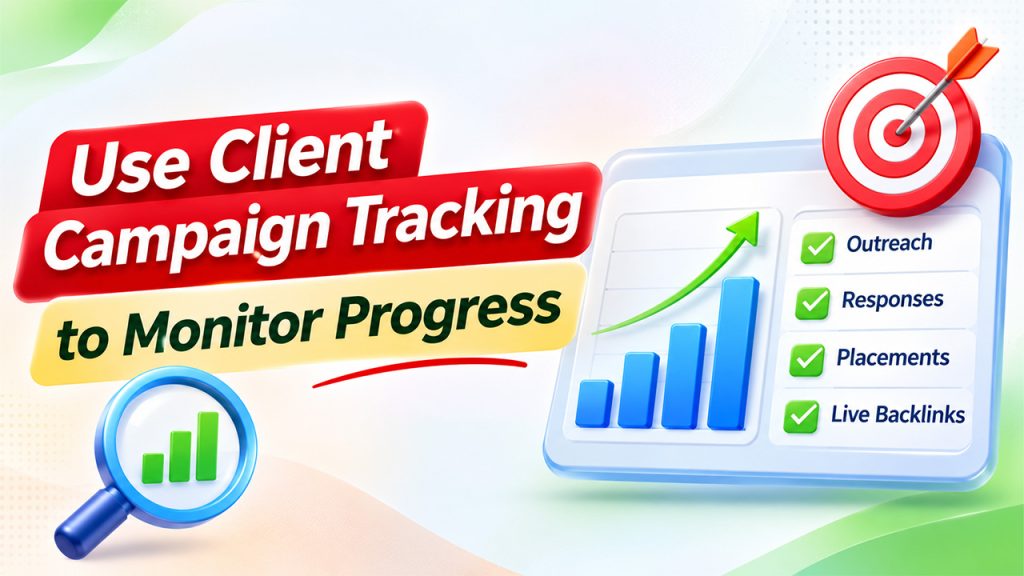
5. Use Client Campaign Tracking to Monitor Progress
One of the most important aspects of managing multiple clients is knowing exactly what is happening in every campaign.
Without proper tracking, account managers may struggle to answer basic client questions:
- How many websites have been contacted?
- How many publishers have responded?
- How many guest posts are awaiting publication?
- Which backlinks have gone live?
- Are any placements pending verification?
- Which campaigns are falling behind schedule?
Effective client campaign tracking provides visibility into every stage of the link-building process.
Agencies should monitor important campaign metrics such as:
| Metric | What It Tracks |
| Prospects Identified | Number of potential publishing websites |
| Outreach Sent | Emails and pitches delivered |
| Positive Responses | Publishers interested in collaboration |
| Placements Approved | Websites approved for publication |
| Live Backlinks | Successfully published backlinks |
| Pending Placements | Links awaiting publication |
| Verified Backlinks | Links checked and confirmed |
A centralized tracking dashboard allows managers to compare campaign progress and identify which clients need additional attention.
6. Maintain a Quality-Control Process for Backlinks
When agencies manage several clients, there is often pressure to achieve monthly backlink targets. However, focusing only on backlink quantity can damage campaign quality.
Every backlink should be evaluated based on its relevance, authenticity, and potential SEO value.
Before approving a placement, agencies should review:
- Website relevance to the client's industry.
- Organic traffic quality and consistency.
- Content quality and editorial standards.
- Website indexing status.
- Outbound link patterns.
- Spam signals and suspicious activity.
- Whether the backlink points to the correct destination.
- Whether the agreed anchor text is used appropriately.
A reliable link building client management process should also include post-publication verification.
A backlink appearing in a publisher's email confirmation does not necessarily mean it is live. The team should visit the published page and verify that the link works correctly.
Quality control protects client websites and helps agencies build sustainable backlink profiles.
7. Automate Repetitive Link-Building Tasks
As the number of clients increases, manual campaign management becomes increasingly time-consuming. Researchers may spend hours updating spreadsheets, outreach specialists may send repetitive follow-ups, and account managers may manually prepare reports.
Automation can reduce this workload.
Agencies can automate tasks such as:
- Outreach follow-up reminders.
- Campaign status updates.
- Duplicate prospect detection.
- Backlink verification reminders.
- Client reporting notifications.
- Task assignments and deadline alerts.
- Publisher contact organization.
A specialized link-building CRM can further simplify these operations by connecting prospect databases, email communication, campaign records, and backlink tracking. Automated Guest Posting Software can also help agencies organize publisher outreach, manage guest post submissions, track publication status, and reduce repetitive campaign tasks.
However, automation should support human decision-making rather than replace it. Publisher relevance, content quality, and relationship management still require careful evaluation.
8. Keep Client Communication Transparent
Clients want to understand what their SEO agency is doing and whether their investment is producing meaningful progress.
Poor communication can create dissatisfaction even when the campaign is performing well.
Agencies should establish a regular reporting schedule and communicate campaign updates clearly.
A useful monthly report should include:
- Campaign activities completed.
- New backlinks successfully published.
- Websites contacted and responses received.
- Pending placements and expected timelines.
- Changes in target keyword performance.
- Challenges and recommended next steps.
Avoid presenting backlink numbers without context. Explain why the placements matter, how they support the client's SEO strategy, and what activities are planned next.
Transparent communication strengthens SEO client management and helps establish realistic expectations.
9. Monitor Campaign Budgets and Resource Allocation
Not every client has the same budget or backlink requirements. Some campaigns may require extensive publisher research, while others may focus on a smaller number of highly relevant placements.
Agencies should monitor campaign spending, resource allocation, and operational costs separately for each client.
Important areas to track include:
- Publisher placement costs.
- Content creation expenses.
- Outreach team hours.
- Research and prospecting costs.
- Software subscriptions.
- Campaign-specific operational expenses.
A clear budget management system helps agencies identify profitable campaigns and prevent overspending.
It also allows managers to adjust campaign activities when client requirements or available resources change.
10. Choose the Right Link-Building Management Software
Managing multiple clients becomes much easier when agencies use software designed for campaign organization and workflow visibility.
Although general project management tools can handle basic task assignments, dedicated link-building platforms can provide more specialized functionality.
Look for features such as:
- Multiple client and campaign management.
- Publisher and prospect databases.
- Email communication tracking.
- Duplicate website and contact detection.
- Backlink status monitoring.
- Anchor text and target URL management.
- Team collaboration.
- Automated reminders.
- Client-specific reporting.
For example, a Link Building Agency CRM can help SEO agencies maintain separate client inventories while managing outreach activities, organizing publisher relationships, assigning team responsibilities, and tracking backlink placements from a centralized dashboard.
The right platform should reduce administrative work, improve data accuracy, and make campaign performance easier to understand.
Conclusion
Managing multiple link-building clients requires more than finding publishers and acquiring backlinks. Agencies need organized workflows, clear responsibilities, reliable tracking systems, quality-control processes, and consistent client communication.
A structured approach to link building client management helps SEO teams manage several campaigns without losing control of individual client requirements.
By centralizing campaign information, automating repetitive activities, monitoring backlink quality, and using dedicated management software, agencies can improve operational efficiency while maintaining strong client relationships.
Ultimately, successful link-building operations depend on balancing scalability with quality. Agencies that build repeatable systems today will be better prepared to manage more clients and deliver consistent results as their businesses grow.