


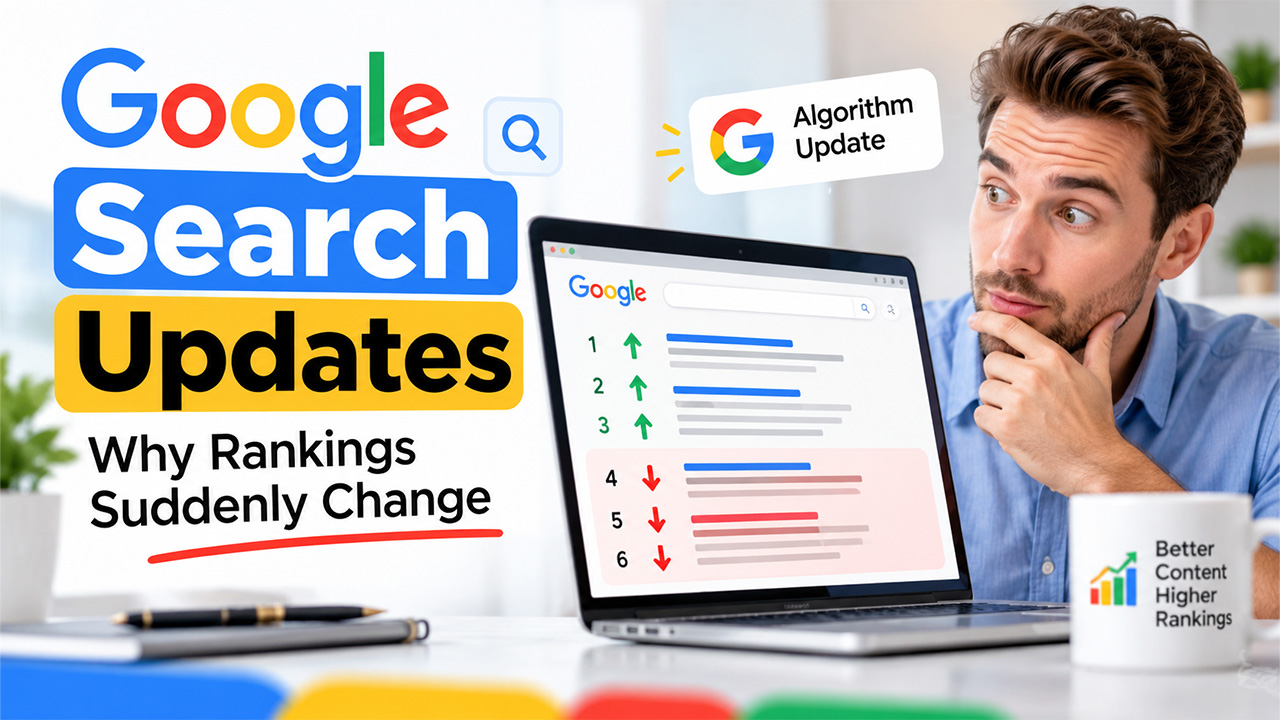
A site ranks among the top pages of Google for a long period but loses positions suddenly, even without any substantial changes made to the website. Most of the time, this is the moment when one may hear about Google search updates.
It is important to understand that Google continually modifies its ranking algorithms and updates them from time to time. This means that some updates affect some sites and may not change how other sites rank. We discuss various Google updates that are involved in ranking changes.
What Are Google Search Updates?
Google uses automated ranking systems to decide which pages appear for a search query. It regularly improves these systems, while larger changes can appear as named updates on its Search Status Dashboard.
Core updates make broad changes to Google's ranking systems rather than targeting one website. Spam updates improve Google's ability to detect websites that break its spam policies. A ranking drop doesn't always mean a penalty, especially after a core update.
Google describes core updates as broad changes designed to improve the relevance and usefulness of search results. A site can lose rankings simply because another page becomes a better result for a particular query.
Major Google Search Updates in 2026

Google's 2026 update history already includes several confirmed ranking changes. Its official dashboard lists a February Discover update, March core and spam updates, the May core update, and a June spam update. It also lists an August 2026 spam update.
| Update | What Google Changes |
| February 2026 Discover update | Google improves the way Discover shows useful, original, timely, and locally relevant content |
| March 2026 spam update | Google updates its spam detection systems |
| March 2026 core update | Google makes broad changes to its core ranking systems |
| May 2026 core update | Google makes another broad change to its core ranking systems |
| June 2026 spam update | Google makes another adjustment to its spam detection systems |
| August 2026 spam update | Google lists another spam-related ranking update |
If you want a closer look at the May change, you can also read our guide to the Google May 2026 Core Update.
How Google Updates Affect Your SEO
A Google SEO update doesn't mean you need to rewrite your entire website overnight. First, you need to identify what actually changes.
When Google releases an update, some websites may see an improved ranking when it comes to their SERPs because the algorithm for new evaluations of how relevant an internet page is for certain search queries. The result could be increased traffic and higher click-through. It is also worth noting that even a slight rating shift may lead to a significant increase in organic traffic for a specific page receiving many queries.
It is also essential to take into consideration the intent behind the user's search because content should deliver answers and not just repeat keywords. Unnatural links may be harmful as well.
For example, if a guide falls from position 3 to position 8, don't immediately delete it. Check what the pages above you did better.
Major Google Algorithm Updates That Shape SEO
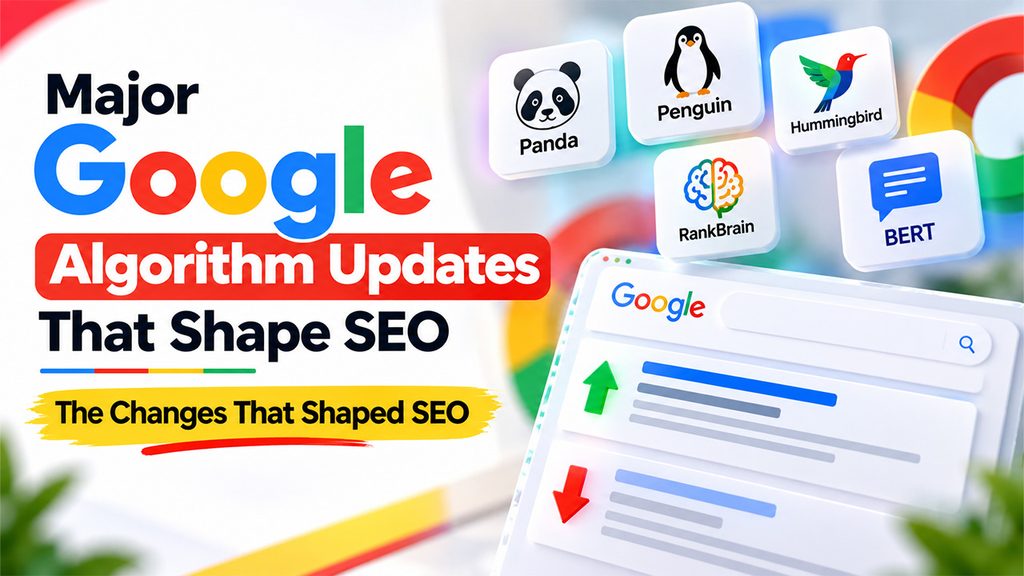
Some older updates still matter because their underlying systems become part of Google's wider ranking technology. Panda, Penguin, and Hummingbird are good examples.
Panda focuses on improving the visibility of original, high-quality content, while Penguin targets manipulative link practices and link spam. Hummingbird improves Google's understanding of search queries and their meaning, while RankBrain helps Google connect words with concepts and understand unfamiliar searches. BERT also improves how Google understands words by looking at how they work together within natural-language queries.
These changes show why SEO doesn't stay fixed. Google gradually shifts from matching exact words towards understanding meaning, relevance, quality, and the usefulness of a page.
What Should You Do After a Google Algorithm Update?
Your first response matters. Making five major changes at once makes it difficult to know what actually helps. Start by looking at the changes that appear in your search performance instead of making assumptions about what caused them.
- Check Google Search Console and use Google Search Operators to find pages and queries with noticeable changes.
- Compare dates before and after the confirmed update period.
- Review your content for accuracy, originality, clarity, and first-hand value.
- Check technical issues such as indexing, mobile display, and page performance.
- Avoid quick fixes based on random SEO advice from social media.
- Monitor the results after making meaningful improvements.
Google specifically recommends deeper assessment when a page experiences a large and sustained ranking drop. It also says there's no single action that guarantees recovery after a core update.
Conclusion
Google consistently alters how its search algorithms comprehend and evaluate content, which means that SEO is never static. Nevertheless, it is not necessary to take note of every update rumor that arises online. The reason behind these Google search updates becomes clearer when you understand that Google aims to improve the quality of its results.
Keep your information precise, relevant, and authentic. Monitor technical performance and use Search Console to track traffic changes. Update your content when needed to improve your website. The correct evaluation of the pages after the core update should be conducted before any significant edits are made.



.png)
.png)