




.png)
.png)
Any user who spends a lot of time on the internet eventually faces a similar question: Should you utilize a proxy or Virtual Private network to ensure privacy and access restricted content? Both are ubiquitous solutions that reroute the traffic of your network and hide your real IP address. However, the way they achieve that varies significantly. Knowing the basics of VPN or proxy is the first step you have to take in selecting the right platform for your browsing habits, whether that is for streaming, gaming, or just ensuring that your data stays away from prying eyes. In this comprehensive guide, let us break down the VPN vs Proxy debate in plain language, encompassing how each one works, their key advantages, and which option makes sense in different situations.
What Is a VPN?
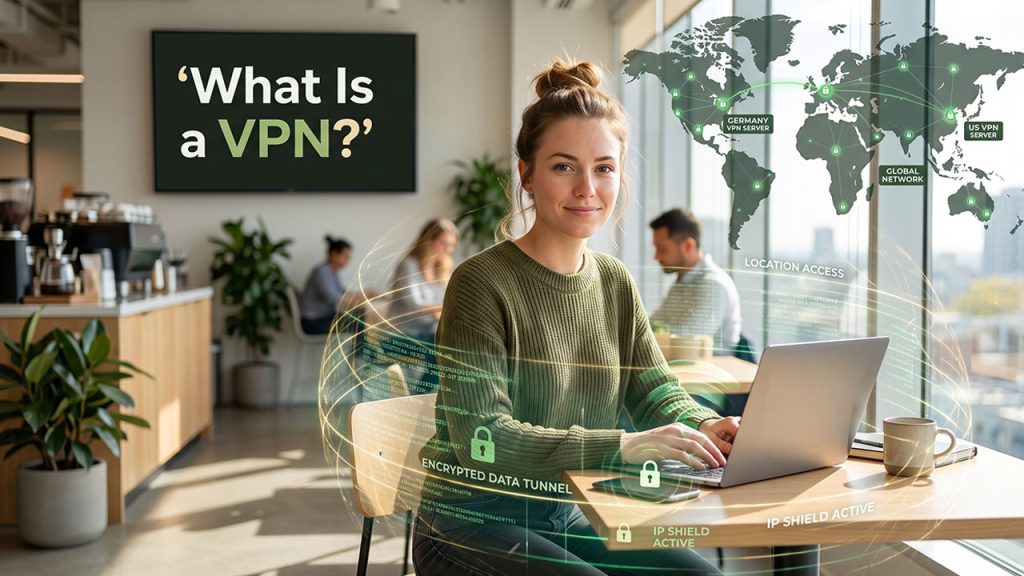
VPN is a short term that refers to Virtual Private Network, which basically creates an encrypted channel between your device and remote server operated by your VPN provider. Once the connection is all set up:
- All the network traffic, not only your web browser, is routed through this encrypted network.
- Your real IP address get replaced by the IP address of the VPN server.
- Websites, apps, and your internet service provider cannot see the original location or activity.
A VPN applies encryption at the system level and secures everything that is run on your device, including apps, background processes, and browser tabs alike. This makes sure that VPNs become a major choice for people who use a set-it-and-forget-it layer of security instead of changing settings for every task. Different VPN providers also allow users to choose from server locations across distinct countries, which ensures flexibility for getting access to region-specific content along with core privacy benefits.
What Is a Proxy?

You can say that a proxy works as a middleman between your device and the internet, with limited scope. When you leverage a proxy:
- Only the traffic that comes from a browser or application is directed through the proxy server.
- Your IP address is hidden for the specific connection.
- Many proxies do not encrypt your traffic, implying that your information can be visible still to your network or ISP.
Proxies are commonly used for quick tasks like accessing geo-restricted content or anonymous browsing in a single session, without the broader security that a VPN provides. There are also different types of proxies, including HTTP proxies for simple web browsing and SOCKs proxies for handling a wider range of traffic types, such as file transfers or gaming connections. This variety ensures that proxies become flexible for technical needs, even though they do not offer similar blanket security as a VPN.
Difference Between Proxy and VPN
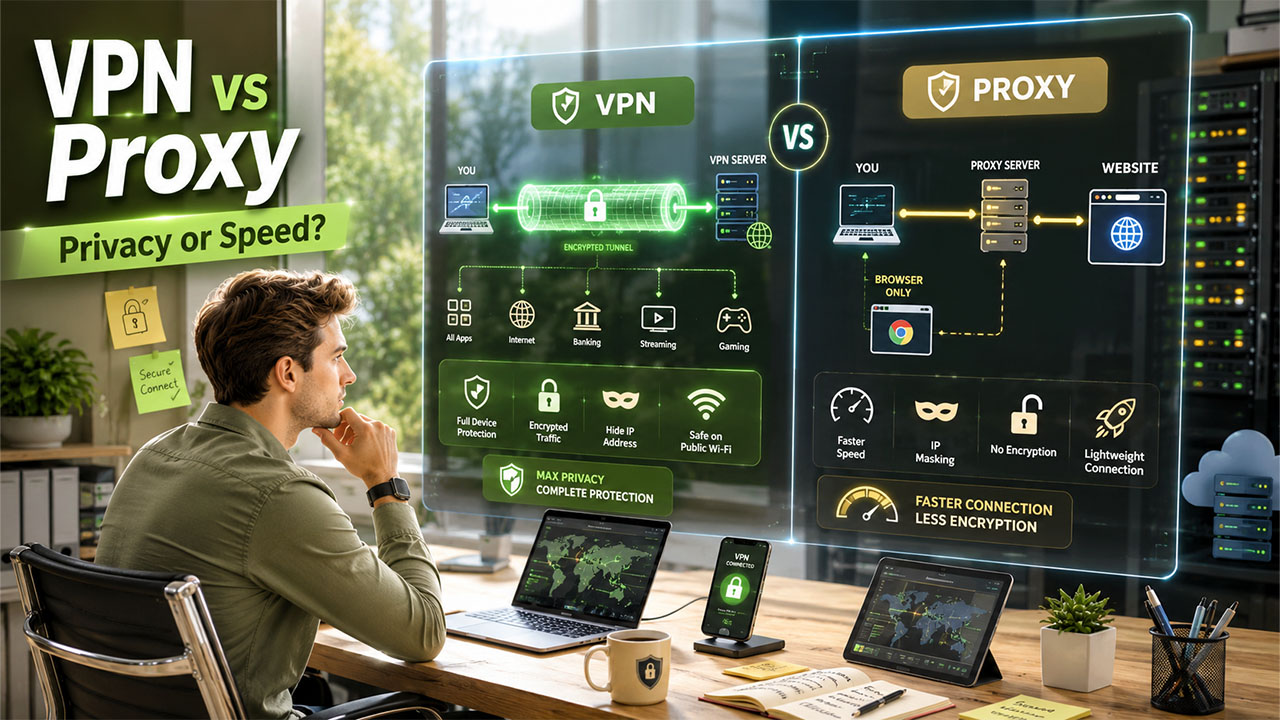
The difference between proxy and virtual private network can be understood with three key factors including encryption, coverage, and speed.
Encryption
- VPNs make sure that all data that you are sending or receiving from your device is encrypted.
- Proxies often pass all data without any encryption level, leaving it vulnerable to interception.
Coverage
- A VPN makes your entire device secure, covering each connection and application.
- A proxy essentially secures only browser or app it is secured on.
Speed and Reliability
- VPNs can essentially make your connection slow because of encryption overhead, though premium providers reduce this.
- Proxies are generally quicker because they skip encryption, but compromises on security.
When you compare proxy vs VPN for daily use, the best choice depends on whether speed or privacy is important for the task at hand. It is also worth noting that VPNs often need installation of dedicated apps or software, while proxies can get directly configured within browser settings without any additional download, which impacts how fast each one can be set up.
Benefits of VPN
- Full-device Encryption: Each browser and app on your device remains secure, not on just a single connection.
- Stronger Privacy: Your network administrators and Internet Service Provide cannot track the activity in your browser.
- Reliable Access to Restricted Content: A VPN is quite effective as an Unblock Website Browser solution for websites blocked by organization or regional networks. However, they should be used for ethical purposes only.
- Better for Sensitive Tasks: Remote work, digital banking, and managing personal data are a lot safer with complete encryption in place.
- Consistent Security Across Different Networks: Public Wi-Fi at airports or cafes becomes considerably less risky with an active Virtual Private Network.
Benefits of Using a Proxy
- Quicker Setup: Proxies are fast to configure for a single browser session without needing to install dedicated software.
- Compact for Straightforward Tasks: Ideal choice if you want to access region-locked content or geo-restricted content for research or studying purposes.
- No Changes Across the System: Only the application you set up is affected, leaving other traffic unbothered.
- Valuable for Testing: Marketers and developers generally utilize proxies to check how websites show up from distinct locations.
Common Applications for Virtual Private Networks and Proxies
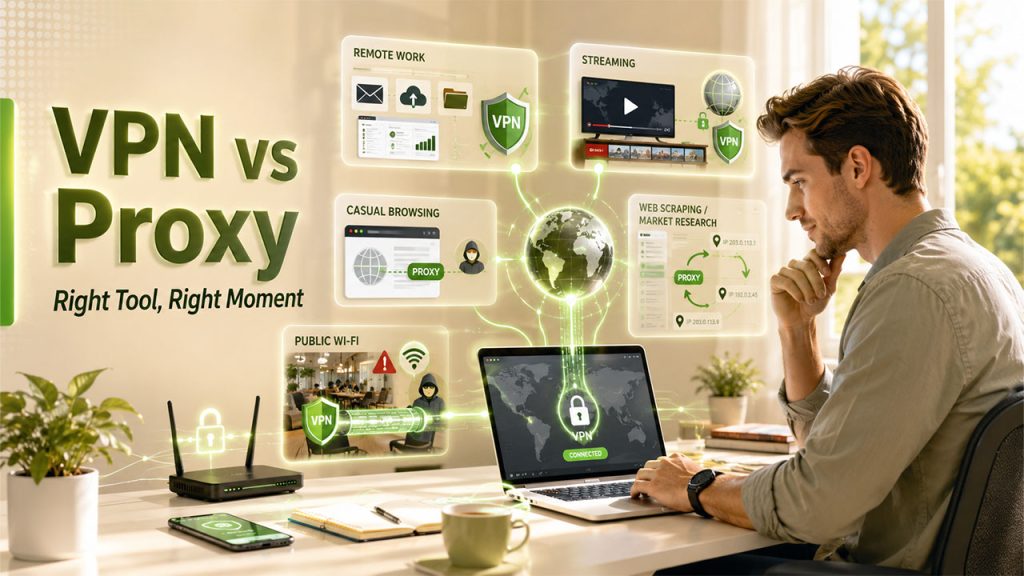
Different situations call for distinct tools and understanding where each one aligns can save your frustration and time.
- Remote Work: A Virtual Private Network is often a better fit since it secures all work-related traffic, including file sharing, email, and internal company tools.
- Casual Browsing: A proxy can be sufficient if you want to check how a website looks from another geographical location without requiring complete encryption.
- Streaming: VPNs tend to provide more consistent accessibility to geo-restricted platforms because they encrypt track and make it difficult to detect and block the device.
- Web Scraping or Market Research: Proxies are generally preferred here because they enable fast IP rotation across different requests without the encryption overhead.
- Public networks: A VPN is a considerable safer option on WI-FI, which is unsecure, where the lack of encryption of proxy exposes the data more.
Which One Should You Choose?
Selecting between a VPN and proxy ultimately depends on your priorities:
- Choose a VPN if: You require privacy on a consistent basis, plan to manage confidential data, or need protection for your complete device.
- Choose a proxy if: You require a fast or temporary change for one browser task, and speed is important than security.
It's also worth pointing that VPN use depends on regional regulations in a few cases. For example, there are a few discussions around VPN Age Verification Law Utah accentuate how specific states are introducing rules that impact digital access and VPN, making it value to remain informed about local laws before depending on such tools.
Conclusion
Both VPNs and proxies serve the purpose of masking your IP address and helping you access restricted content, but they are not interchangeable. A VPN offers stronger, device-wide encryption suited for privacy-conscious users, while a proxy provides a faster, lighter option for quick, single-app tasks.
Understanding the fundamentals of VPNs or proxy helps you match the right tool to your specific needs, whether that's secure browsing, streaming, or bypassing regional restrictions. For those who handle sensitive information regularly or simply want peace of mind while browsing, the added encryption of a VPN makes it worth the small trade-off in speed. When security and consistent protection are the priority, a VPN is generally the safer long-term choice among the Best VPNs available today.
Note: Whether it is proxy or VPN, they must be used for ethical use-cases only.



.png)
.png)