




.png)
.png)
Most businesses wake up thinking about their products, their revenue targets, and their quarterly goals. What they should be thinking about is simple: what does the customer actually need? That shift in perspective is what customer-centricity really comes down to. It’s not a buzzword or a marketing trend. It’s a fundamental choice about how you build your business, from product development to how you treat people after they buy.
The reason this matters so much is that businesses built around products inevitably fail when those products stop being what people want. But businesses built around people- genuinely understanding what customers need and delivering exactly that they’re the ones that survive recessions, outmaneuver competitors, and build loyalty that lasts decades. It’s the difference between a company people choose and a company people tolerate.
In this blog, we’ll walk through what customer-centricity really is, why it’s becoming essential for business survival, how to build a customer-centric strategy that actually works, and look at real companies getting it right so you can see what it looks like in practice.
What Is Customer-Centric Meaning?
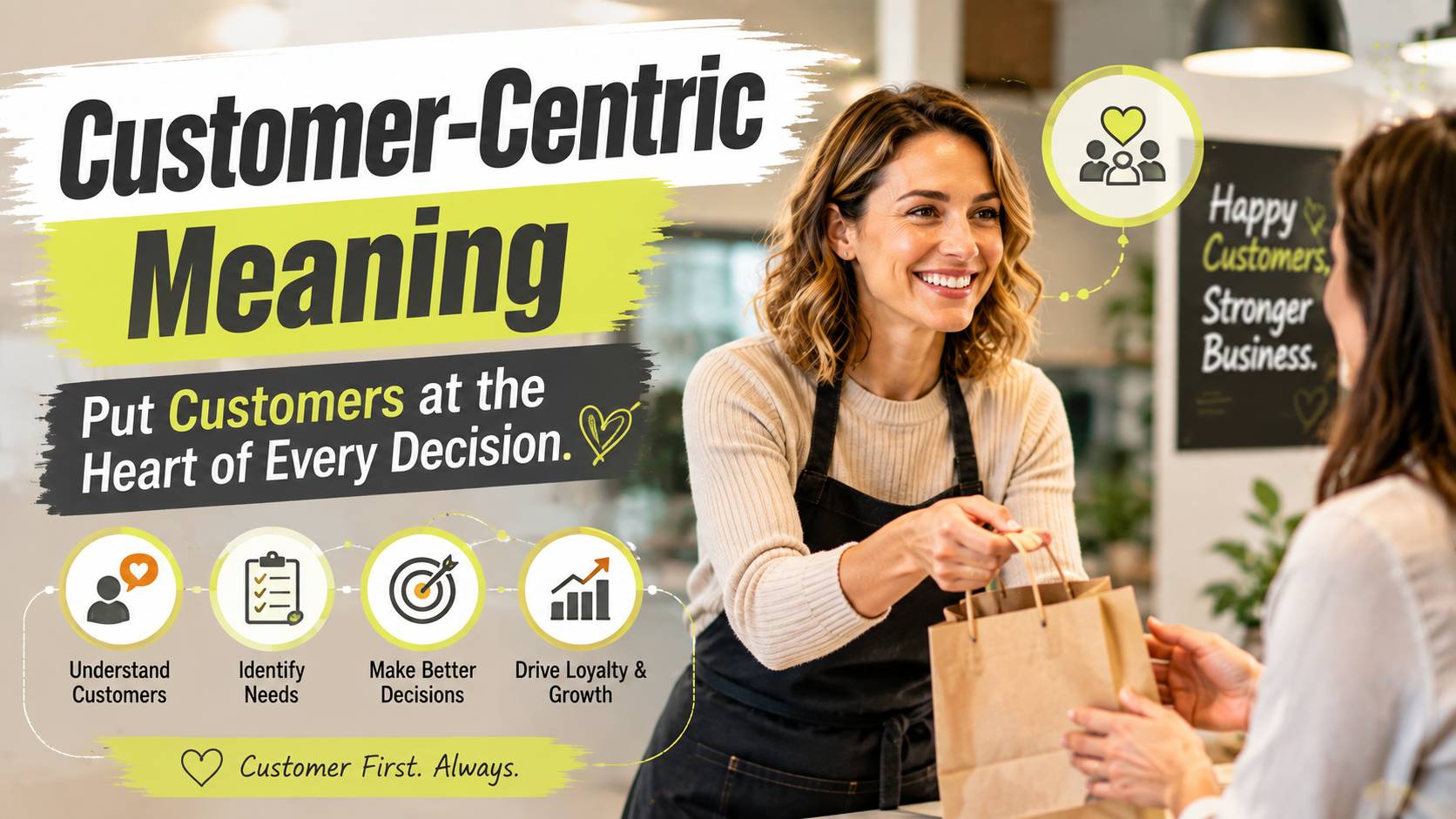
In essence, the customer-centric meaning entails a business strategy whereby customer needs and preferences drive all decisions that you make. It does not involve what you would like to sell but rather what your customers need to buy. It does not involve pushing your product roadmap but rather developing products based on customer demands.
Being customer-centric, one always thinks whether the decision will benefit the customer or not. Will this change make it easier for him or harder? Does this change correlate with customer feedback? In case of any doubts, the decision shouldn’t be made even if all the calculations prove that it is necessary.
It will look different for each business, but the theory will remain the same. If your company is in software, it involves creating something that your customers asked for rather than something your engineers wanted to create. If your business is retail, it involves selling the sizes and styles that your customers are buying rather than just the cheapest ones. If you’re in services, it involves providing the type of communication that your customers prefer.
The most important part about this is: being customer-centered does not mean passivity or reaction. It means proactive engagement in discovering customer needs and then constructing your business around meeting those needs.
Why Customer Centricity Matters

There are practical reasons to adopt a customer-centric approach. The benefits can be measured, immediate, and reflected directly in your bottom line.
- Customer loyalty skyrockets: Customers stick around because you solve problems that really matter to them. This translates into repeat purchases, renewals, and referrals.
- Brand reputation is enhanced: Happy customers share their experience. They write positive reviews, recommend you to friends, and become your marketing tool for free.
- Product development becomes more efficient: No more discussions in meetings about which features to develop. Instead, you’ll receive real feedback from customers that tells you which things are actually important to solve their pain points. You save time, launch faster, and go to market with useful features.
- You develop pricing power: If your product solves problems for customers in an optimal way, they will pay you more. You compete not on price but on value.
- Alignment within your company increases: Everyone from engineering and customer support teams understands the purpose of their job. This creates a common sense of direction and eliminates misunderstandings and friction.
The firms that are succeeding in a congested market are not doing so because of having the lowest prices and the highest number of features. They are succeeding because they know their clients better than any other firm does.
Building a Customer-Centric Strategy
The realization that you should be customer-centric is one thing; turning it into an actionable strategy is a completely different story.
A customer-centric strategy starts with one simple principle: gathering data about your customers and actually paying attention to it.
- Collect feedback on an ongoing basis: Through surveys, help desk tickets, sales conversations, and social media mentions. What you want is to find the recurring topics people complain about, are happy with, or request.
- Organize that data so everyone can see it: A customer insight locked in one person’s email is useless. You need it visible to product, marketing, sales, and support teams so they all make decisions based on the same reality.
- Track what matters to customers, not just what’s easy to measure: Revenue numbers tell you what happened. Customer satisfaction, churn rate, and feedback themes tell you why it happened and what’s coming next.
- Close the loop with your customers: If you get feedback from a customer, make sure to let them know what you have done about it. If you release a new feature due to their suggestions, make sure to thank them.
Many businesses use Customer Relationship Management systems to centralize this work, keeping customer data, interactions, and feedback in one place so teams can actually coordinate instead of working in silos.
The real shift happens when your organization sees customer feedback not just as additional information but as essential information for its operations. When this moment arrives, customer-centricity ceases to be an aim and turns into practice.
Real-World Examples of Customer Centricity in Action

The companies getting this right aren’t doing anything magical. They’re just making deliberate choices to prioritize what customers actually want over what’s easiest to build or sell.
Patagonia created their passionate community not because their outdoor clothing is cheaper, but because they realized their customers cared about the environment. The products were designed in such a way that less waste was created, repair services were provided for free so that people wouldn’t feel like buying something new, and public positions regarding environmental issues were taken even though it led to losing some sales. The customers do not buy from Patagonia; they promote this company because it can be seen that the company is focused on the customers’ values, not on the values as a marketing slogan.
Spotify focuses on the customers not only at the customer experience layer, but also at the data layer. Not everyone receives the same experience, but personalized playlists and recommendations are formed based on the data about how they listen to music. Each customer feels like Spotify was made for him. This is how customer-centricity transforming customer engagement.
Monday.com built its product roadmap directly from customer requests. They are not responsible for deciding which features are important. The customers do. This allows each update to be seen as product development that is in line with how things happen rather than asking people to adjust to the product.
The common denominator between all three is that they switched the focus from “What can we sell?” to “What do our customers need?”
Conclusion
In the end, customer-centricity means only one thing: your business exists because people choose to use it, and that choice can disappear tomorrow if you stop paying attention to what they actually need. Those who win today are not big, cheap, or the best in marketing companies. They are those who really understood their customers better than anyone and organized all of their work based on what customers wanted.
And the change from a product-centric company to a customer-centric one does not require anything but simple steps. First, just ask your customers what problems they have using your services or products, listen to their concerns, and solve the problem that bothers them. Most of what customers want is not costly or complicated to do. It is mostly something no one ever asked them.
Every touchpoint matters in this journey; from the first time someone discovers your brand through your email marketing customer journey and all the way to support interactions months later. When you treat each one as an opportunity to prove you understand them, something shifts. Customers stop feeling like transactions. They start feeling like people who made the right choice choosing you, and you’re proving it every single day.

.png)
.png)