




.png)
.png)
The guide explains the most effective link building strategies, how to choose the right approach, what strategies businesses can use, and how to build a sustainable backlink profile.
Link building strategies are planned approaches businesses use to earn backlinks from relevant and trustworthy websites. While backlinks can support search visibility and help search engines discover and evaluate content, effective link building is not about acquiring the highest possible number of links. The focus should be on earning relevant, editorially valuable backlinks that make sense for users and contribute to a natural backlink profile.
What is the Link Building Strategy?
Link building is the process of getting a third-party website or another website to link to a page of your website. These links help search engines understand that the website contains useful and trustworthy information. However, a relevant link from a trusted and reputable website is considered more valuable than hundreds of links from irrelevant or low-quality sites.
Link building strategies are methods and processes used to earn hyperlinks from external websites to relevant pages on a business website. The purpose is not simply to increase the number of backlinks, but to earn links that are relevant, trustworthy, and useful to the audience.
A link building strategy can involve creating content that other websites want to reference, contributing expertise to relevant publications, finding broken links that can be replaced with useful resources, promoting original research, or building relationships with industry websites.
The right tools can make link building more efficient by helping businesses discover backlink opportunities, research competitors, find relevant websites, manage outreach, and monitor their backlink profiles. Businesses looking for the best link building tools should consider whether a tool supports their specific workflow rather than choosing a platform based only on the number of features it offers.
What Makes a Link Building Strategy Effective?
Some of the key elements of link building strategy are as follows:
- High-Quality Backlinks
The quality of a backlink is considered more important than the links that a business acquires. A link from a trusted, authoritative, and reputable website can offer greater SEO value.
- Relevance
Industry relevance is a crucial element of link building. The website linking the backlinks should ideally be related to the industry, topic, or audience.
- Link-Worthy Content
Creating valuable content is considered the foundation of successful link building. Resources such as original research, comprehensive guides, case studies, infographics, expert insights, and reports can encourage other websites to reference and link to the content.
- Natural Anchor Text
Anchor text is a clickable text within a hyperlink. For a backlink, an anchor text should describe the linked page naturally and also provide context to users.
- Authority and Trust
A backlink from an established and trustworthy website can help strengthen the credibility of the website. While evaluating potential link opportunities, businesses should consider the reputation, content quality, total relevance, and audience of the website.
Popular Link Building Strategies
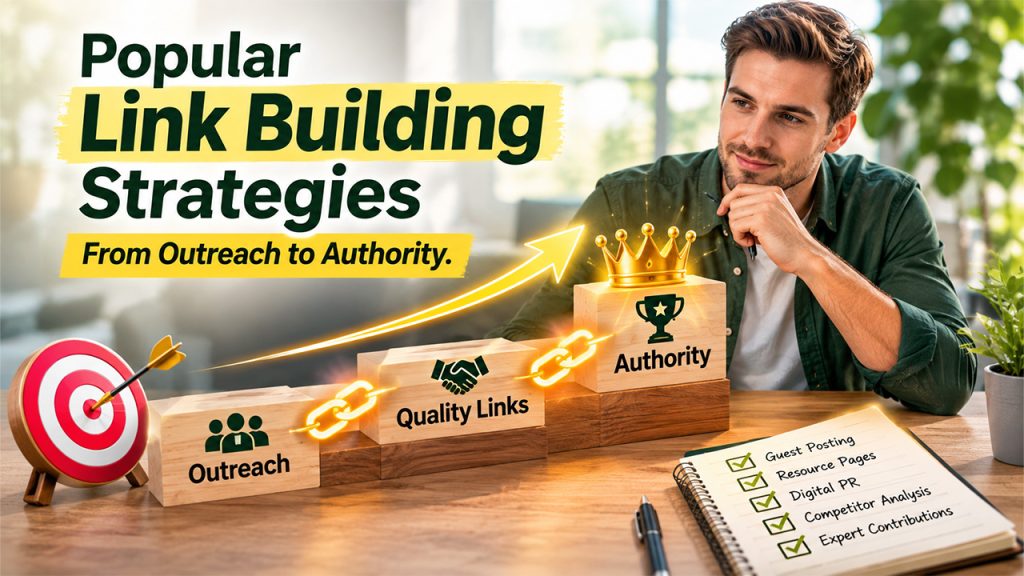
A successful link building strategy generally focuses on obtaining relevant, high-quality, and natural backlinks, rather than simply increasing the number of links.
Some of the popular link-building strategies include:
1. Guest Posting
Guest posting is the process of creating useful and original content for another relevant website. Website owners should focus on guest posting on websites with a genuine audience and strong editorial standards.
Managing guest-post outreach can become challenging when businesses are contacting multiple websites, tracking responses, following up with publishers, and monitoring publication status. A Link Building Guest Post CRM can help organize prospects, manage outreach conversations, schedule follow-ups, and keep track of guest-post opportunities in one place.
2. Creating Link-Worthy Content
One of the most popular and sustainable approaches for link building is to create content that the audience naturally wants to reference. This includes original research, industry statistics, detailed guides, case studies, surveys, infographics, and expert roundups.
3. Resource Page Link Building
Some websites maintain resource pages that link to useful guides, tools, and educational materials. If the link is a genuinely valuable resource that fits the page, users can contact the website owner and suggest inclusion.
4. Broken Link Building
Broken link building involves looking for relevant pages that contain links to resources that no longer exist. If users have suitable resources, they can contact the website owner and suggest page replacement.
5. Digital PR
Digital PR is a link building strategy that involves creating newsworthy content, original research, expert insights, surveys, industry reports, or data-driven stories that online publications may want to reference. When journalists or publishers use this information as a source, they may link back to the original content.
6. Unlinked Brand Mentions
Unlinked brand mention building involves finding websites that mention a business, product, service, research report, or expert but do not link to the relevant page. Businesses can contact the website owner and politely suggest adding a link where it would provide additional value to readers.
7. Competitor Backlink Analysis
Competitor backlink analysis involves researching websites that link to competing businesses to discover potential link-building opportunities. Businesses can examine competitor backlinks to identify relevant publications, resource pages, industry websites, content topics, and other sources that may be worth exploring.
Businesses can use backlink analysis tools to identify websites linking to competitors, review referring domains, examine linking pages, and identify patterns in competitors' link profiles. A Backlink Checker Ahrefs can be used as one option for researching competitor backlinks and discovering potential websites to evaluate for link-building opportunities.
8. Linkable Asset Creation
Linkable asset creation involves developing useful resources that other websites have a genuine reason to reference and link to. These assets can provide information, data, tools, or practical resources that are difficult for other websites to create themselves. Businesses should identify information gaps or common user problems before creating an asset and then promote the resource to relevant websites and industry publications.
9. Expert Contributions
Expert contribution involves providing valuable insights, opinions, data, or commentary to relevant publications, industry websites, interviews, expert roundups, podcasts, and other editorial platforms. When the contribution is published, the contributor may receive a relevant backlink to their website or a specific resource.
10. Industry Associations and Partnerships
Industry associations and genuine business partnerships can provide relevant link-building opportunities through member profiles, partner pages, supplier pages, industry resources, events, and professional organizations. Businesses should identify associations and organizations that are genuinely relevant to their industry and audience.
Common Mistakes to Avoid
Although link building can improve a website's visibility and authority, using the wrong techniques can also result in loss of resources or potentially harm SEO performance. Some of the common mistakes that a beginner can avoid are as follows:
- Focusing on Quantity: One of the biggest mistakes is believing that more backlinks means better SEO. Hundreds of irrelevant, low-quality, or spammy website links may provide lower value, compared to links from relevant, trustworthy, and authoritative websites.
- Using Excessive Exact-Match Anchor Text: Repeatedly using the same keyword-rich anchor text can make the link profile unnatural. Users should use natural anchor text through brand names, URLs, descriptive phrases, and other appropriate wording.
- Sending Generic Outreach Emails: Sending the same generic outreach emails to multiple website owners rarely produces any good results. Effective outreach needs to be personalized, with mention of the recipient's website or articles.
- Ignore Existing Backlinks: Link building is not only about acquiring new links. Businesses should also monitor their existing backlinks profile regularly and check for lost, broken, or changed backlinks.
Conclusion
Link building is considered a long-term SEO strategy that focuses on earning relevant, trustworthy, and high-quality backlinks, rather than just increasing the total number of links. Businesses can build a stronger and more sustainable backlink profile by creating valuable content, choosing the right link-building strategies, conducting personalized outreach, and regularly monitoring backlinks. With a consistent and quality-focused approach, link building can help improve search visibility, website authority, referral traffic, and long-term organic growth.


.png)
.png)