




.png)
.png)
If you’ve wondered why some websites consistently outrank others despite having similar content, link building is usually a big part of that answer. It’s one of the oldest, most consistently effective parts of SEO, and it hasn’t lost relevance even as algorithms have changed dramatically over the years.
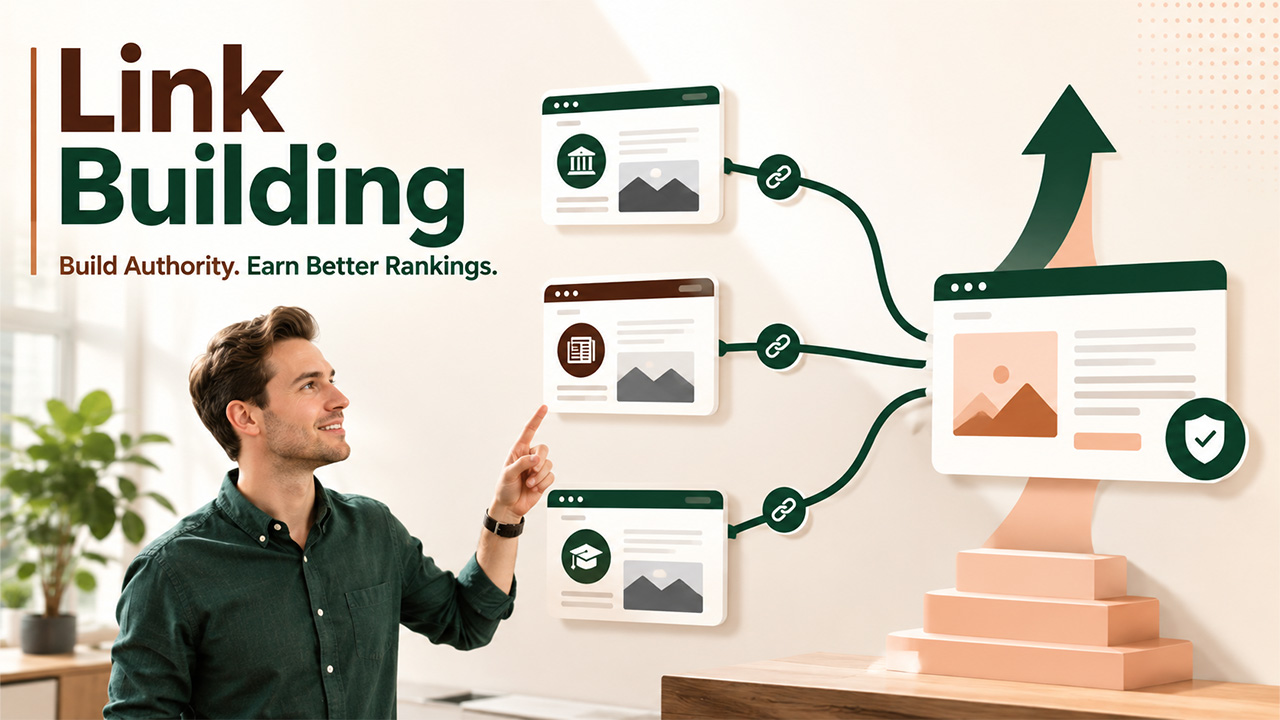
Link building is fundamentally about getting quality backlinks from other sites to your site. For search engines, the presence of such links signals credibility and authority for the site receiving them; the higher the credibility of the linking sites, the higher the credibility of the site being linked to.
In this blog, we’ll break down what link building actually involves, why it still matters so much for SEO, the different strategies businesses use, and the best practices worth following if you want it to actually move the needle.
What Is Link Building?
Link building is defined as the ongoing efforts of obtaining links from other websites that will direct to your own. Links are the best ranking factor that Google uses and considers as votes of approval by search engines. When you receive links from a reputable and relevant site, it means that your content has been deemed credible enough by another person to be linked, which ultimately helps your pages rank higher on search engines.
There is something people often mix up with link building, and it is having a website that is getting mentioned in other places on the Internet. Link building is very specific; it requires forming relationships, creating content worth being linked to, and contacting other website owners. Link building is not a passive process at all, and quality counts much more than quantity.
Why Link Building Matters for SEO
Search engines don’t just look at your content in isolation; they analyse how the whole web sees your content. This is when link building takes place.
- Improve search rankings: Backlinks are still among the best ranking factors for Google, and pages that have good backlinks rank better than others.
- Builds domain authority: The more high-quality sites that link to you over time, the more your entire domain is seen as trustworthy, which lifts the ranking potential of your other pages too.
- Drives referral traffic: In addition to boosting your search rankings, link building is useful because it can bring actual visitors to your website through reputable websites.
- Establishes credibility and trust: When reputable websites link to your content, this increases your trustworthiness and credibility, and this is true for your visitors rather than search engines’ algorithms.
- Supports long-term visibility: Unlike paid ads that work as long as you pay for them, link building continues to give you benefits in terms of ranking.
However, you cannot expect results to come quickly. Link building is a long process in which its effect accumulates slowly.
Types of Link Building Strategies
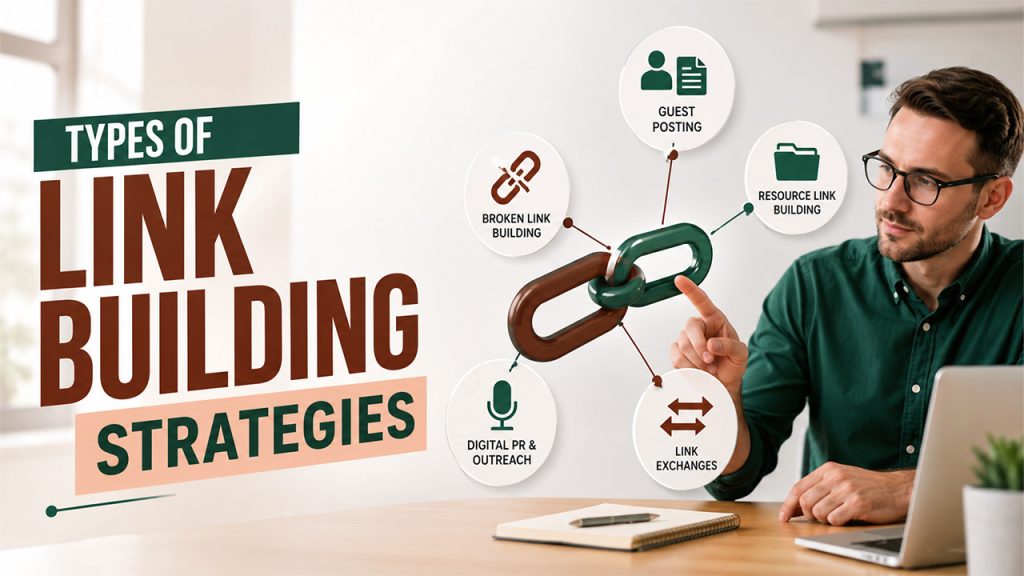
There isn’t just one way to build links, but most successful SEO techniques use a combination of these methods. Understanding the different link building strategies available helps you choose the right mix for your industry and resources."
1. Guest Posting
Guest posting might be the best-known of all methods, and that’s not for no reason. This technique consists of creating and publishing a blog post on another person’s website, usually placed naturally within the article or in an author bio. For teams managing multiple guest posting outreach campaigns, using a Link Building Guest Post CRM helps track pitches, placements, and relationships with site owners without the manual chaos.
2. Broken Link Building
Broken link building takes a slightly different approach. It means finding broken or useless links on other sites, which once led to good sources, but now they do not, and offering your content as a replacement. This way is good for both parties since the website owner is fixing the broken link and, in exchange, you get the backlink, which makes it easier to convince them.
3. Resource Link Building
Resource link building means creating good, comprehensive content, such as guides, tools, or research, which can be used by other sites. In such a case, you do not have to ask for a backlink, but you make it happen just because of creating something worth it.
4. Digital PR and HARO-Style Outreach
Digital PR and HARO-based outreach help your company connect with those who need expert opinions or data for their stories. Your quote will usually feature a link to your website, from reputable publications that would be hard to pitch to without this type of outreach.
5. Link Exchanges
Link exchanges involve two websites agreeing to link to each other. This can still work, but only when the link belongs where it's placed, genuinely useful to the reader in that specific spot, not just inserted to satisfy the agreement. The moment a link feels forced into a paragraph where it doesn't add real value, it stops looking like a natural reference and starts looking like spam, both to readers and to search engines.
All these methods have their advantages, but the best combination will depend on the industry and how much time can be invested in both creating content and engaging in marketing.
Best Practices for Effective Link Building
The successful execution of link building involves the observance of a few key principles that will make the difference between long-term success and futile efforts:
- Prioritize relevance over volume: One link coming from a website that actually has something to do with your field is way more valuable than ten links coming from irrelevant websites.
- Focus on earning links, not just requesting them: Good content is good enough to attract links on its own; it’s always more sustainable than reaching out for links.
- Diversify your link sources: Relying on just one strategy, like guest posting alone, leaves your backlink profile looking unnatural. A healthy mix looks far more organic to search engines.
- Track and manage your outreach properly: Once you’re running multiple campaigns at once, keeping track of pitches, follow-ups, and placements manually gets messy fast. This is exactly where best link building tools become genuinely useful, helping manage outreach, monitor backlinks, and measure what’s working without constant spreadsheet updates.
- Be patient: Good things come to those who wait, while the shortcut approach usually brings penalties rather than top ranks.
It is more important that you get these fundamentals right than trying to perfect any one tactic.
Common Mistakes to Avoid
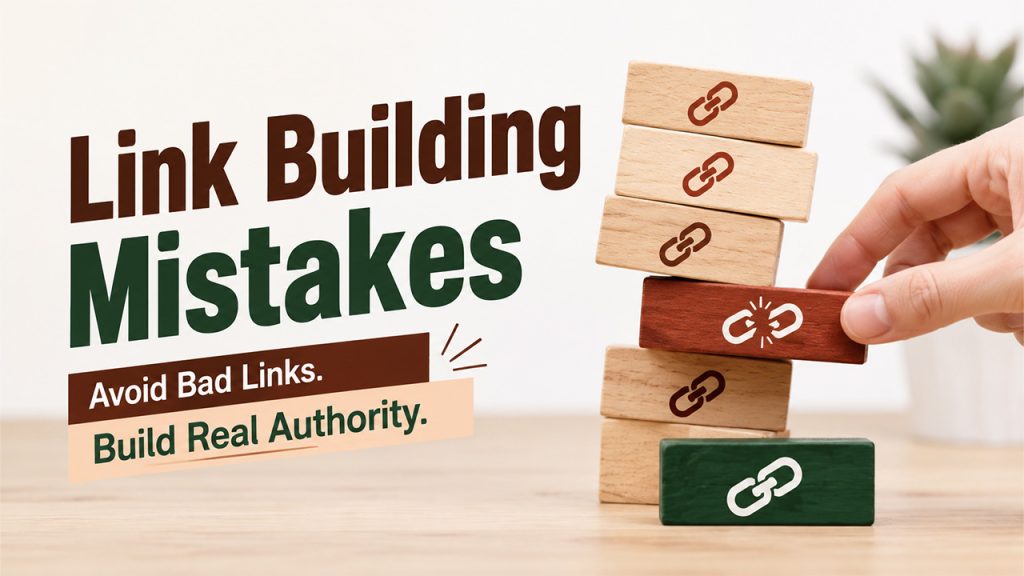
Even well-intentioned link-building efforts can backfire when a few common missteps creep in:
- Chasing quantity over quality: Producing content for a high number of low-authority sites can seem like a lot is being done, but it rarely moves rankings and can occasionally do more harm than good.
- Over-optimized anchor text: Reusing the same anchor text with keywords again and again will appear unnatural and will likely get you penalized.
- Ignoring relevance: Getting a backlink from an entirely different industry won’t do anything to help your SEO.
- Treating it as a one-time task: It’s important to remember that this process takes some time.
- Skipping the relationship-building side: Approaching outreach purely as a transaction, rather than building an actual relationship with site owners, tends to produce weaker, one-off results instead of long-term opportunities.
If any of this sounds familiar, it’s worth taking a closer look at common guest posting mistakes, since guest posting is one of the most frequent places these errors show up in practice.
Conclusion
Ultimately, backlinks still constitute one of the most enduring forms of investment in search engine optimization despite the constantly changing tactics employed by SEO professionals with every algorithm change. The strategy may take some time and may not be very simple to implement, but the trust and authority you earn with backlinks cannot be gained in any other way.
The companies that manage to reap the maximum benefit from backlinking use several strategies, such as guest posting, creation of resource content, and digital PR instead of focusing on one specific tactic. Backlinking, along with relationship-building and patience, always yields results for sure.
Whatever your level of expertise in SEO may be, there will always be some basics of backlinking which do not vary gaining links naturally rather than forcing people into linking to your website, paying attention to relevancy rather than quantity, and consistency of the efforts put into link building.



.png)
.png)