


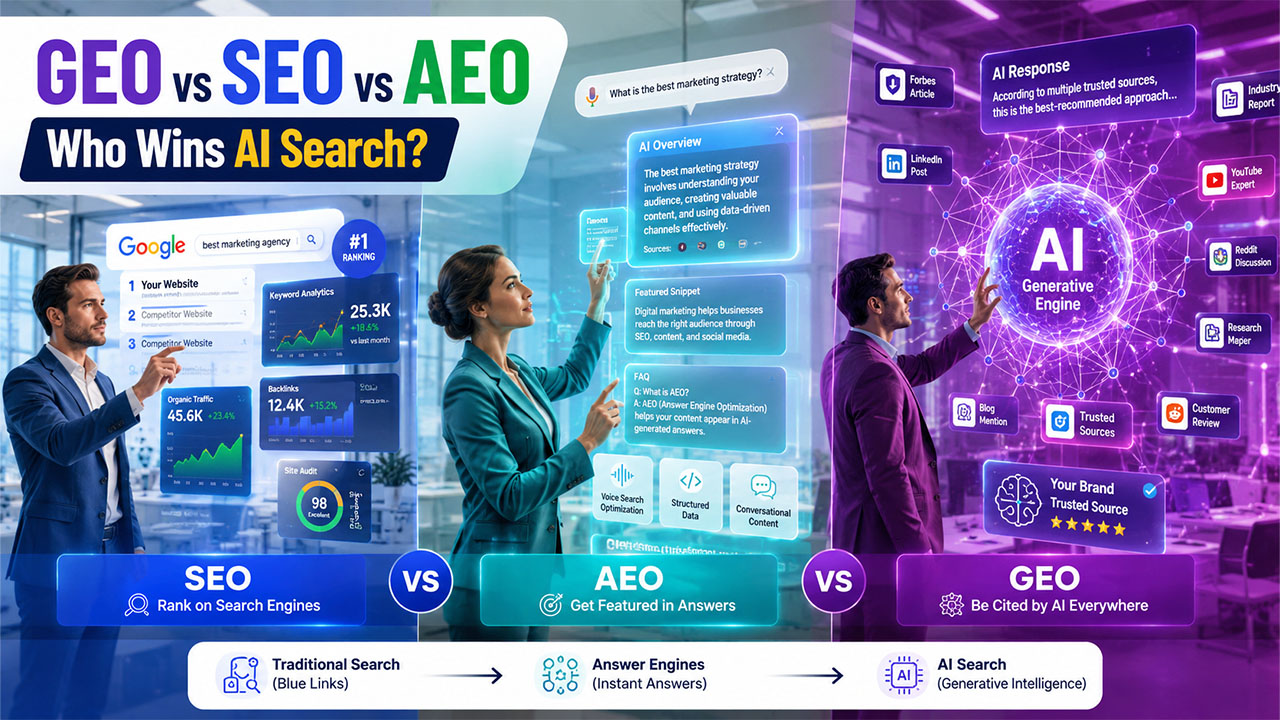
Gaining higher rank on the Search Engine Result Pages (SERPs) used to be the main goal for the digital marketing success, if your website hits the top spot for a search term, you have made it.
In digital marketing, GEO positions content as trusted reference material for generative output, SEO builds your overall search engine visibility and AEO ensures that content can be easily extracted and delivered.
What is GEO?

Generative engine optimization (GEO) goes beyond traditional search ranking systems, it priorities long term influence in the datasets that power AI responses. Instead of just trying to rank on a page, GEO focuses on shaping how AI models like ChatGPT, Gemini, and Perplexity actually think, understand, and talk about a topic. AI-powered search tools like Redeepseek are already shaping how users discover and interact with content without clicking a single blue link.
It’s a long game. The main goal isn’t just to pop up in a single AI-generated answer. It’s about embedding your insights so deeply into the core datasets that these systems recognize you as a definitive authority, your content becomes part of the AI's foundational knowledge ensuring it continuously trusts, learns from and cites your work for the long haul.
What is SEO?
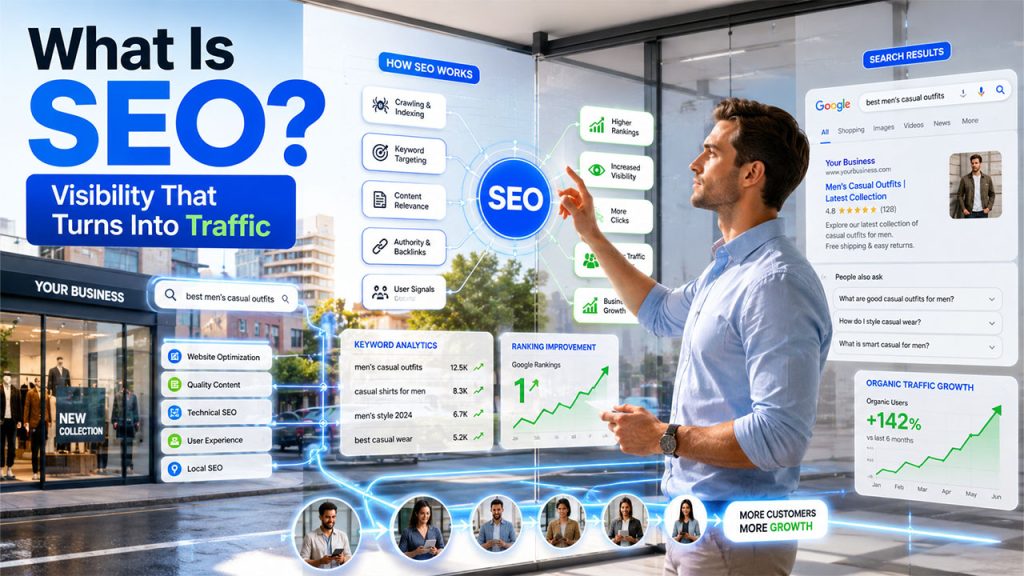
Search Engine Optimisation (SEO) is the practice of improving the visibility of websites on search engine result pages (SERPs). Its main goal is to drive more organic traffic. Traditionally, it has focused on optimizing web pages around specific keywords, improving structure, and building backlinks for boosting authority and trust to search engines, The ultimate goal? To earn clicks that drive traffic to your website. For anyone new to how rankings work, search engine basics cover the foundational concepts behind visibility, keywords, and local discoverability.
But as the digital landscape evolves. Today, there is a greater challenge to stay discoverable across multiple search touchpoints, not just on the SERPs. SEO now forms just one part of a broader, AI-powered search ecosystem that includes GEO and AEO.
What is AEO?
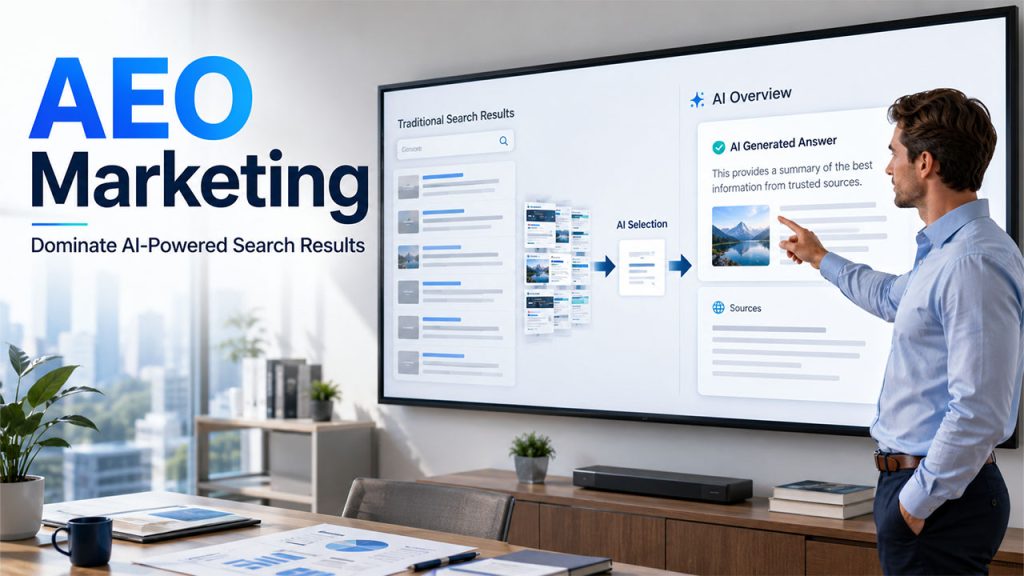
Answer Engine Optimization (AEO) formats content for AI search features like Google's AI Overviews, Perplexity and Bing Copilot’s instant answers. While traditional SEO aims to rank your website at the top of a page of links, AEO focuses on getting your content selected as the single, direct answer synthesized by an AI engine.
It relies heavily on natural, conversational language, clear question-and-answer formatting, and highly structured data to capture the growing number of “zero-click” searches where users get answers without ever clicking through to a website.
Difference between GEO vs SEO vs AEO
| Aspects | GEO | SEO | AEO |
| Type | Selection Based | Ranking Based | Answer Based |
| Primary Goal | Be cited by LLMs as trusted source | Rank in Google’s blue link search result list | ensures accessibility in answer driven search features |
| Content Format | Q&A, datasets, conversational, semantical structured content | Blogs, landing pages, web articles | FAQs, Q&A, sections, structured snippets |
| Results timeline | 3-6 months at consistent citation | 3-6 months typically | 4-8 weeks for initial result |
| User action assumed | User receives AI-synthesized answer | User clicks a link | User reads answer without clicking |
| Measurement Tools | Perplexity dashboards, ChatGPT query tracking, AI rank visibility tools | Google analytics, Google Search console | Brand monitoring, AI citation tracking tools, voice optimization tool |
Relation in GEO, SEO and AEO
The way people find information online has changed. We are moving away from just typing keywords into a search bar and clicking links, and moving toward asking full questions and getting instant answers from AI.
To win in digital marketing today, you need a three-layer strategy:
| GEO: The Authority Layer (Brand reputation across the internet) |
| AEO: The Bridge Layer (Direct, conversational answers) |
| SEO: The Foundation Layer (Technical health and trust) |
- SEO: The Foundation Layer
Traditional SEO is not going anywhere. AI engines prefer to cite and trust websites that Google already ranks highly. Therefore, if your technical SEO is poor, it is because of the following reasons:
- Bad Keyword Stuffing: Makes content unreadable for users and flags it as spam for AI tools.
- Broken Internal Links: Traps search bots and keeps them from indexing your hidden content.
- Poor Mobile optimisation: Penalizes your ranking instantly since most searches happen on phones.
- Slow Page Speed: Drives users away and signals a terrible experience to search crawlers.
- Thin shallow content: Fails to give the deep, authoritative answers that AI engines look for.
- No secure HTTPs: Marks your site as unsafe, completely destroying user and search engine trust.
AEO and GEO efforts will fall short regardless of how well you structure your answers
- AEO: The Bridge Layer
AEO connects traditional Google search with the new world of AI. It uses SEO fundamentals:
- high-quality content
- Clean technical health
- Keyword research
- Mobile responsiveness
- Strong site security
What it actually does is add a clean, direct layout designed for quick reading, making it incredibly easy for AI tools to extract your data. Because of this, optimizing for AEO gives you a double win: it lifts your standard organic traffic and increases your visibility in AI-generated answers at the same time.
You can easily do this by using FAQ schema, framing your headings as real user questions, and giving clear, direct answers right out of the gate. Plus, since GEO looks for these exact same structural patterns, setting up a solid AEO strategy naturally takes care of your GEO prep work too.
GEO: The Authority Layer
GEO goes beyond on-page content. While AEO focuses on how your content is structured. GEO requires the ultimate multi-channel effort, acting as the final evolution of your strategy once your SEO infrastructure and AEO bridge are firmly in place.
Marketing Strategies:
- Moving Away from Your Own Website: Instead of focusing on your website alone, GEO places emphasis on establishing a presence for your brand through the entirety of the Internet, creating an entity footprint via your involvement with social media sites such as LinkedIn and Reddit.
- Earning Third Party Recognition: It depends significantly on getting your brand mentioned in credible online outlets such as articles, press releases, and expert interviews. Publishing on high authority guest posting websites is one of the most effective ways to earn this kind of third-party recognition.
- Managing Digital Reviews: Because generative engines scrape platforms like Clutch, Google Business Profiles, and Trustpilot, maintaining a strong, positive review presence is a critical component of GEO visibility.
- Combining On-Page and Off-Page SEO Signals: This is where your digital marketing process comes full circle because while SEO and AEO ensure that your website is optimally optimized, GEO creates the online network required to establish the legitimacy of said optimization.
A Unified Checklist: How to Optimise for GEO, SEO and AEO at the same time
1. SEO Basics Checklist
- Performance: Ensure the website loads in under 2 seconds on mobile devices.
- Metadata: Verify all pages have unique, descriptive meta titles and descriptions.
- Hierarchy: Maintain a proper H1<H2<H3 heading structure on every page to help bots read your layout.
- Monitoring: Keep Google Search Console connected and active to track crawl health and indexing.
- Local Signals: Keep your Google Business Profile fully optimized with up-to-date photos, reviews, and regular posts.
2. AEO Basics Checklist
- Q&A Modules: Add a dedicated FAQ section with 4–5 highly relevant questions on every core service page.
- Structured Data: Implement FAQ page JSON-LD schema so search engines can instantly parse your questions.
- Conversational Headings: Phrase major subheadings as actual questions your target audience is asking online.
- The "Snipped" Intro: Use a concise, definitional first paragraph on every service page and blog post to target instant answers.
- Process Schema: Deploy How To schema on all step-by-step or tutorial-style content.
3. GEO Basics Checklist
- Crawler Access: Verify that your robots.txt file permits access to all major AI user-agents and scrapers.
- AI Documentation: Publish a live llms.txt file at your domain root directory to give LLMs clean, markdown-friendly context about your brand.
- Entity Mapping: Implement Organization schema featuring same as links pointing to all verified social profiles.
- Professional Footprint: Build out an active LinkedIn Company Page and link it directly into your site’s schema code.
- Author Trust: Embed Person schema for content authors on all blog posts to satisfy E-E-A-T guidelines.
- Data Density: Ground your content with specific statistics, case studies, and measurable data points that AI engines love to cite.
Frequently Asked Questions
Is SEO still relevant in the era of AI search?
Yes. SEO is still at the core of internet visibility. SEO optimization will facilitate search engine and AI detection and indexing of web content. GEO and AEO are built on top of SEO but do not substitute it.
Why is GEO gaining significance in 2026 and beyond?
As people use more AI-powered assistants to search for answers, visibility on search engine results pages is no longer sufficient. GEO makes it possible for businesses to appear within AI responses.
Does GEO supersede SEO?
No. While GEO is used in addition to SEO, websites require high-quality technical SEO, content, and signals of authority in order to be seen as credible sources of information by AI.
What is the role of E-E-A-T in GEO?
E-E-A-T (Experience, Expertise, Authoritativeness, and Trustworthiness) becomes crucial for GEO as AI tends to use credible and authoritative sources to generate responses.
SEO, AEO, or GEO: which strategy should be prioritized by businesses?
The most efficient solution is using all three strategies simultaneously:
- SEO to be discovered and ranked on SERPs.
- AEO to get your content chosen as a direct and instant answer in AI-powered search results.
- GEO to build long-term authority in AI models such as ChatGPT and Perplexity.



.png)
.png)