




.png)
.png)
You must have heard this word being thrown around in marketing meetings, but no one bothered to explain what it means. Someone says. “We need to focus more on outreach” and everyone agrees, but half the room is quietly wondering how that actually works in practice. It might sound simple to reach out to people. At first, most people try exactly that, they send a hundred emails to strangers and hope things work out. Some of them bounce back, and maybe two people reply, one of whom is just asking to be removed from the list. That's hardly called outreach marketing. That's just shooting arrows in the dark, and it rarely builds anything.
Real outreach marketing works differently, and once you understand why, the whole approach starts to make a lot more sense.
What Is Outreach Marketing?
Outreach marketing refers to the practice of reaching out to people outside your existing audience, such as influencers, bloggers, journalists, or other businesses. This is done to expand your network and build relationships that help grow your brand.
It takes a proactive approach. You don’t sit around waiting for customers to come to you, rather you go find the people who already have their attention and offer something worth their time. It's not cold selling. Instead, it’s relationship-building with a purpose, whether that purpose is a backlink, a mention, a partnership, or simply introducing yourself to the right crowd. If you do it right, it stops feeling like marketing and starts to feel like networking with intent.
Top Benefits of Outreach Marketing
Outreach doesn’t just get you attention; it gets you trusted attention. When someone who has an established audience and reputation talks about your brand, their followers listen and take them more seriously than they would an ad. The benefits below only show up when the outreach itself is thoughtful.
Expand Your Reach Through Established Audiences
Every person or brand you connect with already has an audience you don't. Building the following from scratch could take months or years. So, you just borrow access to people who are already paying attention to expand your reach. It's a shortcut, but only if the relationship is genuine.
Build Long-Term Industry Relationships
Outreach isn't a one-time transaction, even if it starts that way. The contacts you make today can turn into collaborators, referral sources, or advocates for years down the line. That long-term value is often worth more than the first result you got from reaching out.
Strengthen SEO With Quality Backlinks
Good outreach naturally produces content that links back to your site, and search engines treat those backlinks as a strong trust signal. Whatever link you earn this way brings referral traffic from people who were already reading something they trusted. This strengthens your SEO, increases visibility, and plays a real part in Enhancing Outreach Efficiency over time.
Add a Personal Touch to Your Marketing
Banner ads or generic promotions may sound insincere. However, outreach is built around one person talking to another. That gives your brand a personal touch and makes it feel less like a company shouting into the void and more like something worth paying attention to.
Increase Brand Credibility Through Third-Party Endorsements
When someone who already has a reputation in the market vouches for you, it carries weight that self-promotion never will. People trust recommendations from voices they already follow or admire far more than they trust anything a brand says about itself.
Common Types of Outreach Marketing
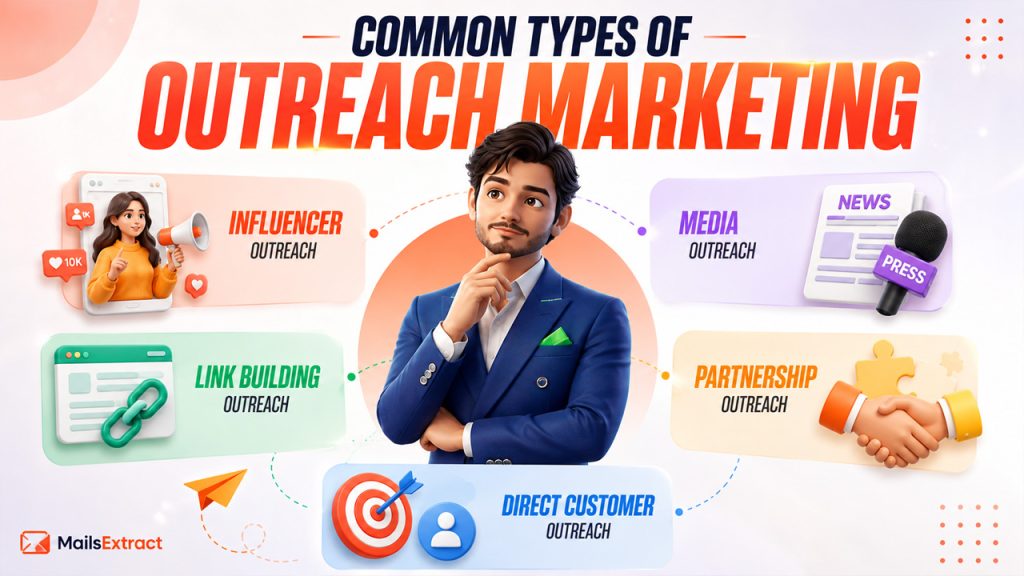
All outreach doesn’t work the same way. Moreover, beginners are under the assumption that it’s just email; it isn’t. Here are the most common types you’ll come across, along with what each one is actually good for.
Influencer Outreach: This is where you reach out to public figures, creators or industry voices who’ve already built an audience in your niche. Paid ads are not the main goal here. It's a genuine mention, review, or collaboration that introduces your brand to people who already take their creator’s opinion seriously. It works best when the influencer's audience genuinely overlaps with yours, not just when their follower count looks impressive.
Media Outreach: Here you directly connect with journalists or publications. You pitch commentary offers, story angles, or newsworthy updates about your business. However, it demands patience, since reporters get pitched constantly, but a single feature in a respected publication can do more to establish your credibility than months of paid advertising ever could.
Link Building Outreach: This involves reaching out to relevant websites in your niche to earn backlinks. This is often achieved through guest posts or by suggesting your content as a helpful resource. This is a common example of what's known as Cold Outreach, since you're usually contacting site owners you've never spoken to before, with no existing relationship to lean on.
Partnership Outreach: This means searching and identifying businesses that complement yours rather than competing against you. Here you promise them something that is mutually useful, like a co-branded campaign or a referral arrangement. This is a win-win situation for both sides, as each one accesses an audience they didn’t have direct access to before.
Direct Customer Outreach: Sometimes outreach isn't about a middleman at all; it's about contacting potential customers directly with something genuinely relevant to them. This only works if the message is personalized and clearly valuable, because generic pitches to strangers get deleted in seconds.
How to Build an Effective Outreach Marketing Strategy
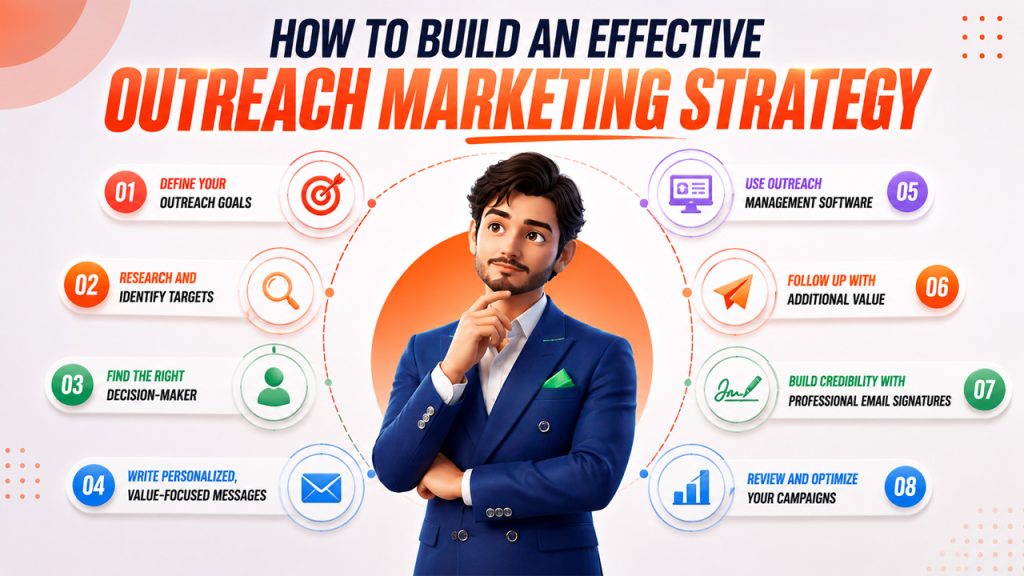
The right approach can make every outreach conversation more meaningful.
Define Your Outreach Goals: Clarify whether your goal is backlinking, press coverage, partnership, or direct leads. This matters because it shapes everything downstream and determines who you contact and what you say to them.
Research and Identify the Right Targets: Look for genuine overlap between their audience and yours. A smaller, well-matched audience interested in your niche will always outperform a massive one that has nothing to do with it.
Find the Right Decision-Maker: Sending a pitch to a generic "info@" inbox is close to sending it nowhere. Track down the specific person who handles content, partnerships, or whatever it is that you wish to pitch.
Write Personalized, Value-Focused Messages: When sending a message, mention their recent work to show them your sincerity. Explain, in the first two sentences, why you’re reaching out to them specifically and how it benefits them, too.
Use Outreach Management Software Without Losing Personalization: This is where good Outreach Management Software comes into play. It lets you track conversations, schedule follow-ups, and stay organized without turning every message into a copy-paste template.
Follow Up With Additional Value: Most people reply after the second or third message, not the first. However, if you decide to send a follow-up message, never send with “just following up” without attaching anything new. Give them a reason to respond.
Build Credibility With Professional Email Signatures: Small things matter more than people expect here, including the Benefits of Adding Email Signatures, since a professional signature with your name, role, and a working link makes a cold message feel far less cold and trustworthy; otherwise, it will be dismissed as spam.
Review and Optimize Your Outreach Campaigns: Track what's working, drop what isn't, and keep tightening your targeting. Running the same campaign on repeat and hoping for different results is how outreach efforts quietly stall out.
How to Measure Outreach Marketing Success
Sending messages is not the tough part. Knowing whether they actually worked is where most beginners get stuck, mainly because they're not sure what to track in the first place. The table below breaks down the core metrics worth watching, what each one tells you, and roughly what to aim for.
| Metric | What It Tells You | What to Watch For |
| Response Rate | Percentage of people who reply at all | Low numbers often mean weak targeting or a forgettable subject line |
| Conversion Rate | How many replies turn into the outcome you wanted | High responses but low conversions usually point to a weak offer |
| Placement Rate | For media outreach, how many pitches result in actual coverage | Useful for judging whether your pitch angle is newsworthy |
| Link Acquisition Rate | For SEO outreach, how many backlinks you actually earned | Compare against the number of sites contacted, not just total links |
| Revenue Attribution | Whether closed deals can be traced back to outreach efforts | Harder to track, but the clearest sign of long-term ROI |
None of these numbers mean much in isolation. A five percent response rate might be disappointing for warm outreach to people who already know your brand, but it's perfectly solid for cold pitches to complete strangers. Context always matters more than the raw figure.
Conclusion
Outreach marketing isn’t complicated once you get rid of jargon. In simple terms, it’s just finding the right people, figuring out what they actually care about, and offering something that is worth their time instead of just asking for something in return. When you get that order right, everything else whether they are replies, backlinks, or partnerships tends to fall into place on its own. Get it backwards, and no amount of volume will save you. A hundred generic or thoughtless emails will always lose to five well-researched and well-written ones. So, start small, be genuinely useful to the people you contact, and let the relationships grow from there. Marketing and outreach go hand in hand.


.png)
.png)