



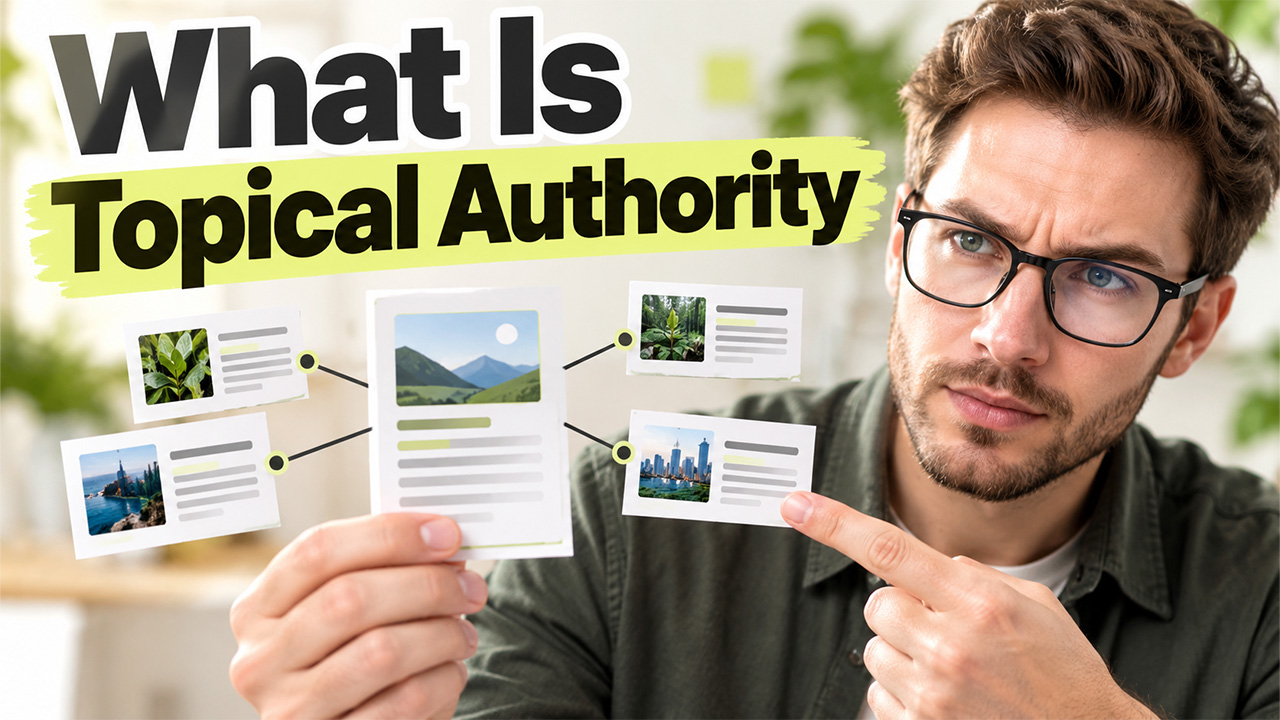
Knowing which websites feature are accurate to answer your question is essential for search engines. After all, a single blog post can rank a website for that one question, but in-depth coverage of other, related questions can make a website a more informative and trustworthy source of information. Topical authority relates to a website's depth and trustworthiness of coverage on a given topic and related topics, based on the accuracy of the information and relevance of connections made. Knowing about "what is topical authority" can help the business formulate a content strategy, optimize its search engine, and establish credibility and authority in its space.
What Is Topical Authority in SEO?
So, what is topical authority in simple terms? It is a website’s authority and expertise in covering a specific subject. The more relevant, informative pages a website publishes to answer questions in its niche and explain key ideas, the more authority it has on that topic. It does not equate to the number of articles published on a specific subject.
There's no such thing as a topical authority score in Google Search Console. SEO practitioners often use the term to talk about the depth and credibility of coverage on a topic by a website. A well-planned SEO content strategy can help businesses organize related content and build comprehensive topic coverage. However, search engines use many factors to rank pages, so simply having good topical coverage doesn't necessarily get your pages ranked higher.
How Does Topical Authority Work?
Topical authority rests on three things: coverage, relevance, and interlinking between pages. The more related queries a website answers, the more context and breadth it shows search engines.
- Full Topic Coverage
A comprehensive website includes the core topic and relevant subtopics. If you had a website about email marketing, you might discuss campaign planning, segmentation, email deliverability, automation, and measuring results. So, what is topical authority for an email marketing site? It is full coverage of the core topic and every subtopic around it, not a handful of posts.
- Related Pages and Internal Links
Internal links attach to other relevant articles and guide visitors around your content. They also aid search engines in crawling the pages and understanding what information the site contains. A proper internal linking system ensures all pages are connected to each other with a meaningful link. It can also help the link equity flow between pages that are related.
- Content Quality and Credibility
Content that covers numerous topics is not helpful if the information is incorrect, duplicated, or cursory. Relevancy comes from helpful samples, fresh perspective, credible references, and related experience. Content that has unique, well-put-forward, and actionable suggestions is understood by your visitors without getting in the way of an "advice battle".
These components all contribute to boost organic search visibility by helping the website to provide more high-quality content and therefore be more relevant and useful to a broader set of related searches. A search's rankings are also determined by all the other factors such as the query, competition, technical accessibility, and ranking systems used by Google.
Topical Authority vs. Domain Authority: What's the Difference?
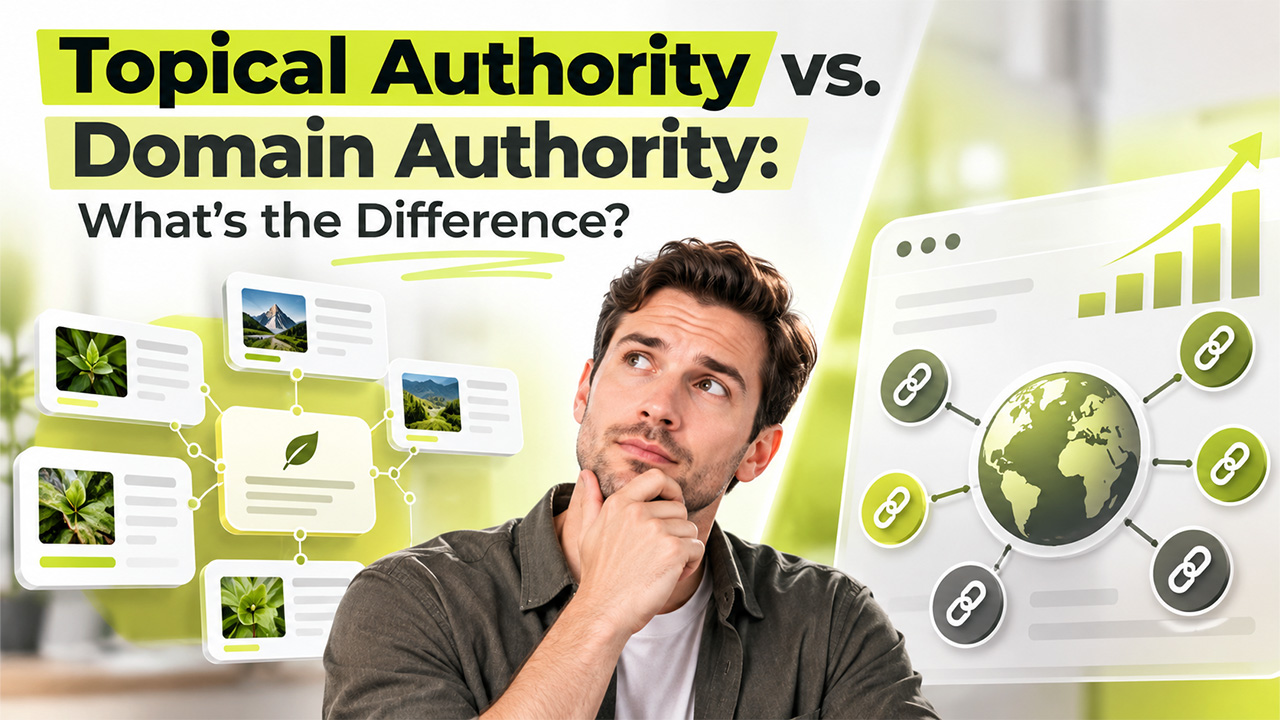
Many people who ask "what is topical authority" also wonder how it differs from Domain Authority. It focuses on expertise within a particular subject, while Domain Authority generally refers to a third-party metric that estimates a website's ability to rank based on its backlink profile and other model inputs.
| Comparison Factor | Topical Authority | Domain Authority |
| Meaning | Depth and credibility within a subject | Estimated overall ranking strength |
| Main Focus | Topic relevance and content coverage | Website-wide link-based signals |
| Measurement | No universal official score | A score provided by SEO tools such as Moz |
| Improvement | Publish useful, connected content and demonstrate expertise | Earn quality backlinks and strengthen the site's link profile |
| Scope | A particular subject or topic area | The website's overall domain profile |
However, this does not mean topical authority always outweighs backlinks or other ranking signals. A website needs relevant, useful content, and its pages must meet the requirements of the specific search query.
Key Steps to Build Topical Authority
A practical topical authority building strategy starts with a focused subject and grows through planned content. Organize articles around the questions your audience needs answered, not isolated keywords.
- Choose a Core Topic
Ask "what is topical authority" for your own niche, and the answer starts with a core topic. Pick a subject that fits your business, audience, and expertise. A CRM software company, for example, can focus on implementation, customer data management, sales automation, and reporting. Avoid too many unrelated subjects at once. A focused plan builds more depth where it counts.
- Research Related Topics and Search Intent
List the questions people ask about your subject. Keyword tools, search results, competitor articles, customer questions, and sales feedback point to useful subtopics. Group queries by intent, such as informational, comparison, or troubleshooting, since each group shows what page readers expect.
- Create Topic Clusters
What is topical authority made of in practice? Mostly clusters like this: a pillar page plus supporting articles that cover one subject from every angle. Build a main pillar page with a broad overview, then add supporting articles covering specific areas in detail. Give every article a distinct purpose instead of publishing several pages for the same intent.
- Publish Helpful, Well-Researched Content
Answer the reader’s question directly, with practical examples, clear explanations, and reliable evidence. Show expertise through accurate information and real experience rather than repeated keywords. Update existing articles before writing new ones to avoid duplicates.
- Strengthen Internal and External Links
Link related articles with descriptive anchor text and connect supporting articles to the main guide. You can also use SEO outreach to build relationships with relevant publishers, industry websites, and subject experts.
Use Google Search Console to review impressions, clicks, queries, and page performance. These metrics do not measure it directly, but they show whether your content reaches the right audience and where your strategy needs work.
What Is topical authority worth in AI search?
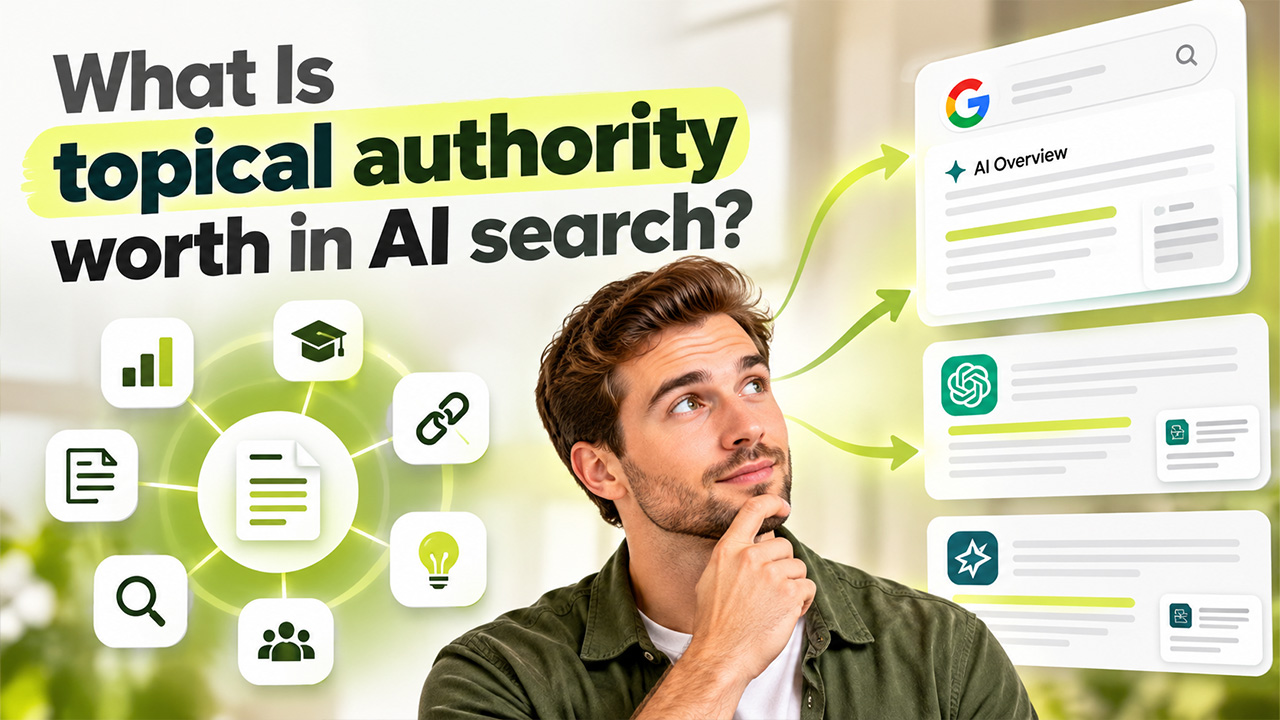
Search experiences built on AI utilize content from a combination of sources to produce a summary, respond to questions, and offer references. This could be Google's AI Overviews & AI Mode and answer engines like ChatGPT and Perplexity.
- Write in Full Sentences: Answer the question you have been asked straight away and then include a detailed answer. Answer the main question clearly before adding extra information so that it is clear what the question is.
- Create a Linked Matter Coverage: Publish supplemental articles that go over connected principles, comparisons, processes, and widespread complications. Be consistent when it can be found in topics so visitors can stick to the subject.
- Be Authoritative and Accurate: Refer to credible sources, relevant examples, research, or first-hand experience when appropriate. Ensure facts are current and recognize the authorship of sources if it adds further weight.
- Clear and Easy to Understand: Use informative headings and short paragraphs, include helpful tables, and use simple terms. Include structured data whenever it can accurately provide information about the page and when it adheres to the guidelines.
- Create Awareness Outside of Your Website: Good links, mentions, and citations on other sites from trusted sources can all contribute to building a reputation in a particular subject area.
Any opportunity to see how your business performs on traditional search and AI, where this is accessible through data, should be taken. To produce real value for people in various discovery channels, the content should aim to be truly usable, not to cater to an AI.
Conclusion
Understanding "what is topical authority" helps businesses move from publishing isolated articles to building a connected, useful content resource. It requires focused topic selection, comprehensive coverage, strong internal linking, accurate information, and regular content updates. This type of thoughtful authority building strategy can support organic search visibility by helping a website address more relevant questions and demonstrate subject expertise. Relevant backlinks and SEO outreach can strengthen these efforts, while clear, trustworthy content may also support visibility in AI search experiences. Results take time, and no single tactic guarantees rankings. Focus on answering your audience's questions well, connecting related resources, and improving your content as their needs change.