


.png)
.png)
Picture this: you have written a good article. Maybe even a great one. It discusses the topic properly, covering all important information in 2,000 words, and you publish it with confidence. Several months have passed and your article is stuck at position 19. It's neither good nor bad, just stuck.
Now what most people don’t pay attention to is that writing isn’t a problem here. The problem is that you never built real SERP insight before you started typing. The first page of search results isn’t just a list of winners. It acts as a report that tells you exactly what kind of content Google wants to reward for that specific search. Most people skip reading it. That's the gap this blog is here to close.
What Is SERP Insight?
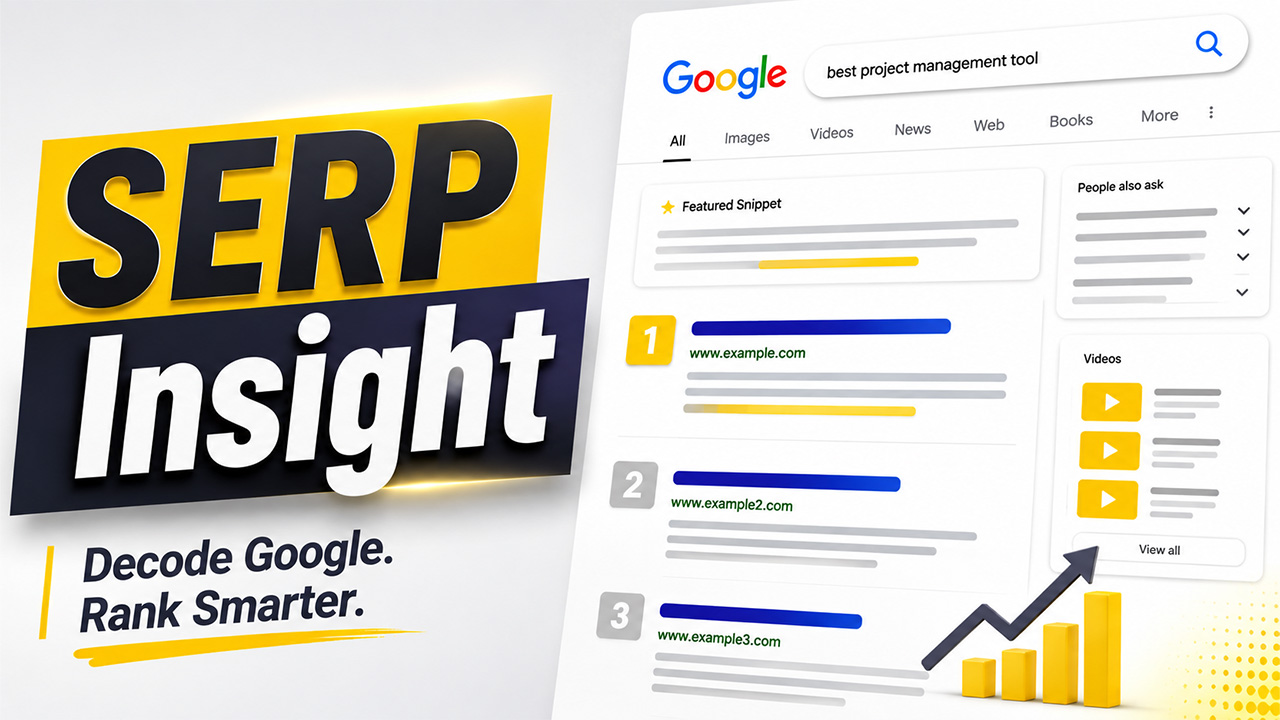
SERP insight refers to the practice of studying Google's results page before you start creating content, not after. Instead of asking "what keyword should I target," you ask "what is Google already rewarding here, and why?"
A Google SERP API can help you pull this data quickly, and a SERP tracking tool lets you watch how those results shift over time. But the tools only do half the job. The real skill is reading the intent, the format, and the gaps in front of you, and using that to make smarter decisions before you write a single sentence.
Key Elements to Analyze for Better SERP Insight
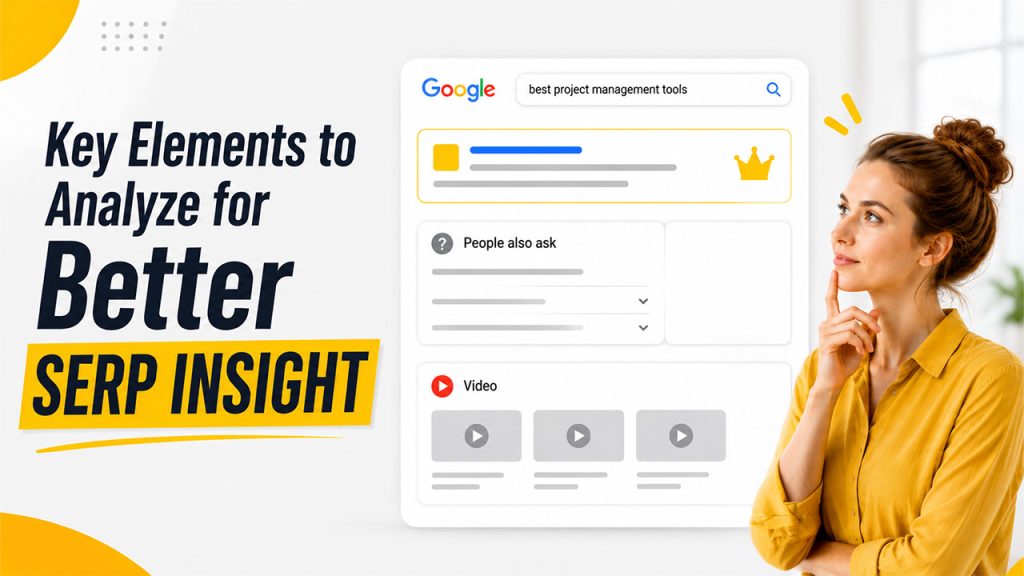
Reading a SERP properly means looking past the blue links and paying attention to a handful of specific signals. Here's what actually matters.
Search Intent
Look at what is already ranking on Google and ask yourself what people actually typed for that search. Observe if they are learning, comparing, or taking action to buy. Understand the intent behind their search. If the top ten results are all long guides and you publish a product page instead, you’re writing against the Google algorithm no matter how well it’s written.
SERP Features
These are the extra elements sitting above or beside the regular results, and each one changes how many clicks actually reach an organic listing.
- Featured Snippets: Google reads well-written content and pulls a short answer out of that page and displays it at the top. It means the query has a clear, precise, and definable answer. If one already exists for your keyword, check how weak it is and write a tighter answer that can replace it.
- People Also Ask (PAA) boxes: These show up because real searchers had follow-up questions. They're basically a free content outline. Skim a few before you write, and you'll spot angles you'd have missed.
- AI Overviews: An AI-generated summary at the top means Google is confident enough to answer the question itself using several sources. This steals clicks that would otherwise go to the blue links below. So, a keyword can look busy on paper but deliver far less traffic than expected.
- Video Carousels: A row of video thumbnails signals that people would rather watch than read for that query. If all competitors are publishing written content and the SERP wants video, that's either an opening or a sign to skip the keyword.
Content Length and Depth
If every top result is written in 2,000 words, then it’s a sign that thin content won’t perform well. Similarly, if top results are short and direct, writing something too detailed won’t help either. The SERP quietly tells you how much detail is expected.
Domain Diversity
If one big brand owns three or four of the top five spots, that's a tough keyword to crack. A mix of smaller sites usually means more room to compete.
Freshness
If the top-ranking pages are a couple of years old on a fast-moving topic, that's a gap right there that you can use to your advantage. Publishing something current can help you move past your rivals and quickly reach a higher position with more backlinks but less relevance.
How to Build SERP Insight: A Step-by-Step Process
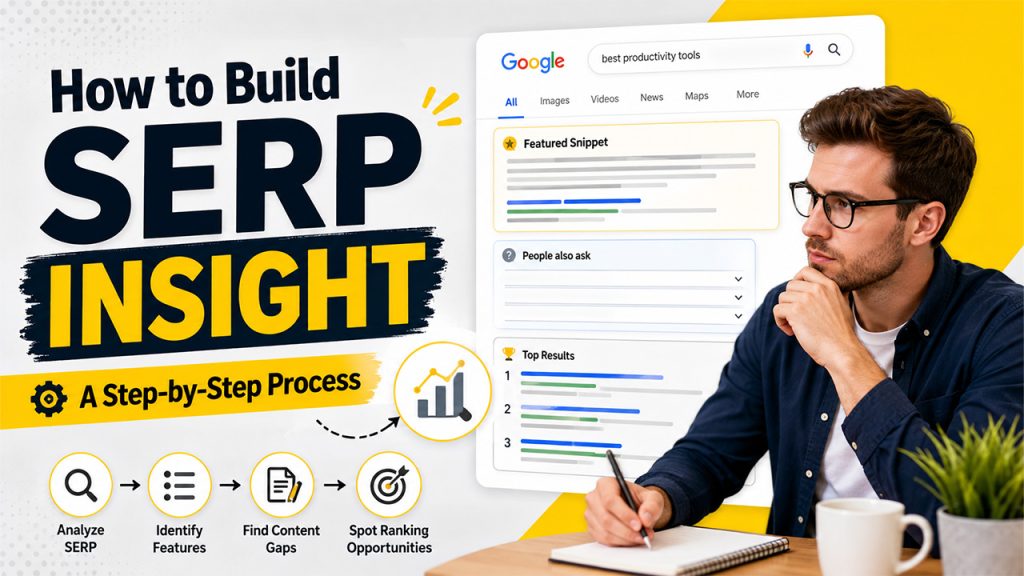
Follow these practical steps to turn SERP observations into a clearer, more effective content strategy.
Search Your Keyword and Study the SERP: Open an incognito window, search your keyword, and just look for a minute before touching any tool. Your honest first impression is often more useful than a dashboard.
Identify and Log Every SERP Feature: Note what is showing up for your keyword whether it’s a snippet, AI overview, PAA, ads, image pack, or a video. Each one steals clicks that an organic result would otherwise get.
Analyze the Format of the Top Three Results: Don't read them yet. Just observe the format and scan for guides, tables, descriptive definitions, or listicles. That's the format your content needs to follow.
Find Featured Snippet Opportunities: If one exists, see how weak the current answer is. A tighter 40-to-60-word answer under your heading can take that spot, and it is often what AI tools pull from too.
Track SERP Changes Over Time: A SERP tracking tool keeps you updated on rankings. You'll know when rankings shift or stay locked. If you see frequent movements, it means Google hasn’t settled on a favorite yet, which gives you a chance to take the top spot.
Identify Content Gaps and Ranking Opportunities: Read the top few articles properly this time and write down every question you still have. That list becomes your content brief. Pairing that stronger content with solid Link Building Strategies helps it hold its position over time.
Common SERP Insight Mistakes to Avoid
Knowing what to avoid can save you from misreading search results and making decisions that hold your rankings back.
Relying on Keyword Difficulty Alone: A great difficulty score only means that the current top pages have strong backlinks. It does not necessarily mean that they actually answer the question well. Sometimes a "hard" keyword is easier than it looks. Always check the page yourself before you trust the score alone.
Overlooking the Mobile SERP: Most people check rankings on a laptop and stop there. But on phones, features like AI overviews take up way more space. A result that shows nicely on a desktop might be buried three scrolls down on mobile.
Prioritizing Keywords Over Search Intent: Even if you use the right keyword, you might still miss the mark. Why? Because you answered a different question than what searchers meant. If everyone's searching for comparisons and you publish a product page, Google simply won't show it.
Missing Valuable Content Gaps: After covering the basics, don’t rush to hit publish. Focus on the smaller questions that your competitors didn’t bother to answer. That’s where the real opportunity lies, and that’s what makes your content stand out in the noise.
Treating SERP Analysis as a One-Time Task: Search results shift as Google tests new formats and competitors update their pages. Checking once and never again means working off old information. A few Google Search Operators can help you spot these shifts faster.
Real-World Example: How a SERP Audit Changed the Strategy
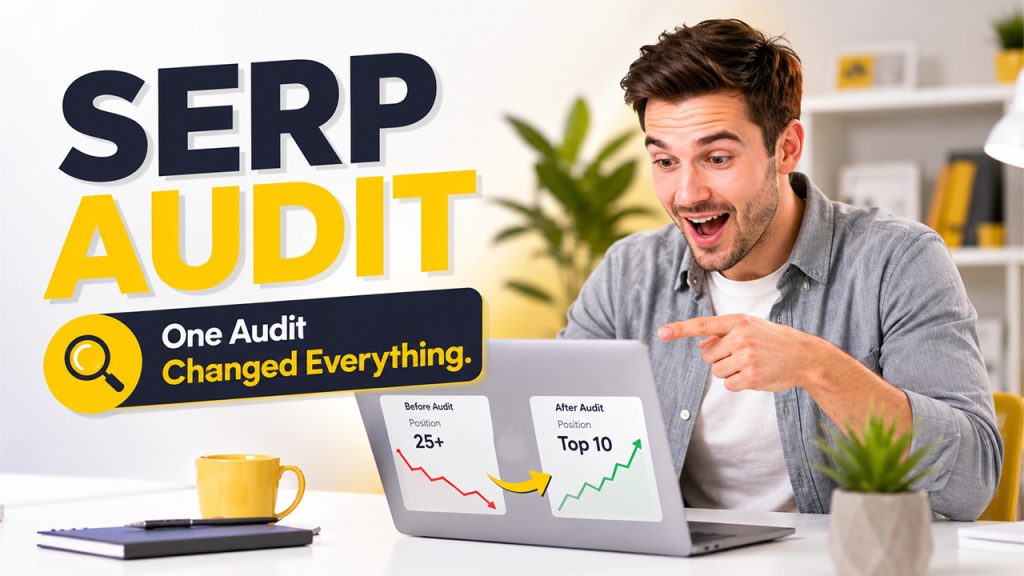
A software company made its product landing page live targeting a competitive keyword. Even after one year, it's still stuck past position 25.
Before the SERP Audit: The team assumed that low rankings meant they needed more backlinks. So, to improve rankings, they kept pushing outreach without checking anything else.
What the SERP Audit Revealed: Every result on page one was a comparison article, not a product page. The intent was informational, and no amount of authority-building was going to fix a format mismatch.
After the Audit: They created a genuine comparison piece, which covered accurate pricing and features honestly. Within a couple of months, the content appeared in the top ten results, and the original product page picked up long-tail traffic on its own. Same keyword but completely different outcomes. Why? Because you actually read the page instead of guessing.
If you're unsure how backlinks fit here, it helps to understand What Is Link Building? before assuming more links will fix an intent problem.
Conclusion
SERP insight isn't a trick or a shortcut. It's the habit of reading Google's first page as a brief before you write, instead of a scoreboard after you've already published. Every snippet, every stale ranking, and every format pattern is Google quietly telling you what it wants. Once you notice that, keyword research stops feeling like guesswork. You stop writing content and hoping it works, and start writing content that already matches what's being rewarded. It takes a few extra minutes per keyword, but it saves you months of sitting at position twenty wondering what went wrong.



.png)
.png)