


.png)
.png)
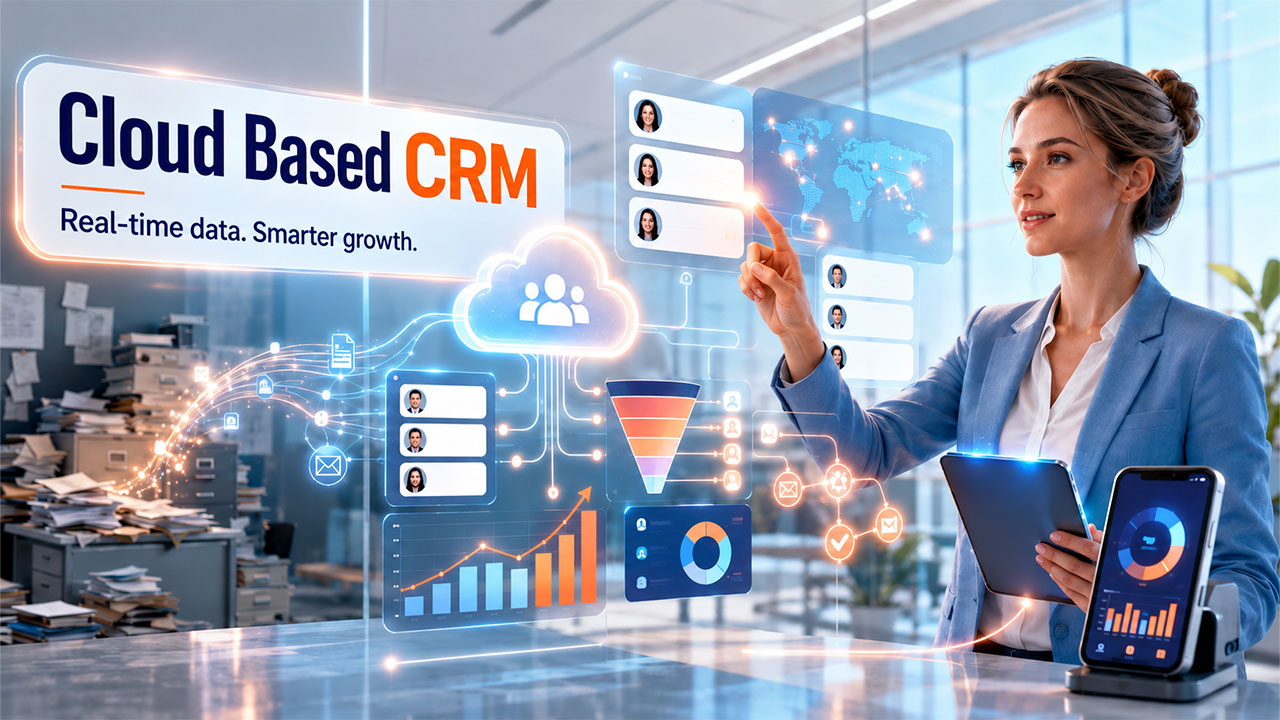
In the current digital-first business environment, companies are constantly searching for smarter and more effective methods to manage customer relationships and streamline communication. The cloud-based CRM software offers businesses solutions that efficiently transform modern business operations.
The cloud-based CRM software offers businesses of all sizes with key benefits, like streamlining sales, improving customer service, and enhancing team collaboration. Cloud CRM offers seamless tracking of customer interaction and also offers valuable insights.
Understanding Cloud-Based CRM Software
The cloud-based CRM is a type of software that is hosted on a remote server by a third-party provider. It allows businesses to efficiently manage sales, marketing, and customer data using the internet. It allows businesses to manage day-to-day activity from a centralized system hosted on the cloud.
The cloud-based CRM software offers key benefits over traditional on-premises CRM systems that are installed on a local server. It offers remote accessibility, low or zero maintenance, higher cost-effectiveness, and improved scalability. The cloud-based CRM software also helps businesses organize customer data, automate workflows, and improve collaboration across different teams and departments.
Cloud CRM vs On-Premises CRM
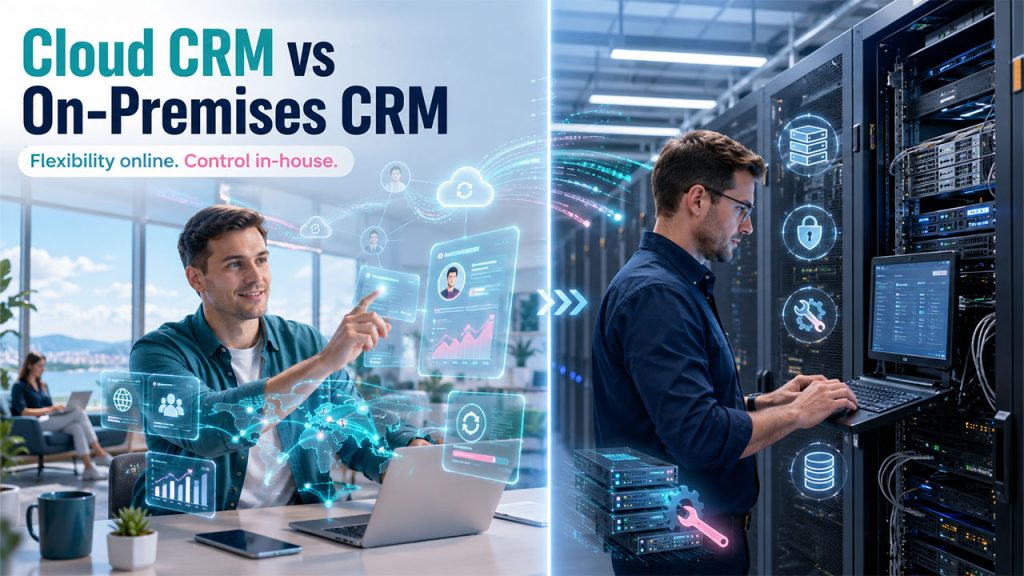
The main difference between a cloud-based CRM software and an on-premises CRM software is the mode of hosting and accessibility. The cloud-based CRM software is hosted by third-party vendors and can be accessed via the internet. Whereas the on-premises CRM software is installed directly on a company's local server, which requires higher upfront investments.
The difference between cloud-based CRM software and on-premises CRM software is as follows:
| Features | Cloud CRM | On-Premises CRM |
| Hosting | Online servers | Local servers |
| Accessibility | Remote access | Limited to the internal network |
| Setup Cost | Low | High |
| Maintenance | Managed by the provider | Managed internally |
| Scalability | Easy | Complex |
| Updates | Automatic | Manual |
| Deployment Time | Fast | Higher |
Hosting and Maintenance
In cloud-based CRM software, the vendor is responsible for all server maintenance, software upgrades, and security patches. In this, the updates are generally rolled out automatically, without causing any system downtime. In on-premises CRM software, the company's own staff is responsible for managing hardware procurement, software installations, and troubleshooting.
Cost and Pricing
The cloud-based CRM operates on an ongoing and predictable subscription model. It also offers lower barriers to entry and virtually no initial capital expenditure.
The on-premises CRM involves a high upfront cost, which includes software purchase, physical hardware, and infrastructure. The total long-term cost of on-premises CRM software may be lower than that of cloud-based software.
Data Control and Security:
The customer's data is stored on a remote server in cloud-based software, whereas it is stored within the internal network in on-premises software. This makes the on-premises CRM software more secure.
Accessibility
The users can access cloud-based CRM software from anywhere and on multiple devices. The user only needs a reliable internet connection to access cloud-based software. Whereas access to on-premises, CRM software is restricted to the local internet network of the company.
Scalability:
Cloud CRM offers enhanced scalability, as users can upgrade storage within a few clicks. On the other hand, scaling in on-premises CRM requires purchasing and configuring additional physical servers, along with buying extra software licenses.
How Does Cloud-Based CRM Software Work?
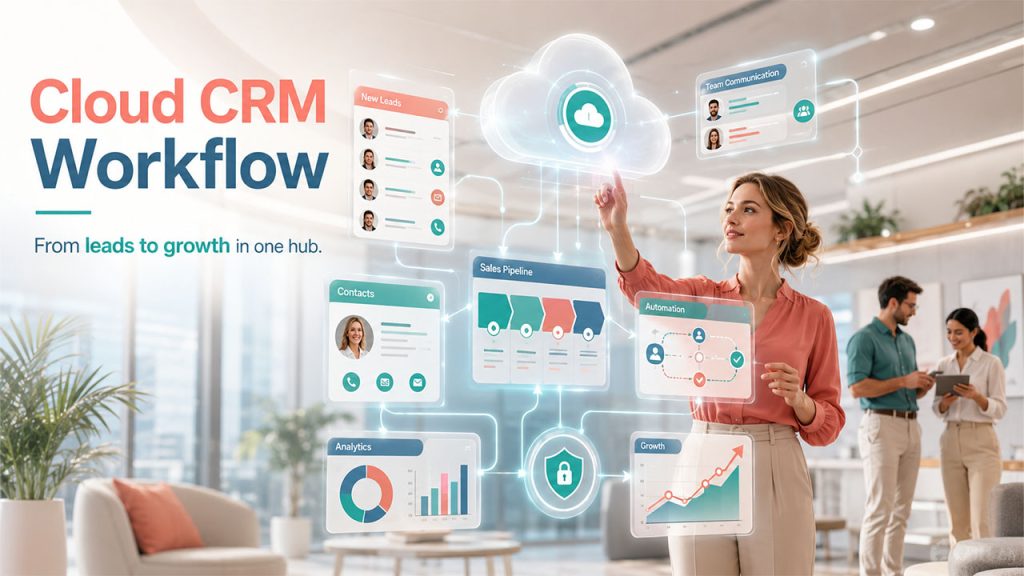
The cloud-based CRM software mainly works by storing all the data and business workflows on secure and remote servers. The team accesses the data in real-time, using a web browser or a mobile application, which eliminates the need for local installation or internal IT maintenance.
There are 4 main components of the cloud-based CRM software, which include:
1. The Cre Architecture (SaaS Model)
The cloud-based CRM software operates on a Software-as-a-Service or SaaS model. Instead of the user buying the software, the third-party software provider offers a subscription to a remote server service on a monthly or yearly basis.
2. Flow of Data and Syncs
As the software is cloud-based, any data added by the users get instantly uploaded to the remote server. The data can also easily be accessed by different teams simultaneously. The cloud CRM uses APIs to seamlessly connect with other business tools and marketing automation software.
3. Everyday Operations and Workflows
The system serves as the central hub for all day-to-day activities, like content and lead management, sales pipeline, and marketing automations.
4. Security and Backups
The cloud providers generally invest heavily in data protection, making the platform safer. It also encrypts the data during transit and maintains redundant servers.
Why Businesses Are Moving Towards Cloud CRM?
There are various major reasons why businesses are moving towards cloud-based CRM software from on-premises CRM. The major factors like flexibility, lower setup costs, and remote accessibility are significantly pushing the growth of cloud-based CRM software.
Some of the major factors driving the shift towards cloud-based CRM software from traditional CRM software are as follows:
- Lower Capital Expenditure: Operating cloud-based CRM software requires lower capital expenditure, compared to traditional on-premises software. The cloud-based CRM software offers a predictable and pay-as-you-go subscription model.
- Remote Accessibility and Collaboration: The cloud-based CRM software also allows teams to access, update, and collaborate data from anywhere and on any device.
- Seamless Scalability: The cloud CRM offers enhanced scalability, as adding new users or entering a new market is easy and requires no hardware updates.
- Advanced Automation & AI: The cloud solutions regularly push software updates, along with integration of modern tools like AI-driven sales forecasting and automated email follow-ups.
Benefits of Cloud-Based CRM Software
The cloud-based CRM software is used to host customer data on a remote server, which allows the teams to access data and information from anywhere. It also offers unmatched mobility, along with seamless scalability and robust security, without requiring heavy upfront infrastructure investment or complex, time-consuming IT maintenance.
Some of the major benefits of cloud-based CRM include:
- Instant Scalability: The cloud-based CRM software offers seamless and instant scalability. The user can easily adjust the storage capacity and feature set as per the requirement.
- Remote Accessibility: The teams can access the real-time data, deal pipeline, and communication histories from anywhere or from any device.
- Lower Maintenance and Upfront Cost: Cloud-based CRM software helps in eliminating the expensive hardware and dedicated IT servers. It also eliminates the system maintenance cost, along with security patches and software upgrades.
- Rapid Deployment: The user can set up and deploy CRM software easily, using a few steps. New features and updates are also pushed automatically by the provider, without causing downtime.
Challenges of Cloud-Based CRM Software
The cloud-based CRM software offers key benefits like flexibility and lower initial expenditure, but it also introduces key challenges, like data privacy vulnerabilities and limited customizations. Some of the major challenges of cloud-based CRM software include:
- Connectivity and Accessibility: The cloud CRM software is completely dependent on a stable internet connection. If the network experiences any outage, the user can lose access to critical customer data and real-time updates.
- Security, Compliance, and Data Control: The sensitive customer data is stored on third-party servers, which poses potential privacy and cybersecurity risks. It also requires rigorous due diligence to ensure that the cloud provider meets the local legal standard of data protection.
- Cost Implications: The cloud-based CRM software operates on a SaaS model, with ongoing monthly or annual charges, which can accumulate rapidly as the team scales. It can also include hidden add-on fees for customizations, third-party integrations, and premium customer support.
- Integration and Migration: Migrating existing client data from legacy or on-premises CRM to the cloud platform offers major technical complexity.
Conclusion
The cloud-based CRM software is considered an essential tool for modern businesses looking to boost productivity, stay competitive, and improve customer relations. The cloud-based CRM software offers key benefits to businesses, like enhanced scalability, real-time data access, and remote collaboration.
The platform also provides businesses with enhanced flexibility and efficiencies, ensuring long-term success. From a startup looking to organize customer interactions to a large enterprise aiming to optimize operations, the cloud-based CRM software offers a future-ready solution for modern business management.
Frequently Asked Questions
Is cloud-based CRM secure?
Yes, the cloud-based CRM is highly secure. The platform also offers advanced encryption, along with continuous monitoring of threats, and meets strict global standards like GDPR, HIPAA, and ISO 27001.
How is cloud-based CRM different from on-premises CRM?
The core difference between the cloud CRM and on-premises CRM is the mode of hosting. The cloud-based CRM software is hosted on a remote server, provided by the vendor, whereas the on-premises CRM software is installed in the local server, located on the premises of the organization.
Is cloud-based CRM ideal for small enterprises?
Yes, the cloud-based CRM software is considered ideal for small enterprises. It eliminates the need for an expensive on-site server and IT staff. It also offers cost-effective solutions, along with remote access.
Can cloud CRM help improve sales performance?
Yes, the cloud-based CRM software helps in significantly improving sales performance. The platform centralizes customer data, along with automating administrative tasks. It also gives real-time pipeline visibility to the teams and acts as a single source of data, allowing teams to close deals faster.
Can I integrate cloud CRM with other business tools?
Yes, the user can integrate the cloud-based CRM software with other business tools. The integration allows businesses to easily sync data automatically and remove information silos and create a centralized hub for all customer interactions.

.png)
.png)