


.png)
.png)
Have you wondered why it is that some websites show up on the first page of Google while others, sometimes with the exact same information, sit buried all the way on page five? It is not by luck, and it is definitely not because someone wrote a better sentence. A big part of the answer comes down to something surprisingly simple: how many other websites are willing to vouch for that page by linking to it.
Think about how trust actually works in real life. If one person recommends a restaurant, you might try it. But if five different people you respect all say the same thing, you're booking a table tonight. Search engines work in a strangely similar way. They notice when other websites point toward a page, and they treat that as a signal worth paying attention to.
That's the whole idea behind a backlink, and once you understand it, a lot of SEO starts making a lot more sense.
What Is a Backlink in SEO?
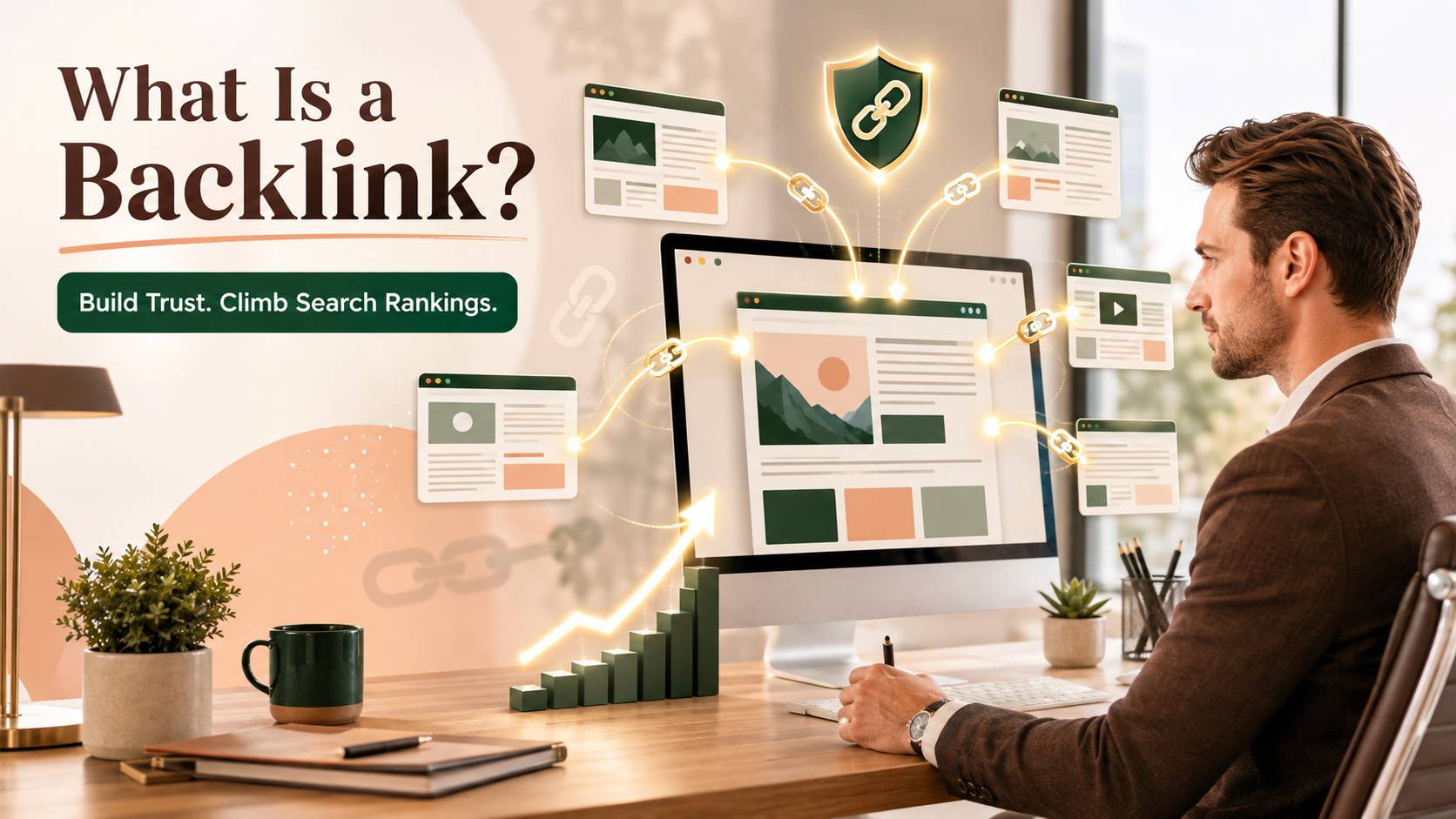
A backlink is simply a link on someone else's website that points back to yours. It's also called an inbound link, and you've clicked plenty of them without even noticing.
When it comes to backlink vs link, the difference is really just direction: a link is any hyperlink connecting one page to another, while a backlink specifically points back to your site from somewhere else. In other words, every backlink is a link, but not every link is a backlink.
Let's understand this: When Website A links to Website B, it's telling the internet, "this page is worth checking out." Search engines pay close attention to these trust signals. The more quality backlinks a page earns, especially from trusted sources, the more credible that page appears. That’s it. Backlinks are not complicated. It's word-of-mouth, just translated into HTML.
Why Are Backlinks Important for SEO?
You must wonder why a simple link carries so much weight in SEO. The answer traces back to how Google itself got started.
When Google launched, it didn't just count how many times a word appeared on a page, the way older search engines did. Instead, its founders built something called PageRank, an algorithm that looked at links between pages to figure out which ones people actually valued. A page that got linked to by lots of other pages, especially reputable ones, was assumed to be more useful. That single idea is a big part of why Google became the search engine everyone uses today.
So, what does that mean to you? Let's see:
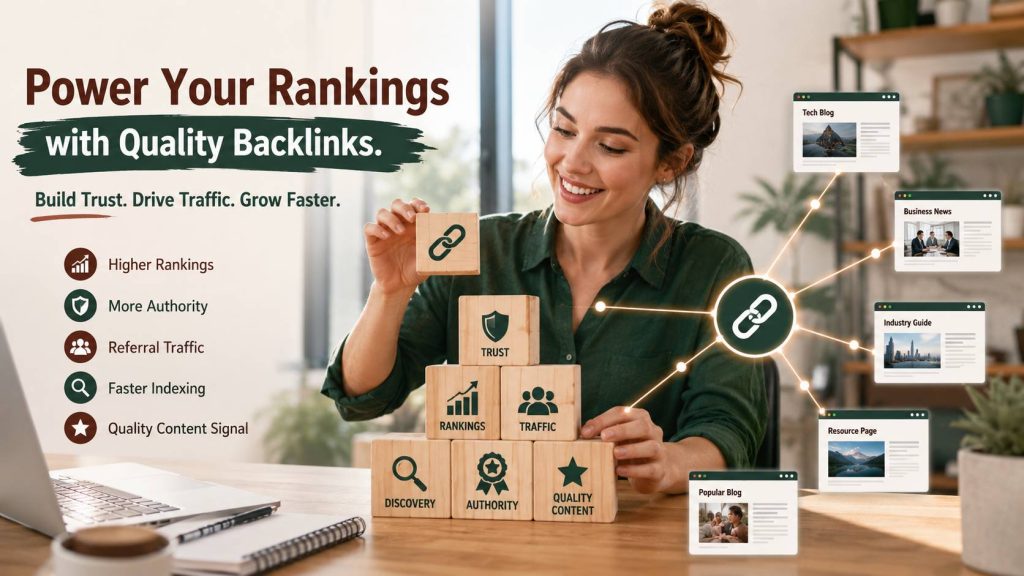
- Backlinks Help Improve Search Engine Rankings: Pages that contain more high-quality backlinks usually rank higher on SERP because search engines see those links as proof that the content is useful enough to show people.
- Backlinks Increase Website Authority and Trust: When a well-known, trustworthy website links to your page, it acts like a recommendation. Search engines notice who's linking to you, and if it's a site that they already trust, some of that trust can pass on to your website. You can also use a DA PA checker to evaluate the authority of websites linking to your pages and identify potentially valuable backlink opportunities.
- Backlinks Drive Referral Traffic: Every backlink also works like a doorway people can actually walk through. Someone reading an article on one site might click the link and land straight on yours, and since they were already interested in that topic, they're often exactly the kind of visitor you want.
- Backlinks Help Search Engines Discover and Index Pages: Search engines crawl the web by following links from page to page. If there are no backlinks pointing to a page, it becomes much harder for it to even get discovered and indexed.
- Backlinks Signal High-Quality Content: Nobody links to boring, thin, or unhelpful content on purpose. Naturally earned backlinks are often a sign that what you've made is genuinely useful.
Types of Backlinks in SEO
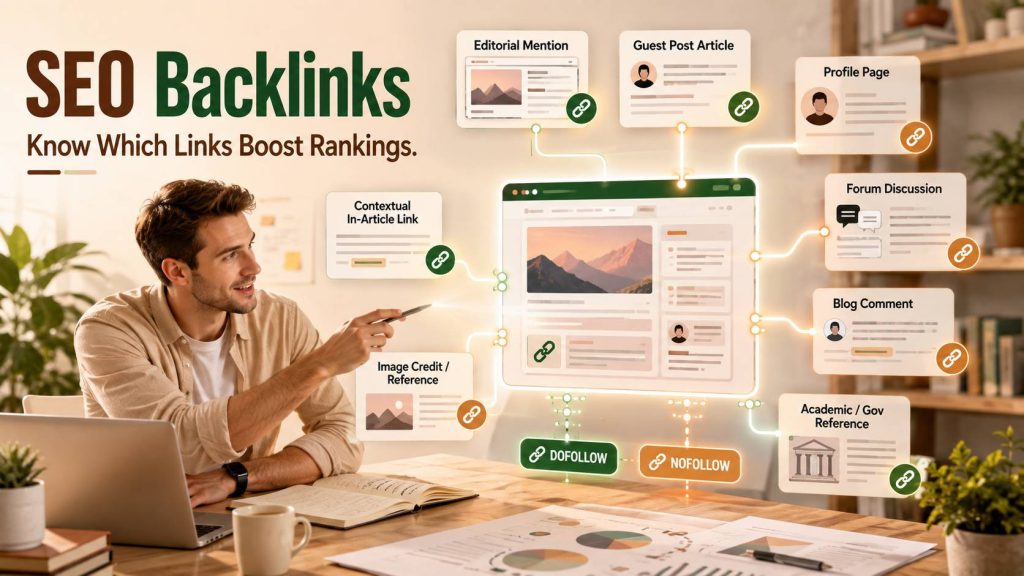
Not every backlink carries the same weight, and understanding the different types helps you see why some links help a lot more than others.
- Natural Backlinks: These are links that you didn’t ask or look for. Someone stumbled across your content on their own and decided that it was valuable to link to. Usually, they’re considered the most valuable kind of link because they happen on their own without using any persuasion technique.
- Manually Built Backlinks: Acquiring these links takes a lot of effort. You must reach out to other site owners, write guest posts, or build relationships with people in your industry who might link to you.
- Editorial Backlinks: A specific kind of natural backlink where a reputable website links to your content purely because it adds value to what they're writing, with no request or exchange involved.
- Guest Post Backlinks: When you write content for another website in exchange for a link back to your own site, usually placed within the body of the article rather than a bio at the bottom.
- Profile Backlinks: Links that live inside your profile on forums, social platforms, or business directories. These vary a lot in value depending on how authoritative the platform itself is.
- Forum and Blog Comment Backlinks: Links added while commenting on someone else's blog post or joining a forum discussion. They're easy to get, but they usually carry limited SEO value and are sometimes flagged as spammy.
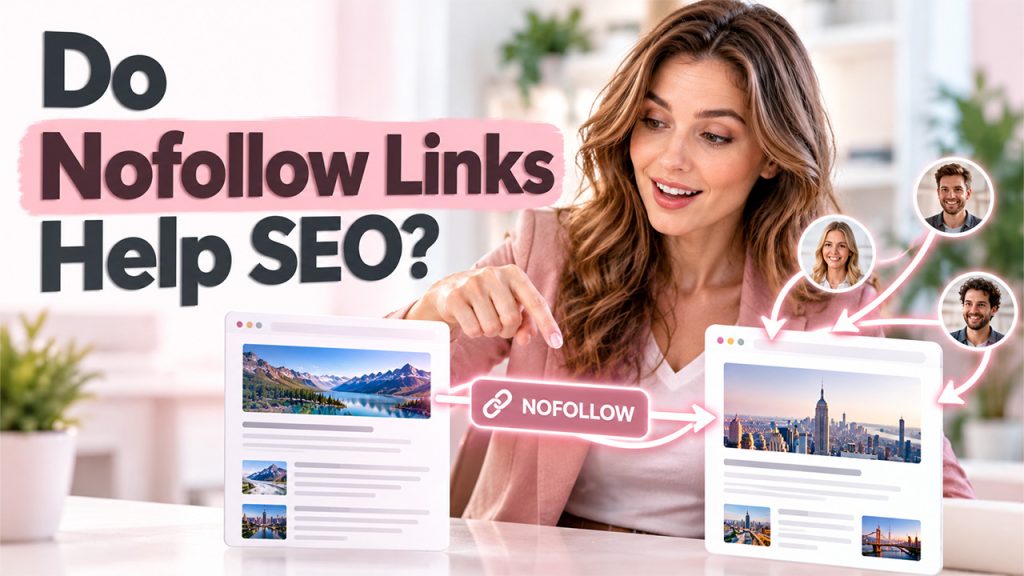
- Dofollow and nofollow Backlinks: Dofollow links pass on SEO value to your site, while nofollow links carry a small tag telling search engines not to count them as an endorsement. Both still matter, but dofollow links do more for rankings.
- Contextual Backlinks: These links are placed naturally within the main body of an article, surrounded by relevant text. These tend to be more valuable than links tucked away in a sidebar or footer.
- Image Backlinks: Links that come from someone using your image and giving you credit with a clickable link. You can often see these links in photo credits or infographic shares.
- Educational and Government Backlinks: These are the links that you get from .edu or .gov websites. These are seen as especially trustworthy because such institutions rarely link out carelessly.
- Social Media Backlinks: These links are shared on platforms like LinkedIn, Twitter/X, or Facebook. They don't carry much direct SEO weight, but they do help with visibility and brand exposure.
- Broken Backlinks: Links that once worked but now point to a page that either has been deleted or moved. Finding and reclaiming these is actually a smart, often overlooked SEO tactic.
How to Build Backlinks for SEO
Now that you know what counts as a good backlink, here's how people actually go about earning them through Link Building.
Create Link-Worthy Content: It is the foundation of everything else. When you write high value content such as original research, detailed how-to guides, and genuinely useful tools that are helpful to people, they tend to attract links naturally without you having to put any effort into it.
Use Guest Posting for Backlinks: Find some credible websites in your niche and reach out to them with a guest posting opportunity. When you write for them, in return you usually get a link back to your own site that is placed naturally within the content.
Use Broken Link Building: Find pages on other websites that link to content that no longer exists, then politely suggest your own page as a replacement. It's a win for them too, since broken links hurt their user experience.
Build Backlinks Through Outreach: Search for blogs, journals, or websites that are related to your industry. Instead of just requesting a link, offer them something that is genuinely useful to them. People tend to respond faster when they think you’re offering value, not just asking for a favor.
Managing all these outreach conversations gets messy fast, which is why many teams turn to a link-building CRM to keep track of who they've contacted and what's still pending.
Add Value in Blog Comments and Forums: If you can genuinely add something helpful to a discussion, it's fine to include a relevant link. Just don't spam every comment section you find, since that does more harm than good.
Get Listed in Relevant Directories and Communities: Industry-specific directories, local business listings, and niche communities can be a steady, low-effort source of backlinks over time.
How to Check Backlinks for a Web Page or Website
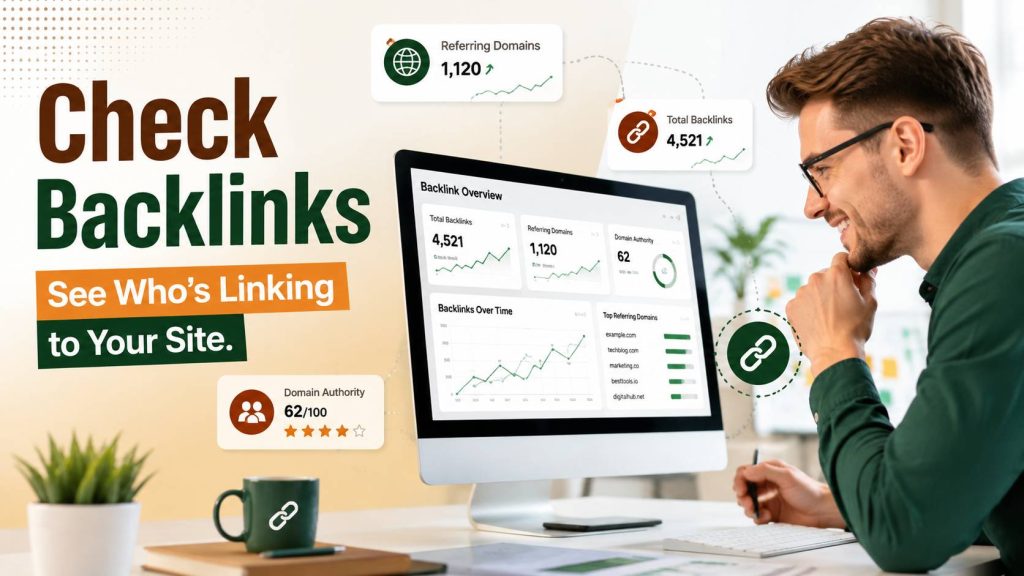
If you are curious whether your own site or a competitor's has backlinks, and where they’re coming from, here’s how you can actually check:
Use a Backlink Checker Tool: You can use tools like Backlink Checker Ahrefs, SEMrush, or Moz as they are specifically built to show you a webpage backlink profile. Moreover, you can also see where those links are coming from and how strong those sources are.
Check Backlinks in Google Search Console: If you manage a website, Search Console's "Links" report will show you some of the backlinks pointing to your pages. It's not always a complete list, but it's a solid free starting point.
View the Page Source Code: Right-click a webpage, select "View Page Source" or "Inspect," and look for anchor tags in the code. It's manual and slow, but it works for quick, one-off checks.
Use SEO Browser Extensions: Tools like the MozBar or Ahrefs SEO Toolbar let you see backlink data right from your browser while you're browsing any page.
Check Social Mentions and Shares: While not technical backlinks, mentions and shares across social platforms often show you where interest in your content is coming from, which can hint at future link opportunities.
Larger link-building campaigns often benefit from tracking risks and blockers the way project teams do with a RAID log, so nothing slips through unnoticed.
What Are the Best Backlinks for SEO?
Not every backlink deserves the same level of excitement. The best ones tend to share a few common traits:
- They're placed naturally within relevant content, not stuffed into a random sidebar
- They're dofollow, meaning they actually pass on SEO value
- They point to pages that are genuinely useful and functional
- They come from websites that are well-established and trusted in their field
- They use natural, relevant anchor text instead of generic phrases like "click here"
If a backlink checks most of these boxes, it's doing real work for your website. If it checks none of them, it's probably just noise.
Conclusion
At its core, what is a backlink really comes down to one simple idea: it's a vote of trust from one website to another. The more of those votes you earn, especially from sources people already respect, the more search engines start trusting you too. Building backlinks was never really about chasing a number. It's about creating something worth linking to in the first place, then putting in steady work to make sure the right people actually find it.

.png)
.png)